
Project manpower supply for work that has a start date and an end date
A shutdown is not a hiring cycle. You need forty certified trades on site by the 14th, working twelve-hour shifts for nineteen days, and gone by the 3rd — with height passes, hot-work clearance and insurance in place before the first gang enters the gate.
Scope, headcount and site city. We aim to send a costed proposal within one working day.
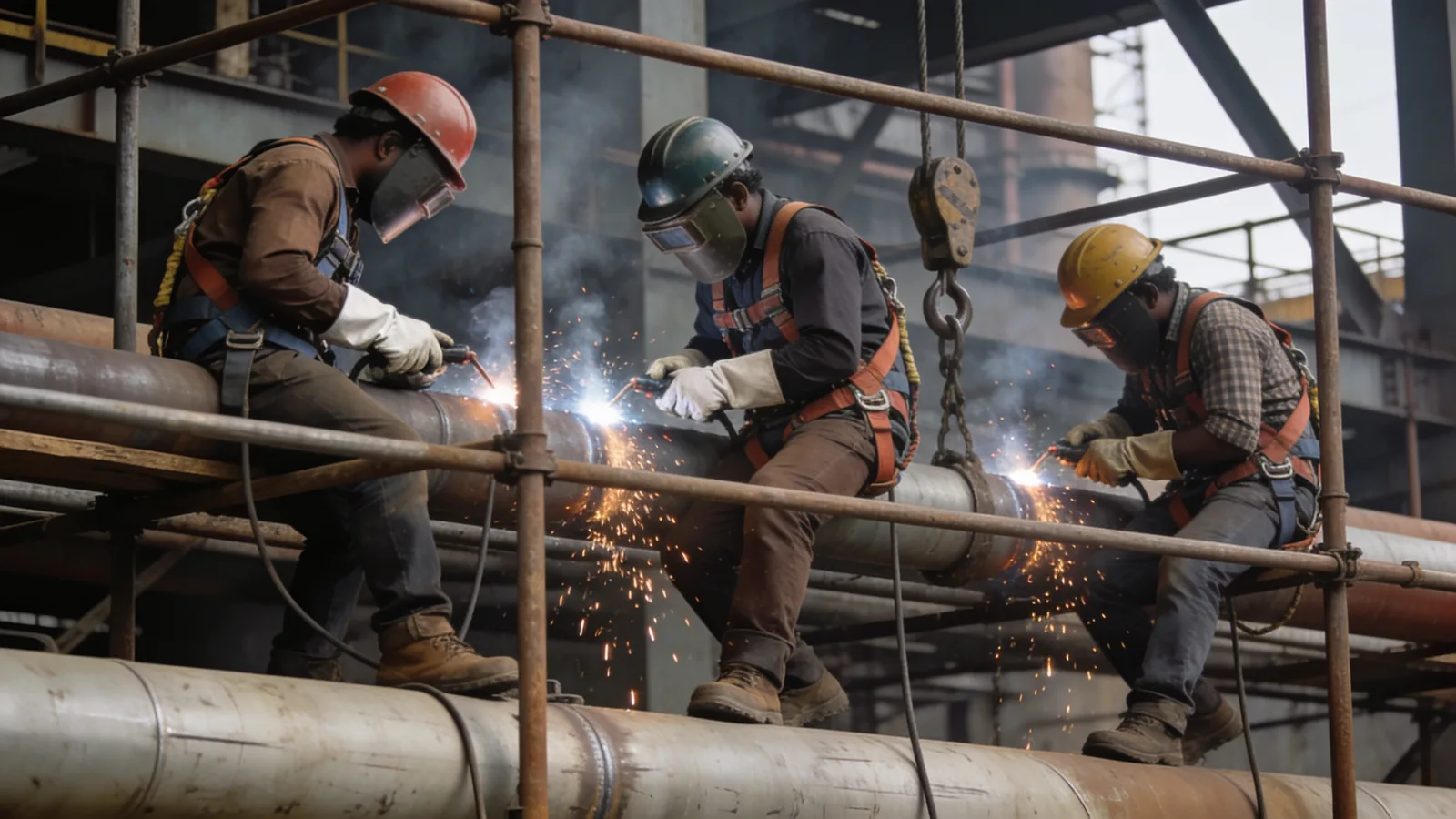
Certified trades, gang structure, and paperwork ready at the gate
Project sites reject workers at the gate for missing certificates, not missing skills. Everything travels with the gang: medicals, height passes, insurance, PF numbers and induction records.
- ✓Trades: 6G welders, fitters, riggers, scaffolders, electricians, insulators, helpers
- ✓Height work medical and work-at-height certification
- ✓Hot-work permits, fire watch and confined-space trained hands
- ✓ESI or employee's compensation cover, plus group accident cover, for every worker
- ✓Gang leader for every 8 to 12 workers, one site in-charge per project
- ✓Demobilisation with settlement and gate-pass closure on the end date
Every day of a shutdown overrun is production you already sold
Shutdown windows are negotiated with customers months ahead. Manpower that arrives short, uncertified or untrained turns a nineteen-day window into twenty-four.
Height passes missing, medicals expired, no insurance proof. Safety refuses entry, the gang sits outside the gate and the critical path slips on day one.
Runs into lakhs of lost output, plus contractor idle charges, plus the customer conversation about the delivery you committed.
Trades tested for the job, certificates verified before travel, insurance active, gang leader named, and a demobilisation date written into the work order.
Get a quote →
Mobilisation, supervision, demobilisation
Project work is billed on a day rate per trade, or lump sum against a defined scope. Overtime, night shift and travel are agreed before mobilisation. For comparison, the slider shows a monthly bill at an assumed ₹26,000 gross wage per worker and an illustrative 12% fee, before GST; your actual fee is set out in the rate card.
We read the job list, then build the gang around it instead of sending general labour.
Project work we crew, and the trades each one needs
Project manpower is organised around a scope and a window, not a headcount. The gang changes with the type of work:
| Project type | Typical window | Core trades |
|---|---|---|
| Plant shutdown and turnaround | One to four weeks, often round the clock | Fitters, welders, riggers, scaffolders, insulators, helpers, fire watch |
| Erection and installation | One to six months | Structural fitters, riggers, welders, crane operators, millwrights, electricians |
| Commissioning and start-up | Weeks to a few months | Electricians, instrument technicians, mechanical fitters, operators for trial runs |
| Fabrication and piping | Measured scope, often lump sum | Pipe fitters, coded welders, grinders, fabricators, NDT support |
| Maintenance backlog and O&M support | Defined campaigns | Maintenance technicians, fitters, electricians — see maintenance engineers |
Sector specifics: oil and gas, renewable energy and solar, and heavy equipment operators.
Certificates and checks by trade, verified before travel
Gangs are turned back at the gate for paperwork far more often than for skill. The standard or certificate a site asks for is set by your engineering and safety teams; this is what we verify against it before anyone travels.
| Trade | What we verify | Common site requirements |
|---|---|---|
| Welders | Test coupon in the required process and position; qualification record | Qualification to the code your job specifies (for example ASME Section IX for pressure piping, IBR for boiler work, AWS D1.1 for structural steel) |
| Riggers and signallers | Practical rigging test, knowledge of slings, hitches and signals | Site rigging competence card; lift-plan briefing for critical lifts |
| Scaffolders | Erection and inspection practice; tagging system | Scaffold competence; inspection tags signed before use |
| Work at height | Medical fitness (including blood pressure and vertigo), harness use | Height-work medical and site height pass |
| Confined space | Entry procedure, gas-testing awareness, rescue drill | Confined-space training; trained attendant at every entry |
| Electricians | Isolation, lock-out/tag-out, testing | State electrical licence or permit where required |
| Crane and equipment operators | Operating test on the equipment class | Valid licence and operator competence for the equipment |
| Every worker | Identity, age, medical fitness, induction, PPE issue | Site induction, ID card, insurance proof, PF/ESI numbers |
The legal points that change on a project site
Project work brings in rules that a steady-state plant contract rarely touches. The ones to plan for, under the Labour Codes in force since November 2025:
Construction and erection work
Building and other construction work — including much site erection and installation — carries specific safety, welfare and registration duties under the OSH Code and the Code on Social Security, which absorbed the building workers' Acts, including the construction cess.
Employee's compensation vs ESI
Workers covered by ESI receive employment-injury benefits through ESIC. Workers outside ESI — typically those earning above ₹21,000 or on sites outside ESI coverage — need employee's compensation cover, so project insurance is usually a mix of both.
Migrant workers
Many project trades travel from other States. Those earning up to ₹18,000 a month are inter-State migrant workers under the OSH Code, with a yearly journey-fare entitlement and record-keeping duties.
Hours and overtime
Twelve-hour shift patterns mean overtime beyond the daily limit, paid at twice the ordinary rate and within the limits your State allows. Agree the pattern and the overtime budget before mobilisation.
Welfare at site
Drinking water, latrines, first aid, rest shelters and, for larger sites, canteen and crèche facilities — plus annual health check-ups the rules require for construction workers above a set age.
Wages and exit
Wages by the 7th of the following month for monthly wage periods — or weekly or fortnightly if agreed — and all dues within two working days of demobilisation.
A shutdown manpower plan, counted back from day one
Most overruns are decided before the shutdown starts. This is the countdown we run with your planning team.
Scope and job list frozen
Job list, trades, shift pattern and permit system confirmed; headcount by trade and by day agreed.
Gang plan and certificates
Named workers per trade, certificates and medicals verified, back-ups identified for scarce trades.
Logistics
Travel, accommodation, canteen and transport to site booked; insurance cover confirmed for the named list.
Mobilisation and induction
Gangs arrive, site induction and gate passes completed, tools checked, toolbox talk on the first job.
Execution
Daily progress against the bar chart, fresh-hands rotation to manage fatigue, and early warning of any overrun.
Demobilisation
Job closure sign-off, gate passes returned, wages and dues paid within two working days, compliance file handed over.
Questions buyers ask before signing
Answers we give in the first call, written down so you can compare vendors on the same terms.
Get a quote →How is project manpower billed?+
Either a day rate per trade per shift, or a lump sum against a defined scope of work. Day rate suits shutdowns where the job list moves; lump sum suits erection and fabrication scope that can be measured.
Can you mobilise for a 15-day shutdown?+
Yes. We plan on about seven days to mobilise a certified gang from a confirmed work order, so a shutdown starting in two weeks is workable if trades, headcount and shift pattern are frozen now.
Are the workers insured for site work?+
Yes. Workers within the ESI wage limit are covered for employment injury through ESIC; workers outside it carry employee's compensation cover under the Code on Social Security (which replaced the Employees' Compensation Act). Group accident cover is added for every worker. Policy copies and the covered-worker list are shared before mobilisation for your safety file.
Do you supply certified welders and height workers?+
Yes — welders qualified by test coupon to the code your job specifies (including 6G pipe positions), work-at-height certified riggers and scaffolders, and confined-space trained hands. Certificates are verified before travel because sites reject at the gate otherwise.
What happens if the shutdown window extends?+
Extension is priced at the same agreed day rate, subject to worker availability and travel. We flag likely overrun from the daily progress report so extension is a decision and not a surprise.
Who pays for travel and accommodation?+
It is agreed before mobilisation and shown as a separate line. Usually the client bears travel to site and accommodation for out-station gangs, either at actuals or as a fixed per-head allowance built into the day rate.
What insurance do project workers need if they are covered by ESI?+
ESI-covered workers receive employment-injury benefits through ESIC, so separate employee's compensation cover is needed mainly for workers outside ESI. Many sites also require group personal accident cover for every worker regardless; we share policy copies and the covered-worker list before mobilisation.
Send the job list and the shutdown dates
We come back with a trade-wise gang plan, day rates and the certificate list every worker will carry to your gate.