
Fitter manpower supply for erection, maintenance and alignment work.
When a pump misaligns or a conveyor drive fails, the difference between two hours and two shifts of downtime is the fitter on duty. Fitter manpower supply is where a plant's maintenance capability quietly lives. Godstone Consultech screens for measurement accuracy, alignment practice and mechanical fault-finding, employs every worker on our own payroll, and keeps the PF, ESI, wage and contract-labour records — so the person on your floor is documented, replaceable and accountable from day one.
Equipment list, maintenance load and shift pattern are enough to price.
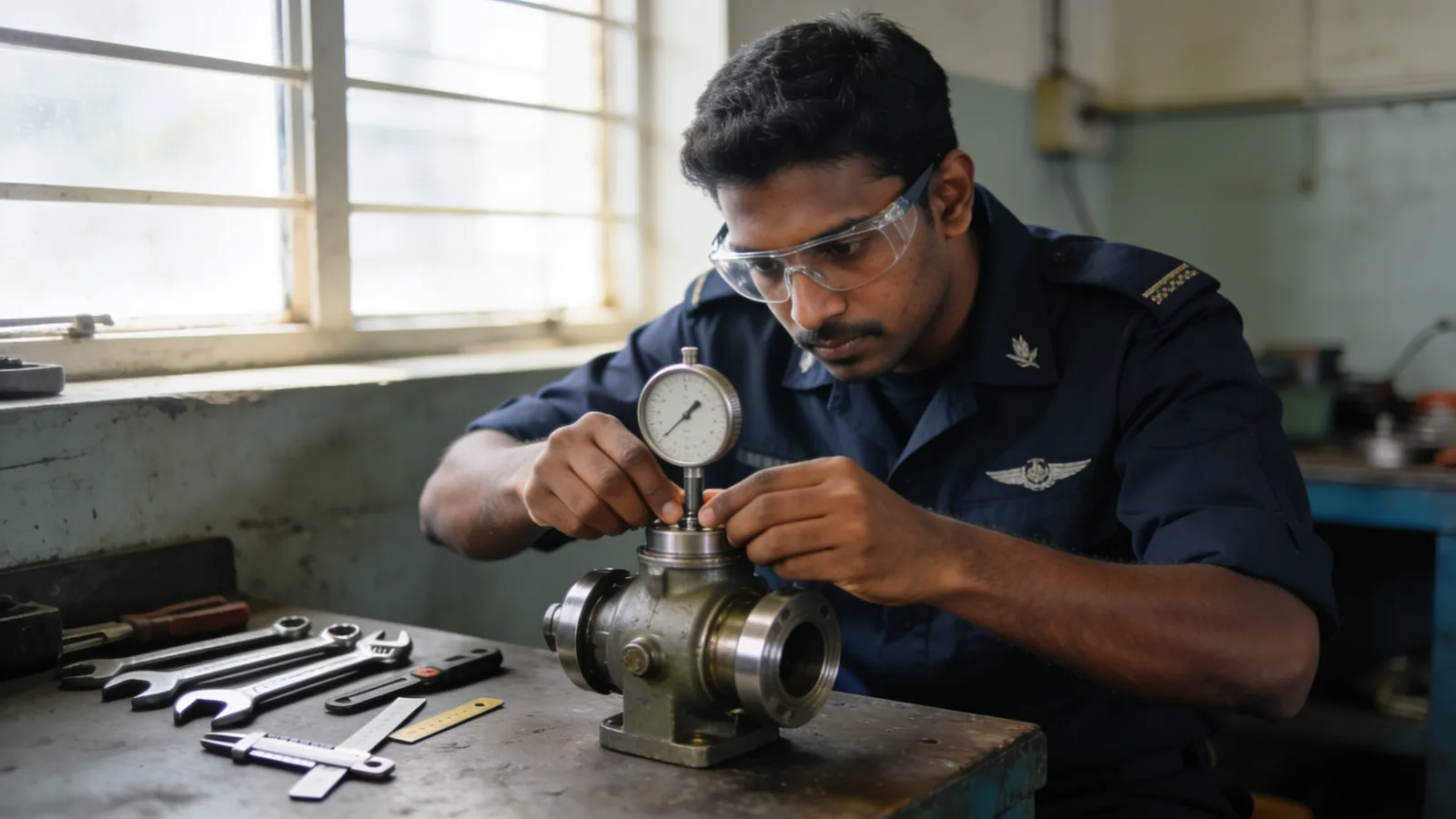
Erection, maintenance, alignment and assembly.
Fitting work spans erection, preventive maintenance and breakdown response. We screen against the type of work you run, and pair fitters with the permit discipline the job needs.
- ✓Machine erection, levelling and alignment
- ✓Pump, gearbox and conveyor maintenance
- ✓Bearing, seal and coupling replacement
- ✓Pipe fitting, hydraulics and pneumatics support
- ✓Preventive-maintenance schedules and records
Downtime is a competence question
Every hour a machine is down, someone is deciding whether the fitter knows what they are doing.
A helper is deployed as a fitter to fill a shift, and a coupling is replaced without alignment. The same machine is down again in three weeks.
Repeat breakdowns, damaged bearings, unplanned production loss and a maintenance history that cannot be trusted.
Measurement and alignment testing before deployment, permit and LOTO discipline, breakdown standby rosters and maintenance records filled in on the day, not at month end.
Get a rate card →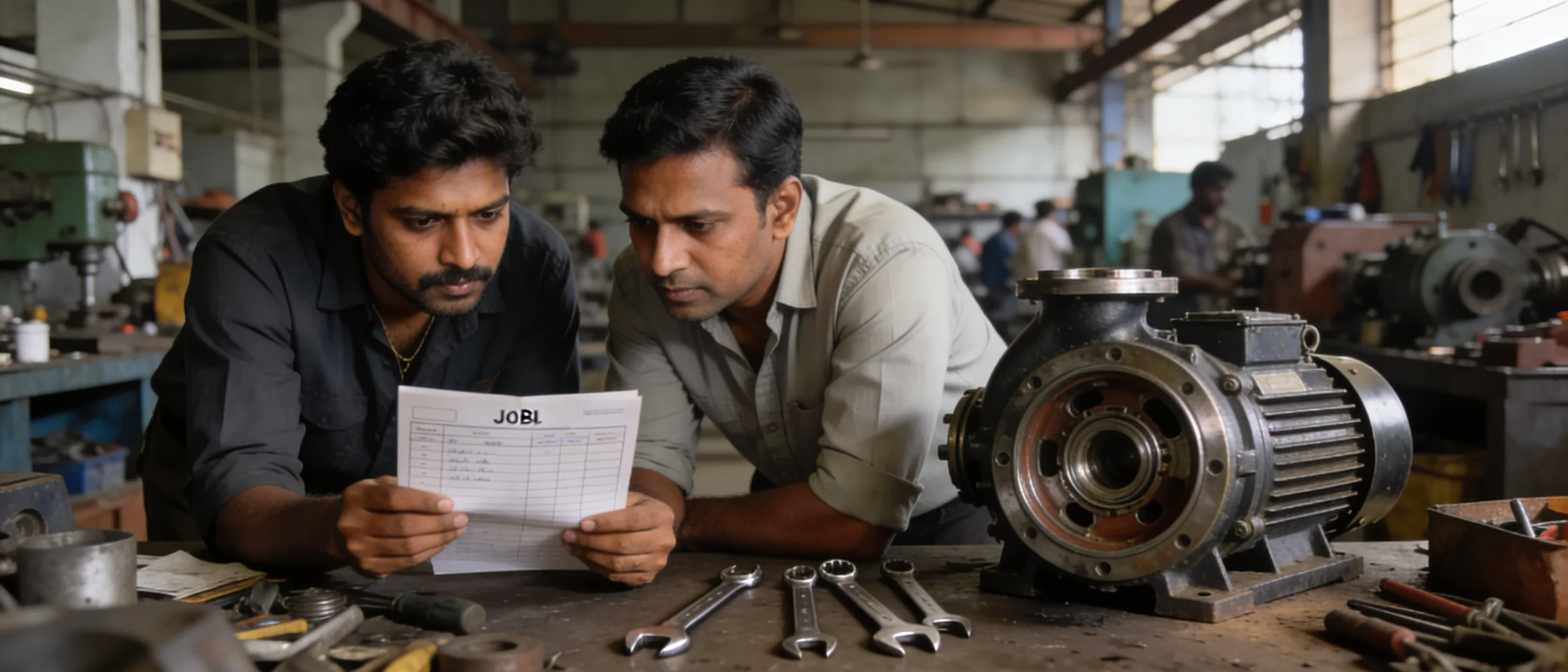
Screening, deployment and compliance
Move the slider for an indicative monthly bill for maintenance fitters at a ₹22,000 gross wage, statutory costs and an illustrative 12% service fee (your actual fee is set out in the rate card). Firm rates follow your State's minimum wage for the skill category, the fitter type and the shift pattern.
What clears before the worker reaches your gate.
Four kinds of fitter, and why the difference matters
“Fitter” covers four different jobs on Indian sites. A maintenance fitter keeps rotating equipment running: pumps, gearboxes, conveyors, bearings, seals, couplings and hydraulics. A fabrication fitter marks, cuts and fits up plate and structural members so the welder can weld. A pipe fitter reads isometrics, fits up spools, aligns flanges and tightens bolts in sequence. An erection fitter sets machines on foundations, levels, grouts and aligns them. Each needs a different test, so the requisition should name the type.
Fitters work alongside, but are not, welders or riggers. On most projects the three are crewed together:
Maintenance engineers
Engineers who own reliability, root cause and the PM plan fitters execute.
Maintenance engineer staffing →Fitter bands we supply
Name the type, the equipment and the tolerance. The test and the rate follow.
| Band | Typical background | Works independently on | Usual minimum-wage category |
|---|---|---|---|
| Fitter helper | Trained on site | Carrying, cleaning, holding, basic dismantling under a fitter | Semi-skilled |
| Maintenance fitter | ITI Fitter (DGT craftsmen scheme, NSQF level 4, two years) or Mechanic Machine Tool Maintenance, 2+ years | Bearings, seals, couplings, gearbox and pump overhauls, hydraulic and pneumatic repairs | Skilled |
| Fabrication fitter | ITI Fitter or Sheet Metal Worker, 2+ years | Marking, cutting, fit-up and tack-ready assemblies from fabrication drawings | Skilled |
| Pipe fitter | ITI Fitter with 3+ years on process piping | Isometric reading, spool fit-up, flange alignment, bolt tightening, hydro-test support | Skilled or highly skilled |
| Erection / alignment fitter | ITI Fitter with 4+ years on installations | Levelling, grouting, shaft alignment by dial or laser, commissioning support | Highly skilled |
Skill categories come from each State's minimum-wage notification under the Code on Wages, 2019; the mapping is typical, not universal.
The fitter trade test, by fitter type
Every fitter clears stations 1 and 6; the middle stations follow the type you need.
Measurement
Vernier, micrometer, dial gauge and feeler gauges read correctly; a measured sketch of a worn part.
Maintenance: bearings and alignment
Remove and fit a bearing with a puller and induction heater, not a hammer; align a pump-motor coupling within tolerance by rim-and-face dial or laser.
Fabrication: marking and fit-up
Mark out from a fabrication drawing, cut and fit up a joint to the root gap and squareness the WPS needs.
Pipe: isometrics and flanges
Read an isometric, fit up a spool, align a flange pair and tighten bolts in a cross pattern with the right gasket.
Erection: levelling
Level a baseplate with a precision level, set shims and explain grouting and final alignment checks.
LOTO and permits
Isolate and lock out a machine, prove zero energy including stored hydraulic and pneumatic pressure, and work under a permit.
PPE, safe systems and the compliance behind each fitter
PPE issued and checked
- ✓Safety shoes, gloves and safety glasses
- ✓Face shield when grinding or using hydraulic tools
- ✓Full-body harness for erection work at height
- ✓Hearing protection where your noise survey requires it
Safe-system rules we brief
- ✓Lock-out/tag-out and zero-energy verification before any intervention
- ✓Stored energy released: springs, accumulators, suspended loads
- ✓Lifting by trained riggers with examined gear, not improvised slings
- ✓Guards refitted and checked before handover to production
Compliance we carry as employer
- ✓EPF and ESI enrolment before day one; ESI covers gross wages up to ₹21,000 a month, and employees' compensation cover applies above that
- ✓Wages at or above the State minimum for the category, paid by the 7th of the following month
- ✓Overtime at twice the ordinary wage rate for breakdown call-outs (OSH Code, section 27)
- ✓Contract-labour registers under the OSH Code (which replaced the CLRA Act, 1970), shared monthly
Maintenance rosters, project crews and the wage basis
Continuous plants need a maintenance fitter on every running shift, plus standby cover on weekly offs. Day-shift plants often combine one fitter per area with on-call breakdown cover. Erection, pipe and fabrication fitters usually work as project crews for a fixed window, where longer days mean overtime at twice the ordinary rate.
| Basis | Figure | Source and notes |
|---|---|---|
| Legal floor (example) | Haryana: skilled ₹18,501 a month, highly skilled ₹19,426 a month | Haryana notification effective 1 April 2026. Your State, zone and scheduled employment decide the real floor. |
| Karnataka | Skill-and-zone structure with steep increases, notified 22 May 2026 | Its legal validity is being contested; check before budgeting a site in Karnataka. |
| Market reference | Fitter average ₹19,324 a month; typical range ₹11,439–₹32,646; senior fitters about ₹28,500 | Indeed India, 358 reports, updated August 2026. Bengaluru, Chennai and Vapi list among higher-paying cities. |
| Our estimator | ₹22,000 gross a month for a maintenance fitter | Planning figure. Pipe and erection fitters are quoted separately. |
Indicative only, not an offer or a legal rate. A national floor wage under the Code on Wages is still being fixed; until then State rates apply. Check your State's rate with the minimum wage calculator.
What to hold fitters, and us, to
Mechanical MTTR
Mean time to restore after a mechanical breakdown, by equipment class.
PM compliance
Lubrication, alignment and inspection tasks completed on schedule, with job cards closed.
Repeat failures
The same failure on the same equipment within 30 days — usually a fit, alignment or root-cause gap.
Fit-up rejection
For fabrication and pipe fitters: joints rejected at fit-up inspection before welding.
Our service targets
We aim to deploy tested fitters in 7–12 working days, keep breakdown standby to the agreed response windows, and replace an exit within 15 days. Targets are written into the SLA schedule.
Fitter staffing FAQs
Fitter types, testing, breakdown cover, records and cost basis.
Get a rate card →What is tested for a fitter before deployment?+
Measurement accuracy, then the stations for the fitter type you need — bearings and alignment, fabrication fit-up, isometrics and flanges, or levelling — plus LOTO and permit knowledge and ITI or trade certificate verification.
What is the difference between a fitter and a welder?+
A fitter measures, marks, cuts, aligns and assembles; a welder joins what the fitter has fitted up. On fabrication and piping jobs they work as a pair, but they are tested and priced separately.
What qualification should a fitter have?+
Usually an ITI Fitter certificate (a two-year DGT trade) or Mechanic Machine Tool Maintenance, plus experience on the equipment type. The practical test decides the band.
Do you supply fitters for erection projects?+
Yes. Erection and commissioning crews are supplied for fixed windows, with riggers and welders on the same contract where the scope needs them.
Is breakdown cover available outside shift hours?+
Yes. Standby rosters with defined response windows, including night and holiday cover where the contract requires it. Call-outs beyond normal hours are paid as overtime.
Do fitters maintain maintenance records?+
Yes. Job cards, preventive-maintenance entries and equipment history are part of the scope, so your maintenance data stays usable.
How quickly can fitters be deployed?+
We aim for 7–12 working days including the trade test. Project crews are mobilised in waves against your schedule.
How is fitter staffing priced?+
The gross wage for the band (at or above the State minimum), plus employer PF, EDLI and admin charges, ESI where gross is up to ₹21,000, bonus and gratuity provisions, overtime for call-outs, and the service fee. Project crews are often priced per crew for the window. See how staffing fees are calculated.
Maintenance backlog growing?
Send the role, headcount and site city. We aim to send an itemised rate card and deployment date within one working day.