
Crane operator staffing where load charts are tested, not assumed.
A lift that goes wrong does not damage a load — it stops a plant, injures people and triggers an enquiry that starts with the operator's competence file. Crane operator staffing is a safety decision that happens to have a wage attached. Godstone Consultech screens for training, load-chart competence and signalling discipline, employs every worker on our own payroll, and keeps PF, ESI and contract-labour records with us — so the person on your floor is documented, replaceable and accountable from day one.
Crane types, capacities and lift profile are enough to price.
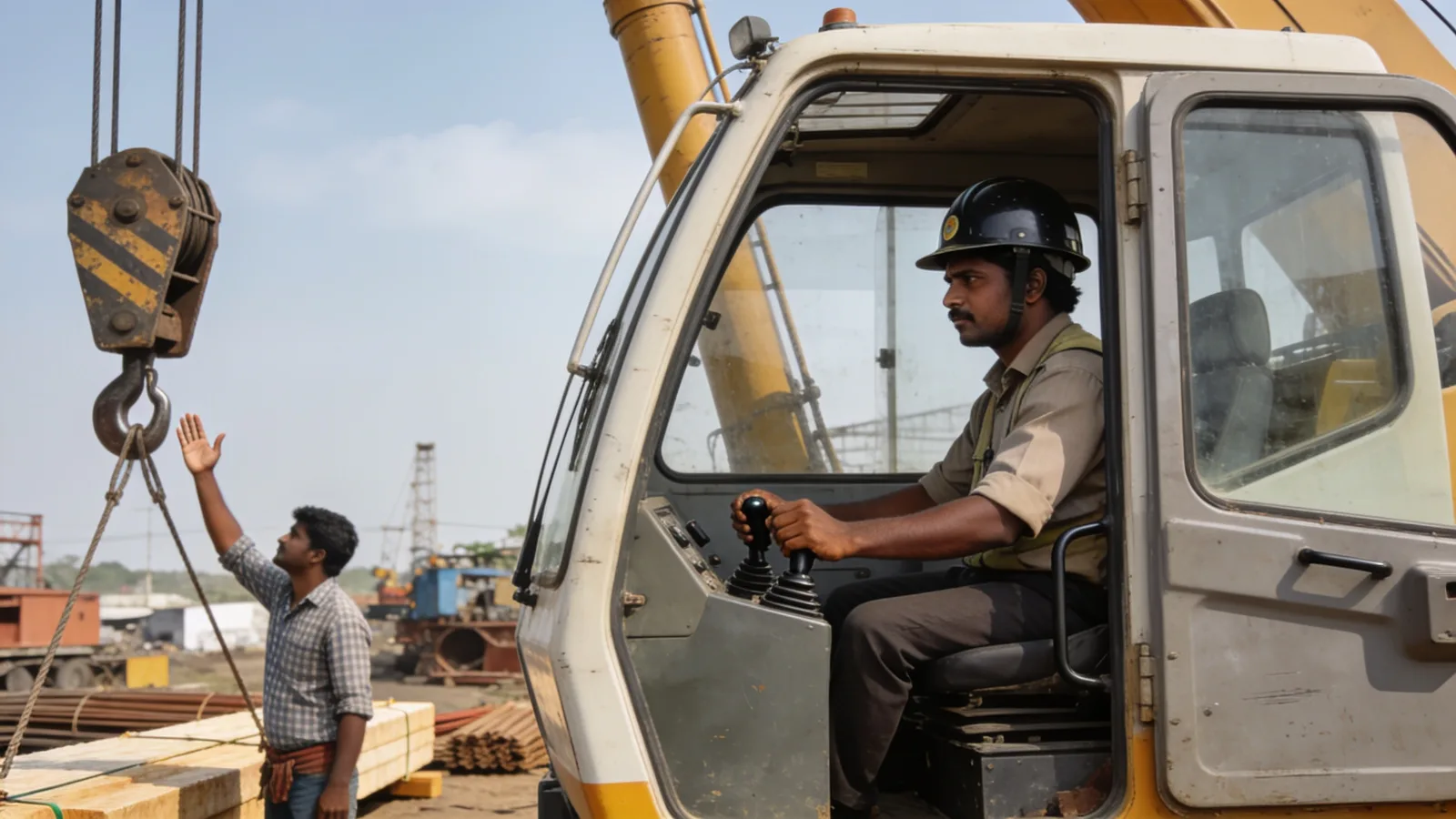
EOT, mobile, tower and yard lifting.
Lifting is a crew activity. We deploy the operator with the rigger and signaller discipline that a safe lift actually needs, and keep the competence record on file for every audit.
- ✓EOT and gantry crane operation in plants
- ✓Mobile and hydraulic crane operation
- ✓Tower crane operation for project sites
- ✓Rigging, slinging and signalling support
- ✓Pre-use inspection and lift-plan compliance
Lifting incidents are competence gaps in hindsight
The load chart is where an untested operator gets exposed.
An operator with a generic licence is put on a mobile crane and reads the load chart wrong at radius. Nobody tested him because the lift was scheduled for that morning.
A dropped load damages equipment, stops production and injures people. The investigation asks for the competence assessment, the lift plan and the inspection record — and finds none.
Load-chart and stability testing before deployment, rigger and signaller pairing, pre-use inspection discipline and competence records retained per operator.
Get a rate card →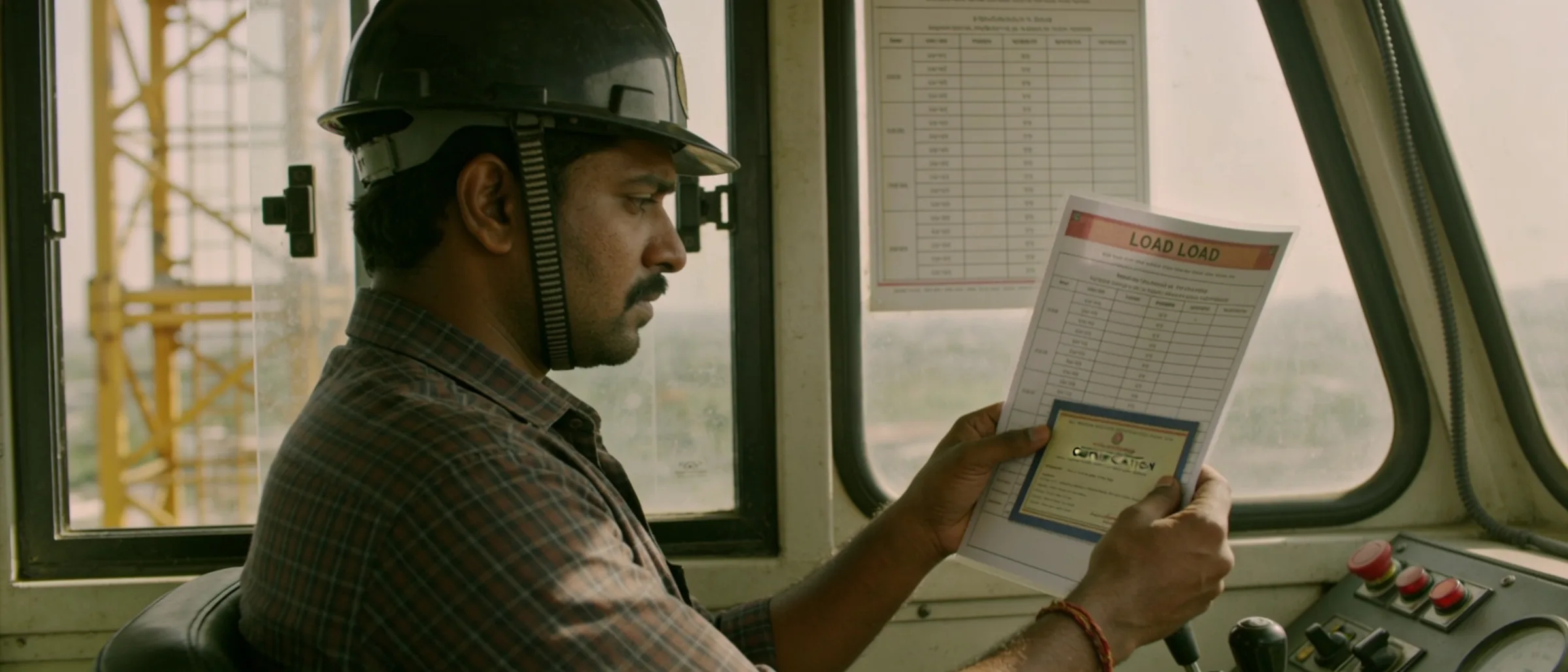
Screening, deployment and compliance
Move the slider for an indicative monthly bill at an illustrative 12% service fee (your actual fee is set out in the rate card). Firm rates follow the state minimum wage for the category and the shift pattern.
What clears before the worker reaches your gate.
Crane classes and what each operator must prove
A good EOT operator is not automatically safe on a Hydra, and neither is ready for a tower crane. We test for the crane you run:
| Crane | Where it works | What the operator must show |
|---|---|---|
| EOT and gantry cranes | Plant bays, stores, fabrication shops | Smooth long- and cross-travel, no side pulls, limit-switch checks, pendant or cabin control |
| Pick-and-carry (Hydra) | Plants, yards and project sites | Travel with a suspended load kept low, no turning on slopes, working safe-load indicator — the class most often involved in tip-overs |
| Mobile telescopic and crawler | Projects, erection and maintenance | Outrigger set-up on firm ground, reading the chart by boom length and radius, lift planning |
| Tower cranes | High-rise and infrastructure projects | Cabin work at height, wind limits, blind lifts with a signaller, climbing procedures |
Lifting is a crew job: see rigger manpower supply for riggers and signallers.
Lifting rules that apply in 2026
Crane safety rules come from several places. What a buyer should expect to see on file:
| Area | What applies |
|---|---|
| The crane | Lifting machines, ropes and tackles examined by a competent person at the intervals in your State's factory or construction rules — the long-standing norm is a thorough examination at least once a year — with the certificate on site |
| Construction sites | Building and construction safety rules, now under the OSH Code 2020, require lifting appliances to be tested and certified and operated only by competent, medically fit people |
| Code of practice | IS 13367 (Part 1), the BIS code for safe use of cranes, covers planning, signalling and operation |
| Mobile cranes on roads | Construction equipment vehicles under the Central Motor Vehicles Rules — registration and a licensed driver |
| Critical lifts | Written lift plan and permit under your site procedure, with a supervisor present |
The OSH Code 2020 has subsumed the Factories Act and the building-workers safety law; where State rules under the Code are pending, the earlier rules continue to the extent they are consistent.
How a crane operator is assessed before deployment
Every stage is recorded per operator and available to your safety team.
| Stage | What we check |
|---|---|
| Load chart | Reads capacity for the actual radius, boom length and configuration; deducts hook block and slings |
| Pre-use inspection | Wire ropes, hook and safety latch, limit switches, safe-load or load-moment indicator test, brakes |
| Rigging awareness | Sling angles, centre of gravity, tag lines, rejecting damaged tackle |
| Signals | Standard hand signals and radio discipline with the signaller |
| Emergencies | Overload alarm, power failure with a suspended load, rising wind |
| Fitness | Eyesight, hearing and, for tower cranes, fitness to work at height |
Crane operator wages in 2026
Crane operators are placed in the skilled or highly skilled grade; tower and large mobile crane operators earn well above the floor. Indicative figures:
| Basis | Amount | Date | Notes |
|---|---|---|---|
| Haryana — skilled / highly skilled | ₹18,500.81 / ₹19,425.85 a month | 1 Apr 2026 | Statutory floors |
| Central sphere — highly skilled, Area A | ₹1,094 a day (about ₹28,444 for 26 days) | 1 Apr 2026 | Central-sphere sites such as ports; VDA revises 1 Oct 2026 |
| Market pay — crane operator (Indeed India) | Average ₹24,931; range ₹14,939–₹41,606 | 26 reports, Jan 2026 | Small sample; Mumbai reported highest |
Sources: Haryana revision of 1 Apr 2026; Chief Labour Commissioner (Central) VDA order effective 1 Apr 2026; Indeed India. Check the current notification for your State and zone.
SLAs and what your site provides
Lifting safety is shared between the operator and the site. Numbers are agreed per site.
Service levels we aim to hold
- ✓Only assessed operators on your crane class
- ✓Pre-use checklist signed every shift
- ✓No critical lift without a plan and permit
- ✓Refresher training every six months
- ✓Standby cover for absence where the class allows
What your site provides
- ✓A crane with current examination certificate and working safe-load indicator
- ✓Lift-planning and permit system
- ✓Firm ground or mats for outriggers
- ✓Barricaded exclusion zones and wind monitoring
- ✓Trained riggers and signallers, unless we supply them
Crane operator staffing FAQs
Screening, cost basis, replacement and deployment speed.
Get a rate card →Are crane operators licence-verified and tested?+
Yes. Training certificates and experience are verified — plus a driving licence for any mobile crane that moves on public roads — and every operator clears a load-chart, radius and stability assessment and a rigging and signalling check before deployment.
Which crane types do you staff?+
EOT and gantry cranes for plants, mobile and hydraulic cranes, tower cranes for project sites, and yard-handling equipment, with riggers and signallers supplied alongside.
Do you provide riggers and signallers too?+
Yes. Lifting is deployed as a crew, because an operator without a trained signaller is the most common root cause in lifting incidents.
What safety records do you maintain?+
Competence assessments, licences, medical fitness, pre-use inspection checklists and refresher training records, all retained per operator and available for your safety audits.
How is crane operator staffing priced?+
On the wage for the crane class and shift pattern — operators sit in the skilled or highly skilled grade — plus employer PF and ESI, bonus, leave and gratuity provision, plus the service fee agreed in the contract. Tower and high-capacity mobile crane work prices above plant EOT operation.
Do crane operators need a licence in India?+
There is no single national crane operator licence. Mobile cranes are construction equipment vehicles under the Central Motor Vehicles Rules, so driving one on a public road needs registration and a driving licence. On site, competence is shown by training certificates, a practical assessment and your authorisation, and the crane itself must be examined and certified by a competent person.
What is a critical lift?+
Sites define it in their lifting procedure, typically a lift close to the crane's rated capacity at that radius, a tandem lift with two cranes, or a lift over people, live plant or public areas. Critical lifts need a written lift plan, a permit and a supervisor present — our operators will not start one without them.
Lifting work ahead?
Send the role, headcount and site city. We aim to send an itemised rate card and deployment date within one working day.