
Institutional catering staffing for kitchens that must serve 2,000 people in forty minutes
Industrial canteens and hostel messes are volume production kitchens with a hard service window. The shift breaks at 12:30 and the food has to be hot, safe and sufficient. We staff cooks, helpers, service and utility crews for factory canteens, campus messes, hospital kitchens and corporate cafeterias — either for you directly or for your contract caterer — with hygiene discipline and headcount matched to the actual meal count.
Roles, meal count and site city. We aim to send a costed proposal within one working day.
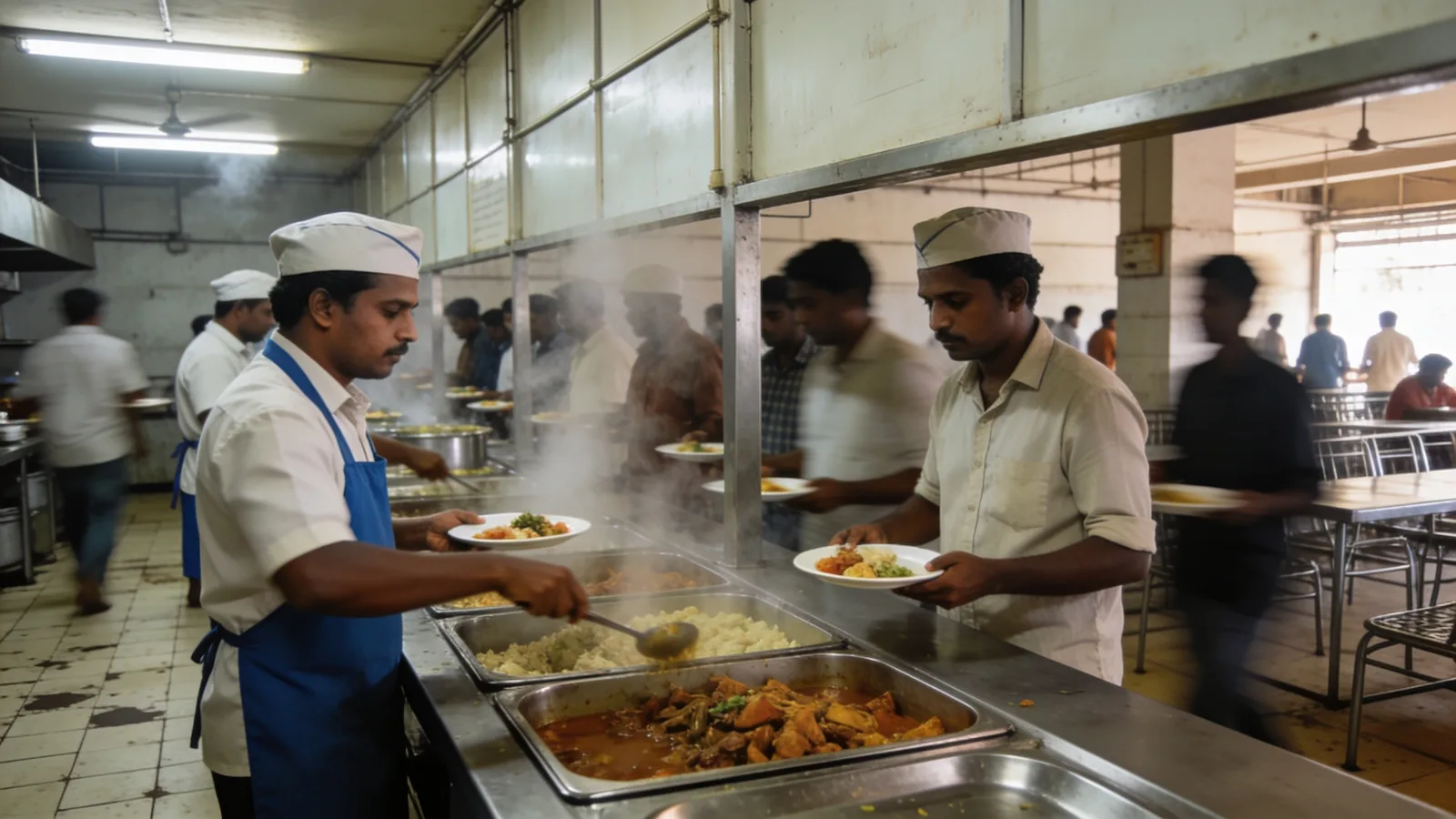
Roles across a catering contract
Staffing is built from the menu and the meal count backwards, because a bulk kitchen's labour requirement is a function of preparation complexity, not floor area.
- ✓Kitchen: head cook, cooks, tandoor and chapati makers, batch preparation crew
- ✓Preparation: vegetable cutting, grinding, marination, bulk cooking support
- ✓Service: serving counter staff, tea and snack rounds, plate and tray management
- ✓Utility: dishwashing, pot wash, kitchen deep cleaning, waste segregation
- ✓Hostel mess: mess in-charge, night meal crew, dining hall cleaning
- ✓Hospital catering: diet-wise tray assembly, ward service, diet kitchen support
- ✓Supervision: catering supervisor, stores and indent management, quality checks
A canteen complaint reaches the plant head the same afternoon
Food is the one facility service every employee experiences daily. Short service, cold food or a hygiene incident becomes an industrial relations issue, not a vendor issue.
So preparation runs late, service is rushed, hygiene steps get skipped and the utility crew is too small to keep pots and dining halls genuinely clean.
Plus wastage from poor batch planning, and in hospital catering the clinical risk of a wrong diet tray reaching a patient.
Headcount derived from meals, menu complexity and the service window, with hygiene-trained crew, a properly sized utility team and a supervisor who owns the service timing.
Get a quote →When the law requires a canteen — and who may run it
Since the Labour Codes took effect on 21 November 2025, workplace canteens fall under the Occupational Safety, Health and Working Conditions Code, 2020. Three provisions matter for anyone planning canteen staffing.
The threshold is now 100 workers
The employer must provide a canteen where 100 or more workers, including contract labour, are ordinarily employed. Under the old Factories Act the trigger was 250. The OSH (Central) Rules, 2026 apply this to factories, mines, docks, plantations, building sites and similar workplaces, and set standards such as a dining hall, kitchen, store and washing area.
Canteens can be contracted out
The Code’s definition of core activity lists canteen and catering among support services, so a factory, hospital or campus can run its canteen through a contractor. For a catering company, of course, cooking is its core business.
The principal employer still answers
Canteen crew supplied by a contractor count towards your headcount and remain your concern for welfare facilities, wages and safety. Contractor licensing now sits under the OSH Code (formerly CLRA): 50 or more contract workers in the preceding 12 months requires a licence, valid for five years.
General guidance, not legal advice. Your State’s rules may add detail for factories. See statutory compliance services or our contract labour compliance audit.
Canteen and catering roles: duties, screening and indicative pay
Pay bands are indicative monthly gross wages. The legal floor is the State minimum wage for the schedule that covers your canteen crew — confirm which one applies before you budget.
| Role | What they do | Screening before deployment | Indicative gross / month |
|---|---|---|---|
| Head cook | Owns batch cooking, recipes, taste and timing for each service | Bulk-cooking trial on your menu cycle, reference check | Set per brief |
| Cook (incl. tandoor, chapati, South Indian) | Batch cooking on kettles, tilting pans or ranges; regional specialities | Practical trial at volume, medical fitness record | ₹12,000–25,000 |
| Kitchen helper / prep crew | Vegetable cutting, grinding, dough, marination, cooking support | Knife and hygiene drill, medical fitness record | ₹10,000–19,000 |
| Service and counter staff | Serving lines, tea and snack rounds, plate and tray management | Portioning drill, grooming, hygiene induction | ₹10,000–18,000 |
| Dishwash and pot wash | Dish machine or manual wash, pot wash, dining hall cleaning, waste segregation | Chemical-safety and hygiene induction | ₹10,000–17,000 |
| Catering supervisor | Service timing, meal count, indent and stores, hygiene logs, crew roster | Interview with your admin or caterer; FoSTaC certificate preferred | Set per brief |
| Hospital diet assistant | Diet-wise tray assembly, labelling and ward delivery | Diet-code training, infection-control briefing | Set per brief |
Basis: Indeed India salary data for cook, kitchen helper and server roles (2026). Check your State’s floor on our minimum wage calculator.
How we calculate canteen headcount
We build the number from your operation, then show you the working. These are the inputs, and the one piece of arithmetic buyers most often miss.
Four canteen settings, four different staffing problems
Factory canteens
Three-shift plants need breakfast, lunch, dinner and a night meal on time for each shift break. Crews follow your shift timings, not standard kitchen hours, with a night-meal team and relief for weekly offs.
Campus and hostel messes
Meal counts follow the academic calendar: full strength in term, a sharp drop in vacations, spikes during exams, fests and admissions. Plan a core crew for vacations and add seasonal hands for term.
Hospital kitchens
Patient diets are clinical instructions. Diet-code training, tray labelling, verification before dispatch to wards and infection-control discipline come before speed.
Corporate cafeterias
Hybrid attendance makes footfall swing by weekday. Counters, café points and pantry service are staffed to the busiest days, with a flexible crew for the rest. See also pantry staff supply.
A three-shift factory canteen roster
An illustrative pattern for a plant running A, B and C shifts. Your shift-break times drive the roster, so we build it from your timings.
| Canteen shift | Main services | Crew focus |
|---|---|---|
| Morning (around A shift) | Breakfast, general-shift lunch, A-shift lunch | Largest crew: cooks, prep, counters and dishwash at full strength |
| Afternoon (around B shift) | Evening tea and snacks, B-shift dinner, next-day prep | Cooks and prep for the dinner service; utility crew for deep cleaning |
| Night (around C shift) | C-shift night meal and tea, breakfast prep | Small night crew with a supervisor on call; women only with written consent and transport |
Overtime beyond 8 hours a day or 48 a week is paid at twice the ordinary rate, so relief cover is usually cheaper than stretching shifts.
Hygiene rules that matter most at volume
Large batches are where food-safety risk concentrates. FSSAI’s hygiene checklist for food service sets these points, and our crew are inducted on them before the first shift.
Cooling and reheating
Cooked food for refrigeration should cool from 60 °C to 21 °C within two hours; reheated food should reach a core temperature of 75 °C.
Holding at the counter
Hot food held at 65 °C or above (70 °C for non-vegetarian) and cold food at 5 °C or below through the whole service window.
Food handlers’ health
Annual medical examination and inoculation against enteric diseases, and no one with illness or open wounds on food handling.
Supervision ratio
FoSTaC-trained Food Safety Supervisors — FSSAI guidance is one per 25 food handlers. A 60-person kitchen therefore needs at least three.
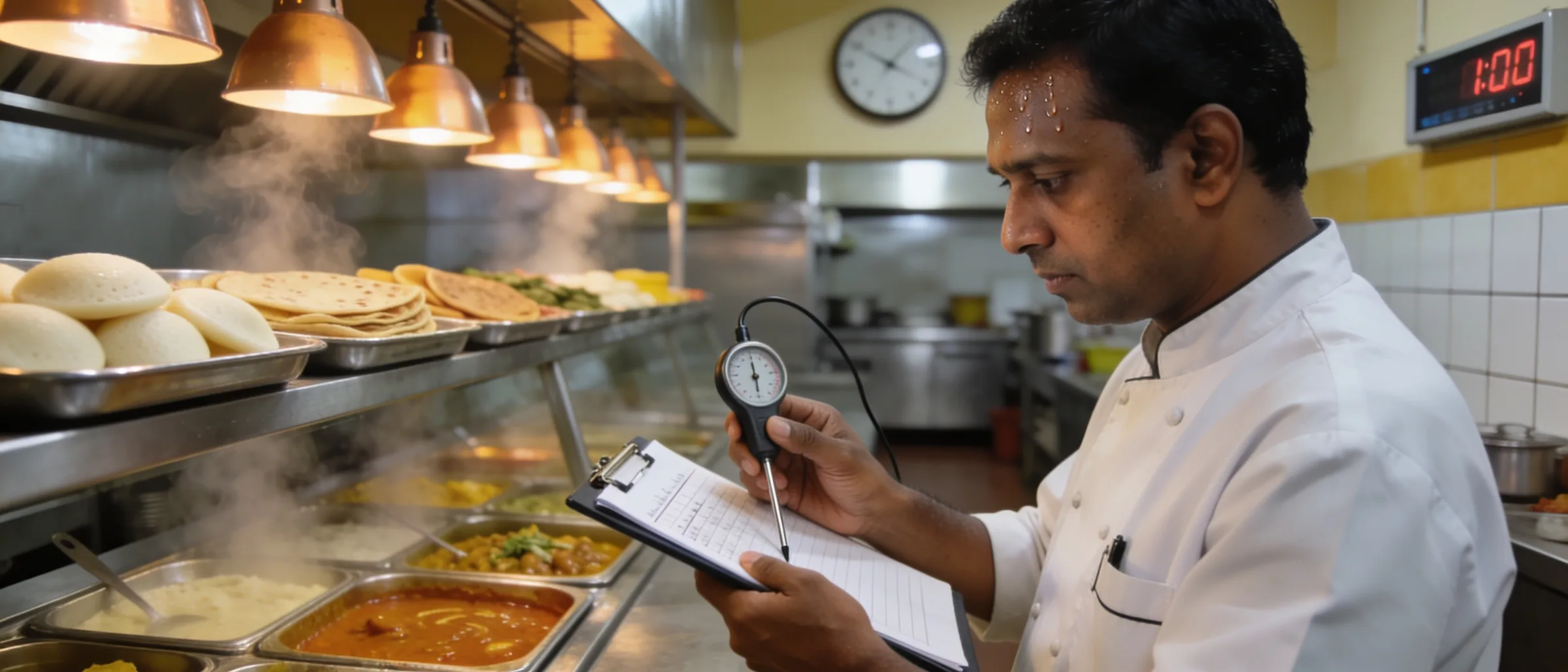
Sizing, hygiene, service
Billed on loaded wage plus service fee for manpower-only contracts. The slider assumes a blended crew gross of ₹16,000 a month and an illustrative 12% service fee (your actual fee is set out in the rate card); food cost is not included.
The headcount is calculated, and we will show you the calculation.
Three ways to use us
Crew for your own canteen
You run the canteen and buy the food; we supply and manage cooks, helpers, service and utility crew on our payroll, with a supervisor if you want one.
Crew for your contract caterer
Your caterer keeps the menu, procurement and per-meal pricing; we supply screened kitchen and service staff to them when they need to scale or fill gaps.
Relief and seasonal cover
Festival leave, plant ramp-ups, campus reopening and audit periods — short-term crews without adding permanent headcount. See temporary staffing.
Canteen service levels
| Measure | How it is measured | What we aim for |
|---|---|---|
| Service start | Counters open and food at temperature at the shift break | Every service, every shift — misses reported the same day |
| Queue time | Time from joining the line to being served, sampled at peak | Agreed per site and reviewed monthly |
| Hygiene findings | Safety, FSSAI or customer audit findings attributable to our crew | Each one closed with retraining and a record |
| Backfill time | Absence reported to replacement on shift | Within 48 hours for regular roles |
| Statutory proof | PF and ESI challans, wage register, attendance | Shared monthly with the invoice |
Institutional catering staffing FAQs
Canteen law, headcount, night shifts, hospital diets and hygiene records.
Get a quote →Do you supply manpower only, or catering with food?+
We supply manpower — cooks, helpers, service, utility crew and supervisors — either to you directly or to your contract caterer. Menu, food procurement and per-meal pricing stay with whoever runs the canteen.
Is a canteen mandatory for our factory?+
Under Section 24 of the OSH Code, a canteen is required where 100 or more workers, including contract labour, are ordinarily employed; the OSH (Central) Rules, 2026 apply this to factories, mines, docks, plantations and similar workplaces. The earlier Factories Act threshold was 250, so many plants that never needed a canteen now do.
Can we give canteen work to a contractor under the OSH Code?+
Yes. The Code lists canteen and catering among support services, not core activities, so the Section 57 prohibition on contract labour in core work does not usually apply to a factory or campus canteen. As principal employer you still need to check the contractor’s licence and its wage and statutory compliance.
How is the headcount calculated?+
From meal count per service, menu complexity, equipment, the service window, the utility load and a relief factor for weekly offs. We share the calculation rather than quoting a headcount, so you can challenge the assumptions.
Can you staff a 24-hour plant canteen?+
Yes — three-shift and continuous canteen operations including night meal crews, with rosters aligned to your shift-break timings. Women work night shifts only with written consent and transport, as the OSH rules require.
Do you handle hospital diet kitchens?+
Yes, including diet-wise tray assembly, ward service and diet kitchen support, with the labelling and verification discipline patient diets require. For wider hospital support roles see healthcare staffing.
What hygiene records do you maintain?+
Food-handler medical examination and inoculation records, hygiene training evidence, temperature and holding logs, cleaning schedules and waste disposal records — available for your safety, FSSAI and customer audits.
How do you handle vacations in a campus mess?+
We agree a core crew that stays through vacations for residual students and staff, and add seasonal hands for term time, so you are not paying full strength for half-empty halls.
Related roles and services
Send us the meal count and the menu cycle
We will show the headcount calculation, the hygiene training plan and the service-timing targets before you sign.