
Plumber manpower supply for premises where a leak is not a small problem.
A dripping joint in a plant utility line or a hospital ward is not a maintenance ticket — it is a shutdown risk with a clock on it. Plumber manpower supply matters most in buildings where water damage reaches equipment, stock or patients. Godstone Consultech screens for pipe sizing and jointing practice, leak diagnosis and pump handling, employs every worker on our own payroll, and keeps the PF, ESI, wage and contract-labour records — so the person on your floor is documented, replaceable and accountable from day one.
Premises type, system list and shift pattern are enough to price.
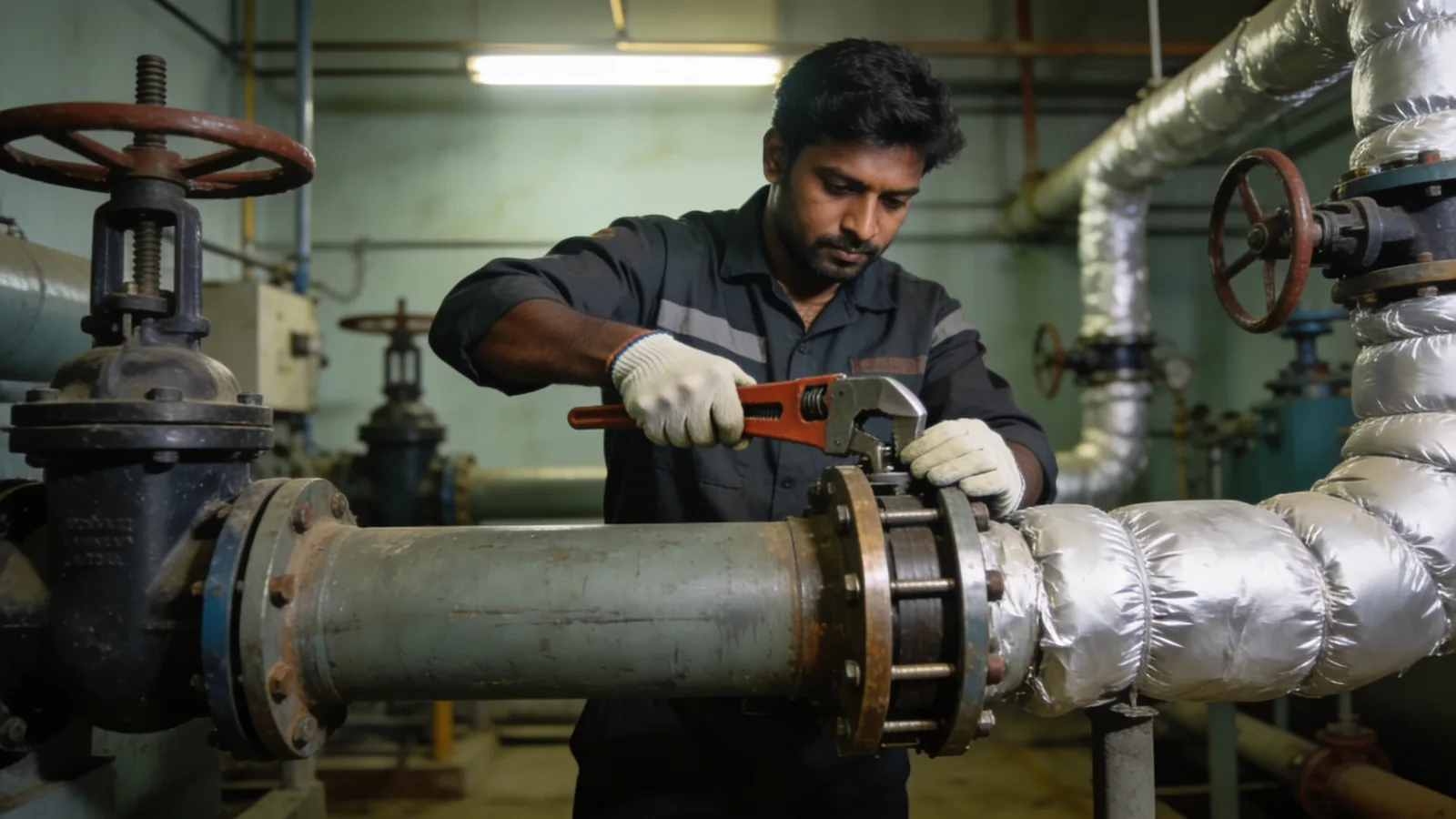
Water supply, drainage, utilities and pumps.
Plumbing spans facility upkeep, utility lines and project fit-out. We screen against the systems in your building — pressure lines, drainage, RO and STP, pumps — and deploy with the right permit discipline.
- ✓Water supply and drainage line maintenance
- ✓Pipe cutting, threading, jointing and pressure testing
- ✓Pump, motor and pressure-system upkeep
- ✓Sanitary fixture installation and repair
- ✓RO, STP and water-treatment support
Small leaks become large invoices
Water finds equipment, ceilings and stock before it finds your maintenance ticket queue.
An untested hand joints a pressure line badly. It holds for a fortnight and then lets go over a panel room on a Sunday.
Damaged equipment, a stopped shift, ceiling and flooring repair, and in hospitals or food premises an infection-control or hygiene finding on top.
Jointing and pressure-testing competence verified before deployment, preventive checks scheduled rather than reactive, and a supervisor who signs the utility log.
Get a rate card →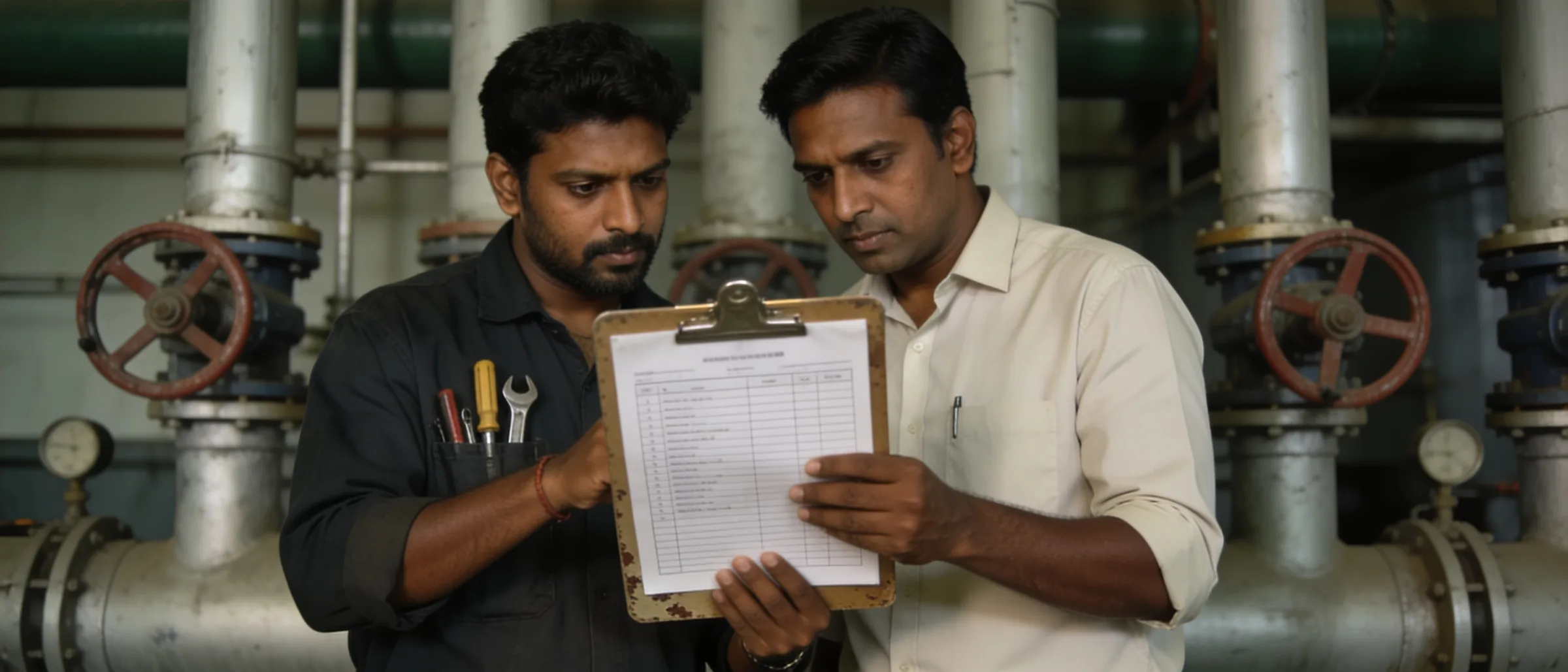
Screening, deployment and compliance
Move the slider for an indicative monthly bill for plumbers at a ₹20,000 gross wage, statutory costs and an illustrative 12% service fee (your actual fee is set out in the rate card). Firm rates follow your State's minimum wage for the skill category, the site type and the shift pattern.
What clears before the worker reaches your gate.
What a facility and utility plumber does
An in-house or contract plumber keeps water moving where it should and nowhere else: domestic and process water lines, drainage and venting, sanitary fixtures, overhead and underground tanks, booster and transfer pumps, RO and softener plants, and the pipework around STPs and ETPs. The skills are jointing the pipe materials on your site — threaded GI, solvent-cement CPVC and uPVC, heat-fused PPR, butt-fused or electrofused HDPE — pressure testing, and finding the leak before it finds your equipment, stock or patients.
Design and layout follow the National Building Code of India 2016, Part 9 (Plumbing Services), and many projects also specify the Uniform Plumbing Code – India. Plumbers are not pipe fitters: process piping in steel, and welded stainless lines, belong to fitters and welders.
Fitters
Pipe fitters for process and utility piping in steel, flanged and welded.
Fitter manpower supply →Electricians
Permit-holding electricians for pump motors, panels and controls.
Electrician manpower supply →Facility management
Plumbing inside a wider building-services and soft-services scope.
Facility management services →Plumbing bands we supply
Tell us the site type and the pipe materials. A hospital, a food plant and a new tower each need a different mix.
| Band | Typical background | Works independently on | Usual minimum-wage category |
|---|---|---|---|
| Plumbing helper | Trained on site | Carrying, digging, cleaning, holding and cutting under a plumber | Semi-skilled (unskilled in some schedules) |
| Plumber | ITI Plumber (one-year DGT trade) or 3+ years | Jointing all common materials, fixtures, leak repair, pressure testing | Skilled |
| Utility / pump plumber | ITI Plumber or Fitter plus pump experience | Pump alignment support, seals and valves, tanks, RO and softener upkeep | Skilled |
| HDPE fusion technician | Plumber with fusion-machine experience | Butt-fusion and electrofusion joints to the pipe maker's parameters | Skilled or highly skilled |
| Plumbing supervisor | Diploma or senior plumber, 6+ years | Layouts, material take-offs, testing records, crew supervision on fit-outs | Highly skilled |
Skill categories come from each State's minimum-wage notification under the Code on Wages, 2019; the mapping is typical, not universal.
The plumber trade test, station by station
Built around the materials and equipment on your site.
Drawings and falls
Read a plumbing layout or isometric, and explain drainage falls, trap seals and venting on a sample run.
GI threading
Cut, ream and thread GI pipe with a die, seal the joint correctly and make up fittings without cross-threading.
Plastic pipe jointing
Make a solvent-cement CPVC joint with the right cure time and a PPR heat-fusion joint at the correct temperature and depth.
Pressure test and leak finding
Pressure-test a section, hold and record the reading, then find and fix a planted leak.
Pumps and valves
Prime a centrifugal pump, check rotation, spot a failed foot valve or non-return valve, and identify a leaking seal.
Safety
Confined-space rules for sumps and tanks, work at height, and why nobody enters a sewer or septic tank without the required safety system.
Confined spaces, hygiene and the compliance behind each plumber
Confined spaces and sewers
- ✓Hazardous cleaning of sewers and septic tanks is prohibited under the Prohibition of Employment as Manual Scavengers and their Rehabilitation Act, 2013 — we do not deploy plumbers for it
- ✓Entry into sumps, tanks and STP chambers only under a permit, with gas testing, ventilation, a standby person and rescue gear
- ✓Harness and anchor points for overhead line work
- ✓Tools and PPE issued and recorded
Hygiene on sensitive sites
- ✓Hospitals: infection-control briefing, clean and dirty tool separation, work sequencing around wards
- ✓Food and pharma plants: hygiene and gowning rules, and line clearance after work
- ✓Tank cleaning and disinfection logged on the schedule you set
Compliance we carry as employer
- ✓EPF and ESI enrolment before day one; ESI covers gross wages up to ₹21,000 a month
- ✓Wages at or above the State minimum for the category, paid by the 7th of the following month
- ✓Overtime at twice the ordinary wage rate for call-outs beyond normal hours (OSH Code, section 27)
- ✓Contract-labour registers under the OSH Code (which replaced the CLRA Act, 1970), shared monthly
Cover patterns and the wage basis
Offices and plants usually need a general-shift plumber plus on-call cover. Hospitals, hotels and continuous plants need plumbing cover on every shift. Fit-outs need a crew for a fixed window with a supervisor who owns the testing records.
| Basis | Figure | Source and notes |
|---|---|---|
| Legal floor (example) | Haryana: semi-skilled ₹16,781 a month, skilled ₹18,501 a month | Haryana notification effective 1 April 2026. Your State, zone and scheduled employment decide the real floor. |
| Karnataka | Skill-and-zone structure with steep increases, notified 22 May 2026 | Reported to be under challenge in the Karnataka High Court; check the current position before budgeting a site in Karnataka. |
| Market reference | Plumber average ₹18,160 a month; typical range ₹9,798–₹33,658 | Indeed India, 90 reports over 36 months. Mumbai (about ₹24,800) lists as the highest-paying city. |
| Our estimator | ₹20,000 gross a month for a skilled plumber | Planning figure. Helpers price lower; HDPE fusion technicians and supervisors higher. |
Indicative only, not an offer or a legal rate. A national floor wage under the Code on Wages is still being fixed; until then State rates apply. Check your State's rate with the minimum wage calculator.
What to hold plumbers, and us, to
Complaint response and closure
Minutes to attend and hours to close each complaint, by priority, from your helpdesk log.
Repeat complaints
The same leak or blockage reported again within 30 days — the sign of a patch, not a repair.
PM completion
Pump checks, valve exercising, tank cleaning and pressure tests done on schedule.
Water-loss events
Leaks and overflows that caused damage or measurable water loss, with root cause recorded.
Our service targets
We aim to deploy tested plumbers in 5–9 working days, provide emergency cover sooner where the local pool allows, and replace an exit within 15 days. Targets are written into the SLA schedule.
Plumber staffing FAQs
Scope, testing, confined spaces, fit-outs, deployment and cost basis.
Get a rate card →What work do your plumbers handle?+
Water supply and drainage maintenance, pipe cutting, threading and jointing across GI, CPVC, uPVC, PPR and HDPE, pressure testing, pumps and valves, sanitary fixtures, tanks, and RO and STP pipework support.
Are plumbers trade-tested?+
Yes. Drawing and drainage basics, GI threading, plastic pipe jointing, pressure testing and leak finding, pump and valve checks, and confined-space safety are tested, with ITI or trade certificates verified.
What qualification should a plumber have?+
An ITI Plumber certificate or several years of documented experience. For HDPE fusion, look for experience on fusion machines to the pipe maker's parameters. The test decides the band.
Will your plumbers clean sewers or septic tanks?+
No. Hazardous cleaning of sewers and septic tanks is prohibited under the 2013 Manual Scavengers Act. Our plumbers enter sumps, tanks and chambers only for plumbing work, under a permit with gas testing and rescue arrangements.
Can you supply plumbers for a project fit-out?+
Yes. Crews for fixed windows come with a supervisor who owns testing records, and are released at handover with settlement completed by us. See project manpower supply.
Is preventive maintenance included?+
Yes. A preventive schedule for utility lines, pumps, valves and tanks is part of the scope, which is what reduces emergency call-outs.
How quickly can a plumber be deployed?+
We aim for 5–9 working days, and sooner for emergency cover where the local pool is deep.
How is plumber manpower priced?+
The gross wage for the band (at or above the State minimum), plus employer PF, EDLI and admin charges, ESI where gross is up to ₹21,000, bonus and gratuity provisions, overtime for call-outs, and the service fee. See how staffing fees are calculated.
Utility upkeep falling behind?
Send the role, headcount and site city. We aim to send an itemised rate card and deployment date within one working day.