
Textile and apparel staffing where the constraint is retention, not recruitment
Garment and mill floors do not struggle to hire. They struggle to keep — high monthly attrition is common, migrant workers leave around harvest and festivals, and every departure resets line balancing. We staff the floor and, more importantly, put in place the hostel coordination, wage clarity and grievance route that make workers stay past month three.
Roles, headcount and site city. We aim to send a costed proposal within one working day.
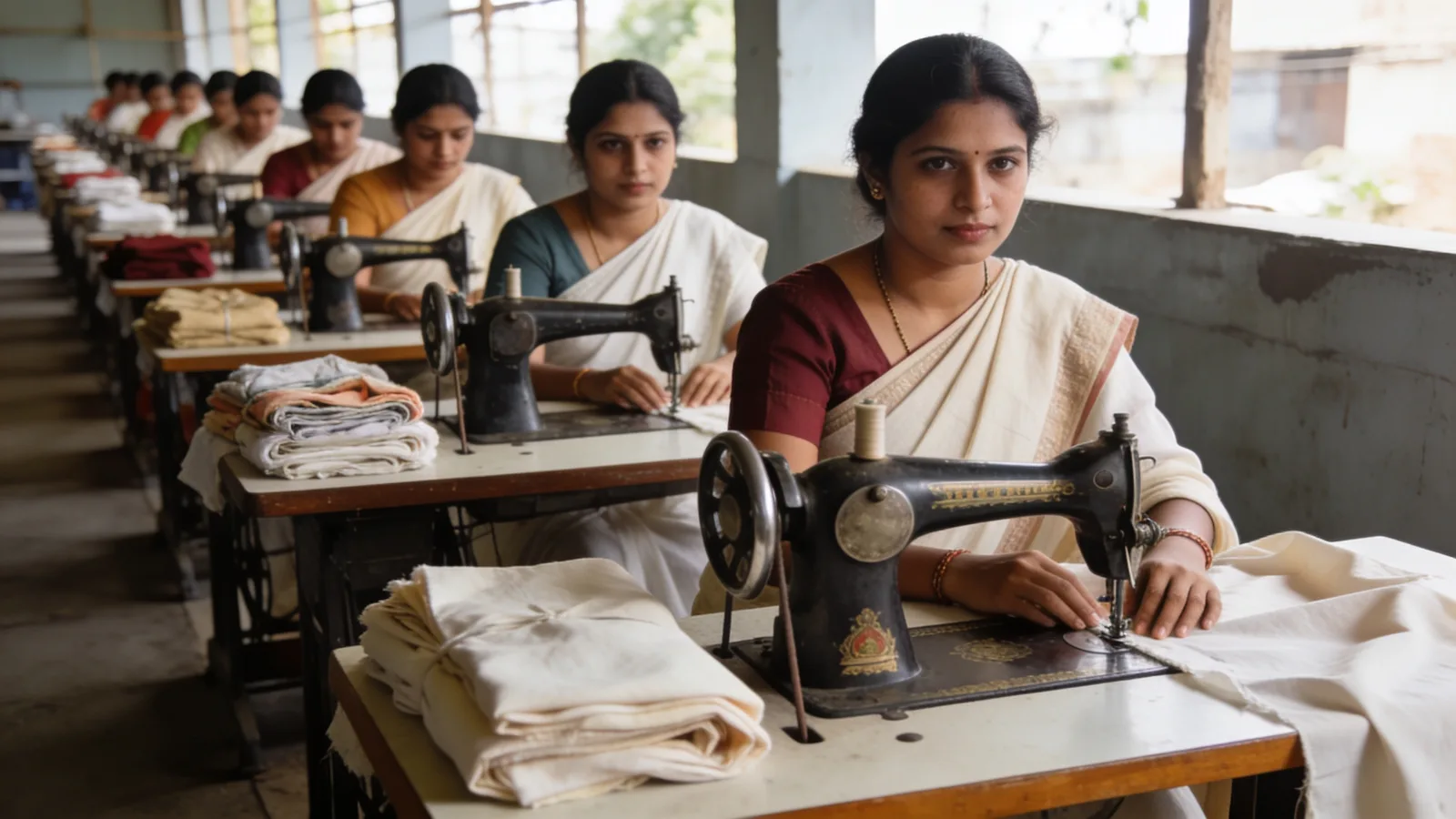
Roles from fibre to finished carton
Mill and garment operations need different skills, but they share the same labour reality: young migrant workers, hostel living and a wage that must arrive on the exact promised date.
- ✓Spinning and weaving: ring frame, doffing, autoconer, loom operators, fitters
- ✓Processing: dyeing, printing, stenter and finishing line operators
- ✓Garment: single needle and overlock tailors, feeders, helpers, line supervisors
- ✓Quality: inline and endline checkers, measurement and AQL audit support
- ✓Finishing: thread cutting, ironing, folding, tagging, packing and cartoning
- ✓Support: maintenance fitters, electricians, boiler and utility operators
- ✓Welfare: hostel wardens, canteen staff, women's safety and grievance handling
Attrition, not headcount, is what breaks a garment line
A line balanced for 32 operators running with 27 loses more than 15% of output, because the bottleneck operations are the ones that go unmanned.
No hostel supervision, no wage clarity, no grievance route. Homesickness, a wage query nobody answered, or a single unsafe incident empties a hostel wing in a week.
Plus repeated recruitment cost, repeated training on the same operation, and delivery slippage on orders that were priced on full line efficiency.
Hostel wardens, wage transparency, an answered grievance line, women's safety protocols and inviting good workers back after each break — the things that actually move retention past month three.
Get a quote →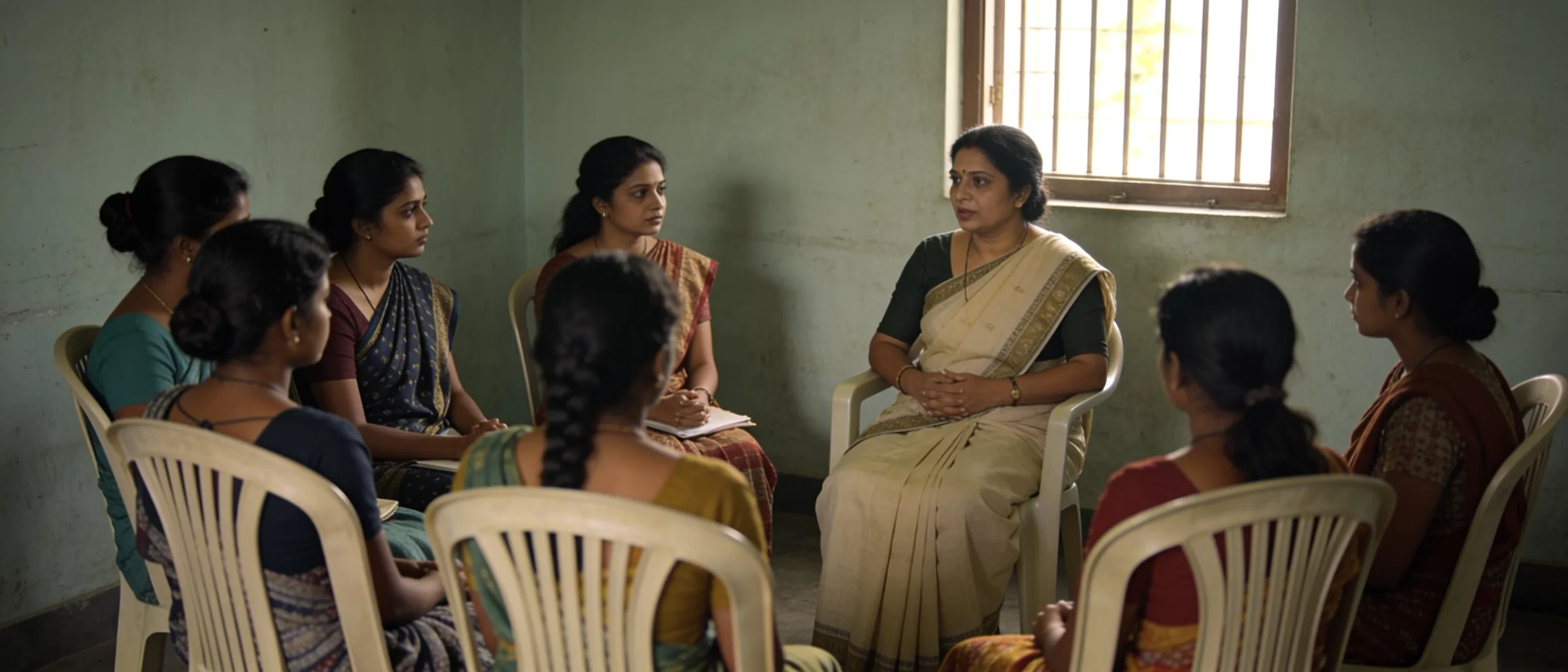
Intake, retention, compliance
Loaded wage plus service fee. Hostel, canteen and transport are costed as separate line items so you can see what welfare actually costs.
Garment intake is a migration exercise, so it is run as one.
Where India's mills and garment factories are
India's textile chain is spread across specialised towns. Each has its own product, wage practice and migration pattern.
Tiruppur
Knitwear and export garments, with a large migrant workforce and many units running piece-rate operations.
Coimbatore, Erode, Dindigul, Karur
Spinning mills, weaving and home textiles; spinning mills rely heavily on young women workers in hostels.
Bengaluru
Export garment factories with a predominantly women workforce commuting from the city's outskirts.
Surat, Ahmedabad
Synthetic weaving and processing in Surat; denim and cotton processing around Ahmedabad.
Bhiwandi, Malegaon, Ichalkaranji
Powerloom weaving centres with long shifts and a largely migrant male workforce.
Ludhiana, Panipat, NCR
Knitwear and woollens in Ludhiana, home furnishings and recycled yarn in Panipat, export apparel in Noida, Gurugram and Faridabad.
New capacity is also coming up in the seven PM MITRA textile parks at Virudhunagar (Tamil Nadu), Warangal (Telangana), Navsari (Gujarat), Kalaburagi (Karnataka), Dhar (Madhya Pradesh), Lucknow (Uttar Pradesh) and Amravati (Maharashtra). Greenfield parks need whole workforces trained from scratch, which is where batch training and hostel planning matter most.
What apparel buyers check, and what we do about it
International buyers audit labour practice as hard as quality, under codes such as SMETA, amfori BSCI, WRAP and SA8000. Most findings in contract-staffed units trace back to how workers were recruited and housed. These are the indicators auditors look for.
| Risk indicator | What an auditor checks | Our practice |
|---|---|---|
| Recruitment fees | Did the worker pay anyone to get the job? | No fee is charged to candidates at any stage; sub-agents are not used for sourcing |
| Retained identity documents | Are original IDs or certificates held by the employer or hostel? | Originals are verified and returned the same day; only copies are kept |
| Withheld or deferred wages | Are wages paid in full, on time, to the worker's own bank account? | Monthly wages by bank transfer on a fixed date; no lump-sum-at-end or "savings" schemes |
| Underage workers | Age proof and a visual check at the gate | Age verified from documents before offer; no one under 18 deployed on production floors |
| Excessive overtime | Hours against the legal weekly limit and OT paid at double rate | OT tracked per worker and flagged before it crosses State limits |
| Freedom of movement | Can hostel residents leave freely outside working hours? | Hostel rules cover safety and curfew only; no restriction on leaving employment |
| Grievance access | Can workers raise complaints without fear? | Helpline in the workers' language, recorded resolutions, and access to the Internal Committee under the POSH Act |
Legal obligations that come with a migrant intake
Most textile intakes cross State lines, and many workers live in hostels. The Labour Codes and some State laws add obligations beyond wages and PF.
Inter-State migrant workers
The OSH Code folds in the old Inter-State Migrant Workmen Act. Establishments employing inter-State migrant workers must record them and pay an annual journey allowance for a trip home, and the workers keep access to PDS and social-security benefits across States.
Women's hostels in Tamil Nadu
Hostels for working women in Tamil Nadu must be registered under the Tamil Nadu Hostels and Homes for Women and Children (Regulation) Act 2014, with norms on safety, space and wardens. We check registration before placing anyone in a hostel.
Piece rates and minimum wages
Piece-rate pay is allowed under the Code on Wages, but earnings for normal hours must not fall below the State minimum wage for the category. We reconcile piece earnings to the minimum every month.
Equal pay
The Code on Wages prohibits gender discrimination in wages and recruitment for the same or similar work, which matters in units where women tailors and men operators do comparable jobs.
How we grade tailors and mill operators before deployment
A "tailor" can mean anything from a helper who can run a straight seam to an operator who can set a collar at target speed. We grade by operation and speed so your line balancer knows what is arriving.
-
1Garment
Operation test
Candidates run the operations they claim (straight seam, overlock, collar, sleeve set, bottom hem) on sample cut pieces.
-
2Garment
Speed against SMV
Output is timed against the standard minute value for each operation and graded A, B or C.
-
3Garment
Quality check
Seam quality, stitch density and measurement accuracy checked by a quality checker before a grade is confirmed.
-
4Spinning and weaving
Machine tending
Doffing, piecing, creeling and knotting tested on the machine type used in your mill, with a safety walk of moving parts.
-
5All roles
Induction
Wage and payslip explanation, hostel rules, grievance route, fire safety and evacuation, before the first shift.
Questions operations and HR heads ask us
Answers we give in the first call, written down so you can compare vendors on the same terms.
Get a quote →Can you supply trained tailors or only helpers?+
Both. Single needle and overlock tailors are graded by operation and speed before deployment; helpers and feeders are supplied alongside, and tailoring training batches can be arranged where local supply is short.
How do you handle migrant worker accommodation?+
As part of the deployment: hostel identification and allocation, warden supervision, canteen coordination and travel. It is costed as a separate line item rather than hidden in the markup.
What do you do about the sector's attrition rate?+
Treat it as the primary deliverable. Hostel supervision, wage transparency, a grievance route that gets answered and inviting good workers back after each break. We report attrition per line every month with reason codes, so you can see whether it is working.
Are you ready for buyer social audits?+
Yes. Apparel buyers audit age verification, wage registers, overtime limits, freedom of movement and grievance mechanisms. Those records are maintained monthly and made available for your audits.
Do you staff spinning mills as well as garment units?+
Yes — ring frame and doffing operators, autoconer, loom operators, processing and finishing lines, plus maintenance fitters and utility operators.
Do you charge workers a recruitment or placement fee?+
No. Candidates never pay us a fee at any stage, and we do not source through sub-agents who might. Recruitment fees paid by workers are one of the main forced-labour indicators in buyer social audits.
Can we pay tailors on piece rates through a contractor?+
Yes, if your process is set up for it, but piece-rate earnings for normal working hours must not fall below the State minimum wage for the skill category under the Code on Wages. We reconcile piece earnings to the minimum each month and top up where needed before payroll closes.
What do we owe inter-State migrant workers under the Labour Codes?+
Under the OSH Code, establishments employing inter-State migrant workers must record them and pay an annual journey allowance for a trip to their home State, alongside normal wages, PF, ESI and welfare facilities. When the workers are on our payroll we handle these, and the records sit in your contractor file.
Fix retention, and the line balances itself
Tell us your line count and current attrition. We will propose an intake plan and the welfare machinery to hold it.