
Unskilled labour supply that arrives in the numbers you agreed.
A shift that needs thirty helpers gets nineteen, and the supervisor spends the day rearranging work instead of running it. Unskilled labour supply is judged on one thing: whether the count that was promised turns up on the morning it was promised. Godstone Consultech screens for physical fitness, safety induction and honest headcount commitments, employs every worker on our own payroll, and keeps PF, ESI and contract-labour records with us — so the person on your floor is documented, replaceable and accountable from day one.
Headcount, shift pattern and duration are enough to plan waves.
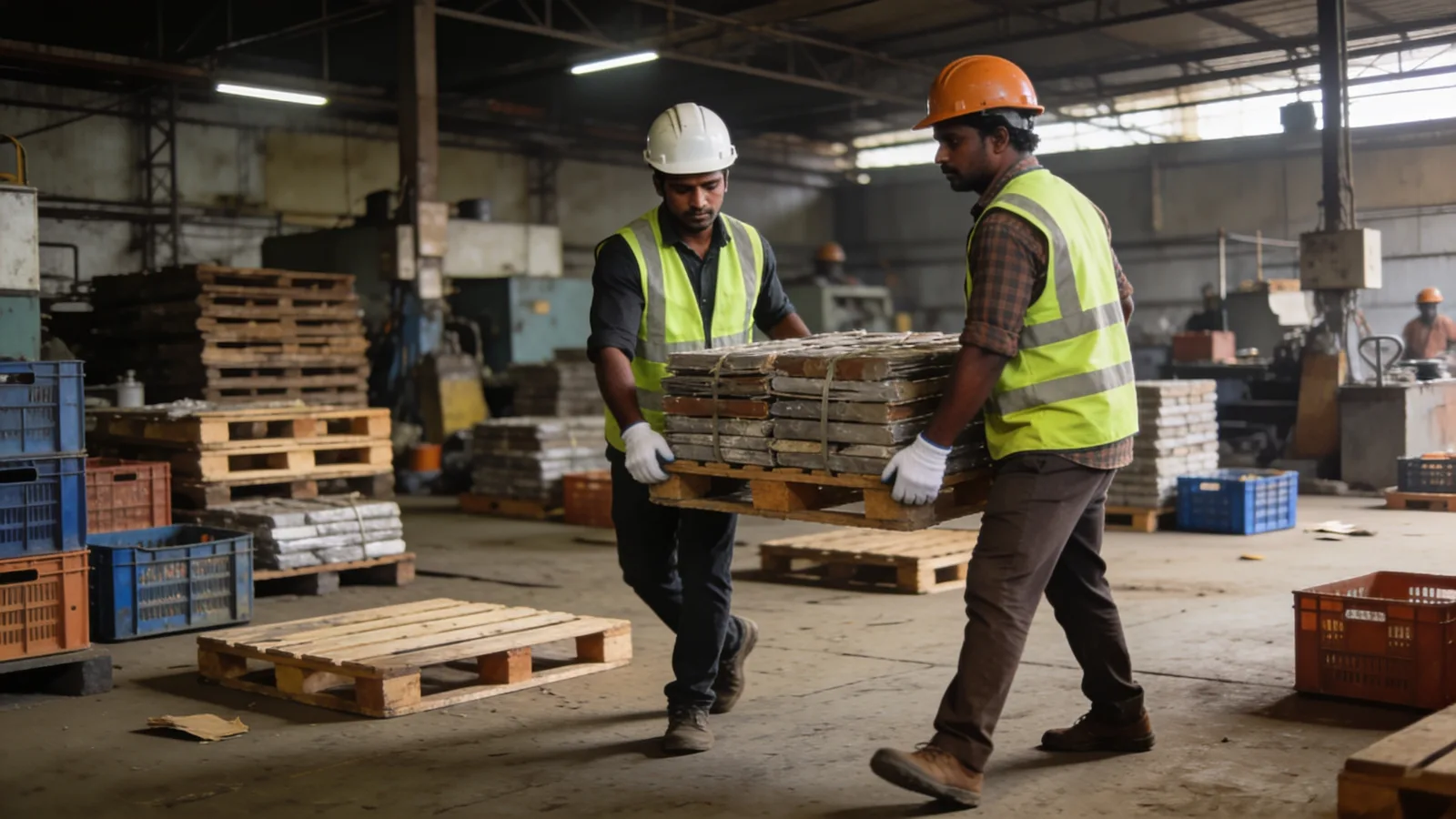
Helpers, loaders and general-duty support.
General-duty labour is where vendors over-promise most. We size the crew against the work, source locally so attendance holds, and put a supervisor with every deployment so the count is verifiable.
- ✓Shop-floor helpers and machine assistants
- ✓Loading, unloading and material movement
- ✓Packing, labelling and shrink-wrap support
- ✓Housekeeping and scrap-yard support
- ✓Shutdown and campaign-based crews
Why headcount promises collapse on the morning shift
Distance and wage dates decide attendance far more than the rate does.
A vendor commits forty helpers sourced from a district four hours away, with no hostel and no transport. Week one looks fine; week six does not.
Short crews mean overtime, delayed dispatches and supervisors doing manual work. Repeated shortfalls quietly reset your production plan every week.
Clusters within commuting distance, hostel or transport arranged with you where the belt needs them, wages by the 7th, and daily attendance reporting against the committed count.
Get a rate card →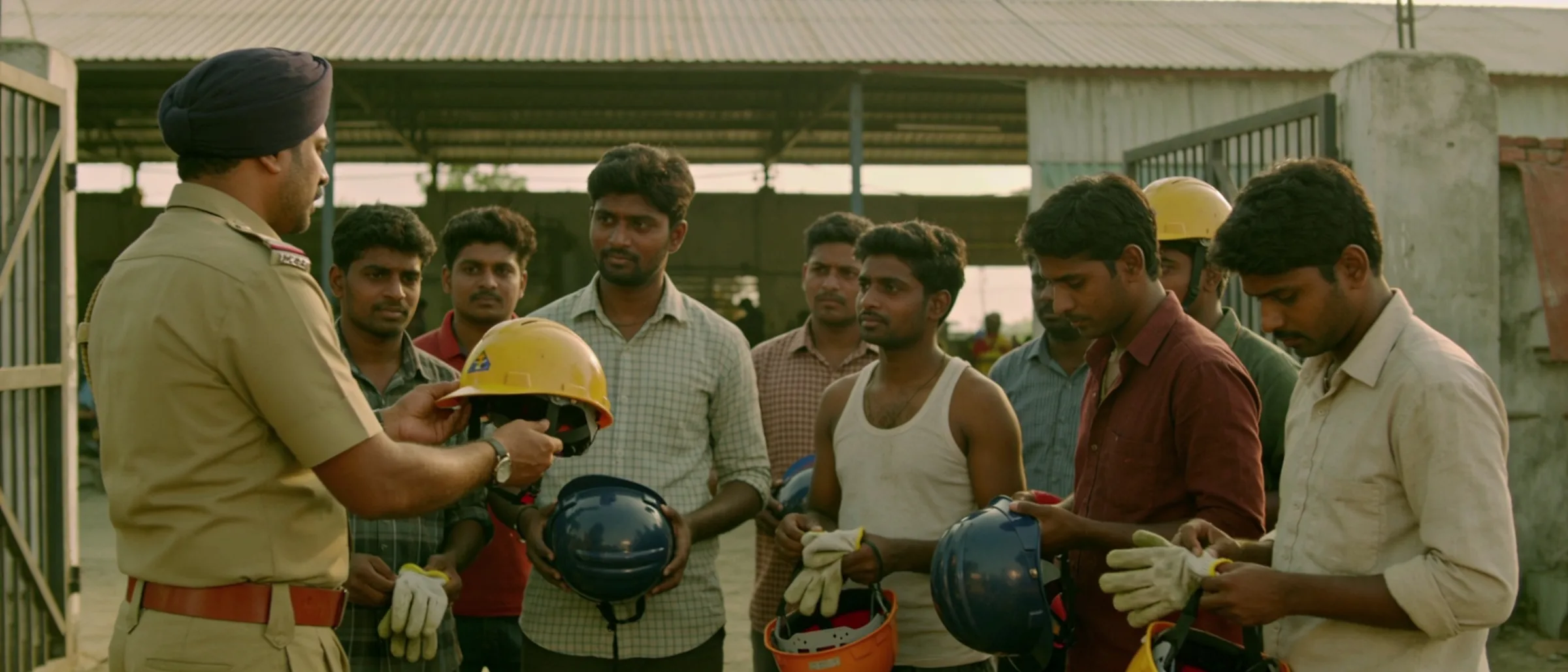
Screening, deployment and compliance
Move the slider for an indicative monthly bill at an illustrative 12% service markup (an assumption, not our rate card). Firm rates follow the state minimum wage for the category and the shift pattern.
What clears before the worker reaches your gate.
Unskilled roles we supply, and what each one needs
“Unskilled” describes the wage grade, not the risk. Each work type gets its own fitness check, induction and PPE.
Factory and line helpers
Material feeding, part movement, packing support and line cleaning. Needs shop-floor safety induction, safety shoes and machine-guard awareness.
Loading and unloading
Trucks, containers and godowns. Needs a manual-handling briefing, gloves and shoes, and loads kept within the State's weight limits.
Construction and project sites
Material shifting, mixing and site clearance. Needs helmets, harness training where there is height, and building-worker welfare registration.
Shutdowns and campaigns
Fixed-window crews for plant shutdowns, stock counts and relocations. Needs your permit-to-work rules and a clean release at the end.
For warehouse pickers, packers and loaders measured on throughput, see warehouse manpower supply; for cleaning crews, sweeper and cleaner supply.
How a large helper requirement is delivered
Promising fifty helpers for Monday is easy. Delivering fifty verified, inducted people who are still there in week six takes a plan like this:
- Day 0
Requirement and site visit
Count per shift, work type, hours, duration, and whether transport or accommodation is needed.
- Days 1–3
Sourcing from nearby clusters
Workers from within commuting distance first; outside-State sourcing only with accommodation agreed.
- Days 2–5
Verification and fitness
Aadhaar, age proof (18+), bank account, and a fitness check matched to the work type.
- Before shift one
Induction and PPE
Site safety rules, manual handling, emergency exits, PPE issue — recorded per worker.
- Every morning
Count against commitment
Attendance against the committed count by crew, with shortfalls topped up in the next wave.
Rules that apply to unskilled and migrant workers
Helper crews are where labour-law exposure concentrates — large numbers, high turnover and cash-wage habits. What applies in 2026:
| Rule | What it requires |
|---|---|
| Minimum wage (Code on Wages 2019) | At least the State's unskilled rate for the zone; equal pay for women and men doing the same work |
| Wage payment | Monthly wages by the 7th of the next month (Code on Wages s.17), paid by bank transfer with the principal employer informed (OSH Code s.55) |
| Overtime | Only with consent, at twice the ordinary wage rate |
| Age | No one under 18 on hazardous work; we deploy only adults |
| Inter-State migrant workers | Where 10 or more are employed: the same benefits as other workers, including PF and ESI (OSH Code s.60), plus a yearly lump-sum fare for a to-and-fro journey home (s.61) |
| Contract labour | Contractor licence where 50 or more contract workers are engaged; welfare facilities from the principal employer (OSH Code s.45–53) |
| Construction work | Building and construction workers registered with the State welfare board, now under the Code on Social Security |
The four Labour Codes have been in force since 21 November 2025; where a State's rules are still pending, earlier rules continue to the extent they are consistent with the Codes.
Unskilled worker minimum wages in 2026
The unskilled rate for your State and zone is the floor for every helper. Indicative figures:
| State / category | Minimum wage | In force from | Notes |
|---|---|---|---|
| Haryana — unskilled | ₹15,220.71 a month | 1 Apr 2026 | Consolidated monthly rate |
| Tamil Nadu — shops & commercial establishments, general worker (loading and unloading) | ₹14,044 a month (Zone A) | 1 Apr 2026 | Factories and other employments have their own schedules |
| Central sphere — unskilled (construction, loading and unloading, sweeping) | ₹827 a day in Area A (about ₹21,502 for 26 days) | 1 Apr 2026 | Central-sphere sites only; VDA revises 1 Oct 2026 |
| Market pay — helper (Indeed India) | Average ₹13,200; range ₹8,249–₹21,123 | 102 reports, Jul 2026 | Survey pay below the notified rate is not a lawful contract wage |
Sources: Haryana revision of 1 Apr 2026; Tamil Nadu notification of 18 Feb 2026; Chief Labour Commissioner (Central) VDA order effective 1 Apr 2026; Indeed India salary data. Check the current rate for your State with our minimum wage calculator.
SLAs and what your site provides
Numbers are agreed per requirement and written into the contract.
Service levels we propose
- ✓A committed count per wave, reported every morning
- ✓Shortfalls topped up in the next wave, visible the same day
- ✓A supervisor with every crew
- ✓Wages by bank transfer by the 7th, with proof
- ✓Clean release and full settlement at the end of a fixed window
What your site provides
- ✓Work instructions and a named site contact
- ✓Drinking water, toilets, a rest shelter and first aid
- ✓Site-specific PPE, if not in our scope
- ✓Permit-to-work for shutdown and hazardous jobs
- ✓Accommodation or transport, where agreed for outstation crews
Unskilled labour supply FAQs
Screening, cost basis, replacement and deployment speed.
Get a rate card →How quickly can you supply unskilled workers?+
We aim to put the first wave of helpers on the floor in three to seven working days, faster where the local pool is deep. Large requirements are staged in waves rather than promised in one lot, so every wave arrives verified and inducted.
How is unskilled labour priced?+
On the State minimum wage for the unskilled category in your zone, plus employer PF and ESI, bonus, leave and gratuity provision, uniform and PPE, plus the service fee agreed in the contract. Overtime is paid at twice the ordinary wage rate, as the Labour Codes require, and billed at actuals.
Do you guarantee the headcount will report?+
We agree a count per wave and report attendance daily against it. Where a shortfall occurs, the shortfall is visible the same morning rather than discovered at the end of the month, and the crew is topped up.
Is safety training provided?+
Yes. Site-specific safety induction, PPE issue and manual-handling briefing happen before the first shift, with records retained per worker.
Can labour be supplied for a short shutdown?+
Yes. Fixed-window crews for shutdowns, campaigns and seasonal peaks are standard, mobilised against your dates and released cleanly with settlement completed by us.
Can you supply inter-State migrant workers?+
Yes, where the local pool cannot meet the count. Under the OSH Code 2020, in an establishment with 10 or more inter-State migrant workers, they must get the same benefits as other workers there, including PF and ESI, and the employer pays a yearly lump-sum fare for a to-and-fro journey to their native place, on conditions the State prescribes. We agree accommodation and transport with you before sourcing from outside the State.
What is the minimum age for unskilled workers?+
We deploy only workers aged 18 or above, verified from documents. The Child and Adolescent Labour (Prohibition and Regulation) Act 1986 bars children under 14 from work (outside narrow family and entertainment exceptions) and adolescents under 18 from hazardous occupations and processes — which covers most factory, construction and loading work.
Need helpers on the floor this week?
Send the role, headcount and site city. We aim to send an itemised rate card and deployment date within one working day.