
Bulk hiring services that fill a new line, not just a requisition
Bulk hiring is a logistics problem dressed as a recruitment problem. Two thousand candidates have to be sourced, tested, medically cleared, documented, housed and inducted on dates that do not move. We run the chain — drives, onboarding desks and the contract-labour and statutory paperwork behind it — and coordinate transport and housing where the intake needs it.
Scope, headcount and site city. We aim to send a costed proposal within one working day.
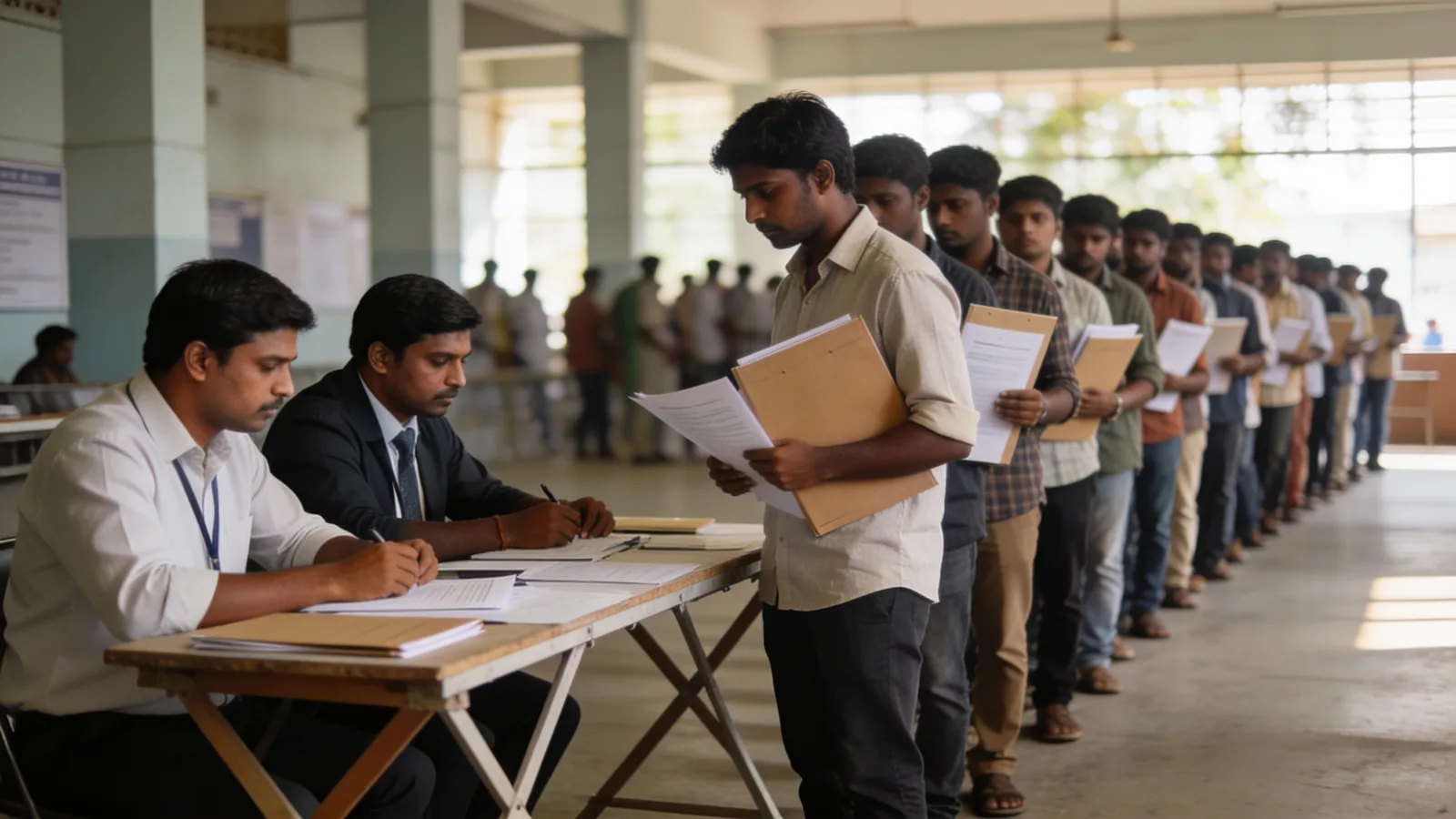
One mobilisation plan, dated backwards from your SOP
We work from your start-of-production date and count backwards: sourcing weeks, drive dates, medical camps, document verification, induction batches and hostel occupancy.
- ✓Sourcing channels: ITIs, polytechnics, village panchayat leads, referral chains
- ✓On-site drive desks with biometric attendance from day one
- ✓Pre-employment medical camps and police verification batches
- ✓Aadhaar, bank, PF nomination and UAN generation on the drive floor
- ✓Hostel, canteen and bus route coordination for migrant intake
- ✓Batch-wise induction, safety training and PPE issue
New lines do not slip because of machines. They slip because of people.
Capital equipment lands on schedule because it has a purchase order behind it. Manpower lands late because it has an internal HR team of four behind it.
Volume hiring needs parallel drives, testing lines and documentation desks. In-house teams run it serially, so the ramp stretches from three weeks to three months.
Depreciation, borrowed capital and committed customer volumes run whether the line is manned or not. A four-week delay on a 500-head line is a quarter of lost output.
We agree batch dates in writing: sourcing, drives, medicals, documentation, induction. You get a daily tracker against plan, and shortfall escalation before it becomes your problem.
Get a quote →
Sourcing, screening, onboarding — the bulk hiring chain
Bulk hiring is priced per head on a mobilisation fee, or absorbed into the contract-staffing markup when the workers stay on our payroll. The slider shows the payroll option at an assumed ₹21,000 gross wage and an illustrative 12% fee, before GST; your actual fee is set out in the rate card.
We do not wait for applications. We run drives in source districts and ITIs and bus candidates to your site.
How many candidates you need to end up with 500 workers
Bulk hiring fails most often at the planning stage: the drive is sized for the number of joiners, not for the drop-off at every step between registration and day 30. Work backwards from the headcount you need still working a month after joining.
| Stage | Example pass rate to next stage | Candidates needed |
|---|---|---|
| Registered at drives | 60% meet basic eligibility and documents | 2,904 |
| Screened in | 50% clear the trade or aptitude test and medical | 1,742 |
| Cleared test and medical | 90% accept the offer | 871 |
| Accepted offer | 75% report on joining day | 784 |
| Joined | 85% still working on day 30 | 588 |
| Working on day 30 | Target | 500 |
The pass rates are example planning assumptions to show the method, not benchmarks — they swing widely with role, wage, location, shift and season. We replace them with the ratios from your own past drives, or from the first week of the current one, and re-size the drive calendar accordingly.
What a well-run hiring drive needs on the ground
A mass recruitment drive is a one-day operation with hundreds of first impressions. The difference between a 60% and a 30% show-up for joining is often decided here.
Before the drive
- ✓Clear advertisement: role, wage, shift, location, documents to bring — and "no fee at any stage"
- ✓Venue with shade, drinking water, seating and separate waiting space for women candidates
- ✓Candidate transport from source districts where the site is far from the pool
- ✓Test stations, medical team and document desks sized to the expected turnout
- ✓Local-language interviewers and printed wage and shift details to hand out
On the day
- ✓Token system so every candidate is seen in order and nobody waits all day unseen
- ✓Parallel desks: registration, documents, test, medical, offer
- ✓Offer letters or written outcome issued before candidates leave
- ✓Rejected candidates told why, and suitable ones waitlisted for backfill
- ✓Joining date, reporting time and a helpline number given in writing
The compliance points that only show up in bulk hiring
Inspections often start from a large intake, because that is where shortcuts are taken. These are the points we build into the mobilisation plan from batch one.
Appointment letters before day one
Under the OSH Code, every worker is issued an appointment letter. With hundreds joining in a week, letters are generated batch by batch at the drive, not after the fact.
Inter-State migrant workers
Workers from another State earning up to ₹18,000 a month are inter-State migrant workers under the OSH Code. The employer owes them a yearly lump-sum fare for a return journey home, and records must identify them.
PF and ESI from the first day
EPF is mandatory for workers earning up to ₹25,000 a month from 17 September 2026, and ESI for gross wages up to ₹21,000. UAN and ESI numbers are generated at the drive, not weeks later.
Housing and transport
Where hostels or buses are arranged for workers, sanitation, drinking water, safety and — for women on night shifts — transport and consent conditions need to be met and recorded.
Contract-labour thresholds
A bulk intake through a contractor can take a site past the 50-worker threshold for the OSH Code's contract-labour chapter overnight. Check the licence position before the first batch.
Recruitment fraud
Large drives attract fake "agents" who charge candidates for jobs. We publish that no fee is charged at any stage and give candidates a number to report demands.
Bulk hiring, temporary staffing or RPO?
Bulk hiring is about a one-off ramp — a new plant, a new warehouse, a new line. If the volume recurs every season or every month, a different model usually fits better.
Bulk hiring
A dated ramp of 50 to several hundred people for a new facility or line. The hires can land on your payroll for a per-head fee, or on ours as contract staff.
Temporary staffing
The same volume, but only for a peak or a shutdown, released at the end. See temporary staffing services.
RPO
Hiring every month, every year, across sites — where you want the whole recruitment process run for you. See RPO services.
Campus and ITI hiring
Freshers in batches timed to the academic calendar. See campus hiring.
The daily tracker you should get during a bulk ramp
A bulk mandate should be measured every day against the dated plan, not at the end. Each row compares actual with plan for the day and the cumulative total.
- ✓Registrations by source district and channel
- ✓Screened in, test pass and medical pass
- ✓Offers issued and accepted
- ✓Joined against the batch plan
- ✓Day-7 and day-30 retention by batch
- ✓Open backfills and the date each will close
- ✓Hostel and transport occupancy, where arranged
- ✓Escalations: what is behind plan and the recovery action
Questions buyers ask before signing
Answers we give in the first call, written down so you can compare vendors on the same terms.
Get a quote →How long does a 500-worker ramp take?+
We plan a 500-head unskilled or semi-skilled ramp in an established industrial belt over roughly three weeks of drives and batches, provided the wage band and any hostel capacity are confirmed on day one. Skilled trades, licensed roles and remote sites take longer.
How is bulk hiring priced?+
Two ways. If the workers sit on our payroll it folds into the contract-staffing service fee on loaded cost, as set out in the rate card. If they go directly onto your rolls, it is a per-head mobilisation fee agreed against the batch plan.
Do you handle hostel and transport for migrant workers?+
We coordinate it. Hostel identification, occupancy tracking, bus routes and canteen arrangements are part of the mobilisation plan; the commercial arrangement can sit with you or be billed through us.
What happens if a batch under-delivers?+
The daily tracker flags shortfall against plan before the batch date. Waitlist pools from the same drive are activated, and if the source district is dry we open a second district rather than let the date slip silently.
Who owns the compliance for a bulk intake?+
If the workers are on our payroll, we hold the wage registers, PF and ESI remittances and appointment letters, and give you a monthly compliance pack for your principal-employer file; if they join your rolls, we hand over complete joining files. Bulk intake is where compliance gaps get discovered in inspections, so it is documented from batch one.
What documents should candidates bring to a hiring drive?+
Typically Aadhaar, a bank account passbook or cancelled cheque, education or ITI certificates, passport-size photographs, and any existing UAN or ESI number. Drivers and licensed trades also bring their licence or certificate. We list the documents in every drive advertisement.
Can bulk hires go directly onto our payroll?+
Yes. We run the sourcing, drives, testing, medicals and documentation, and the workers join your rolls; you pay a per-head fee against the batch plan. Alternatively they join our payroll as contract staff and the cost folds into the monthly bill.
How do you stop fake agents charging our candidates?+
Every advertisement and offer states that no fee is charged at any stage, candidates get a helpline number to report demands, and offers are issued only at the drive or from our official channels. We ask you to share the same message on your own careers page.
Send us your start-of-production date
We will send back a dated mobilisation plan — drives, medicals, documentation and induction batches — costed per head.