
Telecom staffing that covers a circle, not just a city
Telecom manpower is a geography problem. A rollout needs certified climbers, splicers and installers spread across districts, mobilised against a site-release schedule that changes weekly, with safety certification that must be current on the day of the climb.
Roles, headcount and site city. We aim to send a costed proposal within one working day.
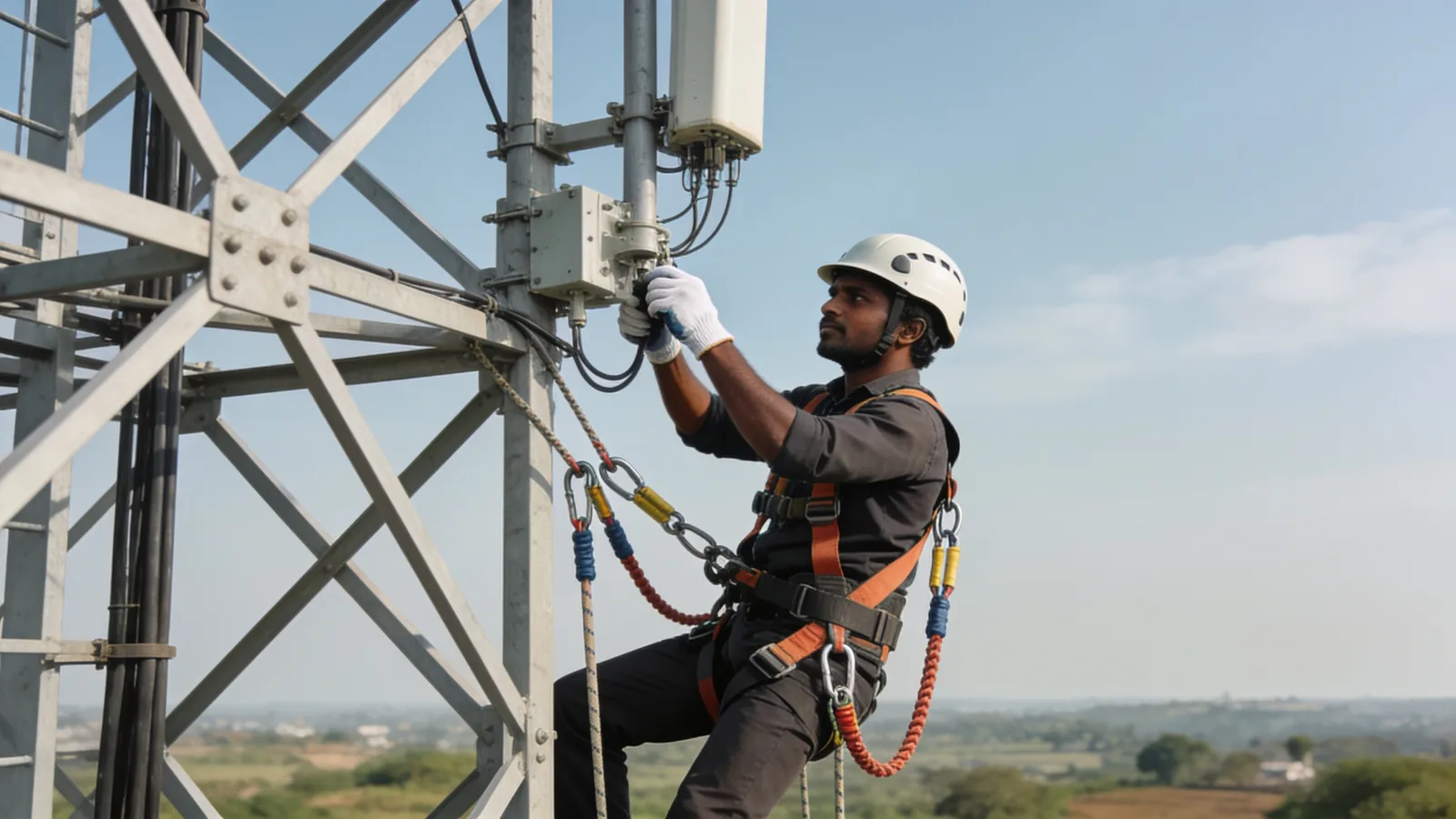
Field, network and channel roles
Telecom hires across three very different populations: field trades, network engineers and channel-side sales staff. Each needs a different sourcing engine.
- ✓Tower: climbers, riggers, antenna and RRU installation, TI and commissioning
- ✓Fibre: OFC laying supervision, splicers, jointers, FTTH home installation crews
- ✓RF and network: drive test engineers, RF optimisation, BSS and transmission
- ✓NOC and O&M: monitoring staff, field maintenance, fault-restoration teams
- ✓Power and civil: DG and battery maintenance, solar hybrid sites, site civil work
- ✓Channel side: retail promoters, store staff, SIM activation and KYC verification
- ✓Enterprise: pre-sales support, service delivery coordinators, project managers
A rollout schedule is only as good as the crew nearest the site
Sites are released in clusters across districts. If the crew has to travel four hours to each one, the schedule fails on logistics rather than on skill.
Every task becomes a travel exercise, crews arrive late, and the vendor bills mobilisation for work that a local team could have done the same morning.
Plus safety incidents when uncertified hands are pulled in locally to keep a date, which in tower work is a fatality risk and not a compliance nuisance.
Field teams positioned in the circle, work-at-height and electrical certification verified before deployment, and mobilisation tracked against your live site-release list.
Get a quote →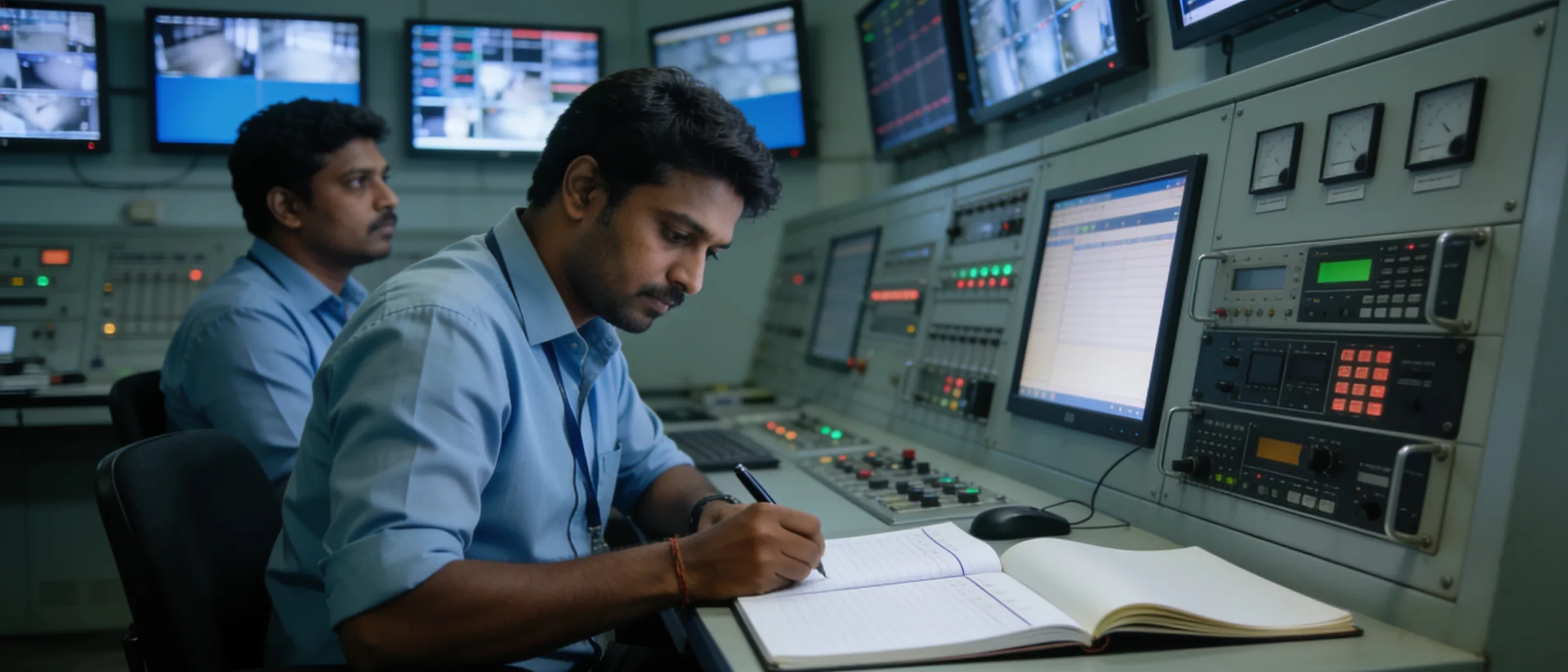
Field crews, certification, coverage
Field work is billed per crew per day or per site completed; network and NOC roles are billed as placements or on third-party payroll.
A splicing crew and an installation crew are not interchangeable, so they are staffed separately.
Four programmes keeping telecom field crews busy
Telecom field work in India is no longer one rollout wave. Several programmes run at once, each needing a different crew.
5G densification
After the 2022 launch, operators are adding small cells, upgrading existing towers and extending coverage, which means steady tower, RRU and power work rather than one-off installs.
Home broadband and FTTH
Fibre-to-the-home and fixed-wireless connections are installed one home at a time, needing installer pairs spread across neighbourhoods rather than big gangs.
BharatNet
The amended BharatNet programme, approved in 2023, extends optical fibre to gram panchayats and villages, with long routes, splicing, OTDR testing and maintenance in rural districts.
Right of Way Rules 2024
The Telecommunications (Right of Way) Rules 2024 under the Telecommunications Act 2023 standardise permissions for laying fibre and installing towers, which speeds up civil and OFC work once permits come through.
What each telecom crew needs, and what we check
A tower crew, a splicing crew and an FTTH installer pair are not interchangeable. This is how we build and screen each one.
| Crew | Typical make-up | Training we look for | What we verify before mobilisation |
|---|---|---|---|
| Tower installation | Climbers, rigger, helper, supervisor | Work-at-height and tower rescue; Telecom Sector Skill Council tower technician qualification preferred | Medical fitness for climbing, harness and lanyard condition, insurance, RF-exposure briefing |
| OFC and BharatNet | Splicers, jointers, route supervisor, helpers | Fusion splicing, OTDR testing, trench and road-work safety | Splice-loss test on sample joints, tool kit, route and permit briefing |
| FTTH installation | Installer pairs with allocated routes | Drop-cable handling, connectorisation, ONT set-up, customer-premises conduct | Two-wheeler licence where used, ID and address verification for home visits, uniform and ID card |
| Site power and O&M | DG, battery and power-plant technicians | Electrical safety, LOTO, battery handling | Electrical licence or competency where the State requires it, fault-response roster |
| RF and drive test | Drive test and optimisation engineers | Drive-test tools and post-processing | Degree or diploma, tool proficiency test, travel plan |
The climbing rules our crews follow on every site
Falls from height are the biggest fatality risk in telecom field work. These rules are part of every tower crew's induction and are checked by the crew supervisor on site.
- ✓Full-body harness to IS 3521 with double lanyards: 100% tie-off from ground to top
- ✓Never climb alone; a trained person on the ground with a rescue plan for every climb
- ✓Medical fitness screened for climbing, including blood pressure and vertigo
- ✓Stop work in lightning, high wind or heavy rain
- ✓Coordinate power-down or keep clear of the front of active antennas; RF exposure briefing before climbing
- ✓Tools on lanyards and a drop zone cordoned off below the tower
- ✓Daily toolbox talk and harness inspection logged by the supervisor
Retail and SIM-activation staff under the tighter KYC rules
Since the Department of Telecommunications tightened point-of-sale rules in 2023, operators must register and verify every point of sale and franchisee, and the people doing customer KYC face more scrutiny.
Verified before activation duty
ID, address and police verification completed before anyone handles customer KYC or SIM activation.
Trained on current KYC rules
Staff trained on the operator's e-KYC process, prohibited practices and data handling, with refreshers when the rules change.
Attendance and coverage reporting
Store and beat attendance reported daily, so you can see coverage by outlet.
Questions operations and HR heads ask us
Answers we give in the first call, written down so you can compare vendors on the same terms.
Get a quote →Do you supply certified tower climbers?+
Yes, with work-at-height training, medical fitness and accident cover verified before deployment, and certificate validity tracked so a crew is never sent to a site it will be turned away from.
Can you cover an entire circle?+
We plan for it. Crews are positioned at district level rather than in the circle headquarters, which is what makes a scattered site-release schedule achievable. India has 22 telecom circles (licensed service areas), and we plan crews circle by circle against your site list.
How is field manpower billed?+
Per crew per day for continuous deployment, or per site completed for installation and FTTH work. Travel, tools and vehicle arrangements are agreed before mobilisation rather than billed as surprises.
Do you staff NOC and network engineering roles?+
Yes — drive test and RF optimisation engineers, BSS and transmission engineers, NOC monitoring staff and O&M leads, engaged as placements or on third-party payroll.
What about retail and channel staffing?+
Store staff, promoters and SIM activation and KYC verification teams, on our payroll with attendance and coverage reporting per store or beat.
What training should a telecom tower climber have?+
At minimum, work-at-height training with tower rescue, a medical fitness check for climbing and a briefing on RF exposure near antennas. The Telecom Sector Skill Council's tower technician qualification is a good benchmark. We verify training and medical validity before each deployment so a crew is not turned away at the site.
Can field crews be paid per site completed?+
The contract with you can be priced per site, but workers themselves must still earn at least the State minimum wage for their skill category for the time worked under the Code on Wages. We pay crews a monthly wage with performance incentives on top, so per-site pricing never pushes wages below the floor.
Do SIM activation and KYC staff need police verification?+
Operators must register and verify their points of sale and franchisees under the Department of Telecommunications rules tightened in 2023, and most require verified staff for KYC work. We complete ID, address and police verification before anyone is put on activation duty.
Should FTTH installers be employees or gig workers?+
Either model exists. Installers taking per-job work through an app may be gig or platform workers under the Code on Social Security 2020, for which aggregators are to contribute to a social security fund once the Central Government notifies the rate and start date. Installers on our payroll are employees, with a monthly wage, PF, ESI where eligible and insurance, which usually gives better attendance and first-time-right rates on a planned rollout.
How do you support crews on long rural fibre routes?+
Route crews are planned with a base town, shared accommodation, a food allowance and transport to the day's work front, agreed before mobilisation. Wages are paid by bank transfer on a fixed date wherever the crew is working, which is what keeps rural crews on the route until handover.
Send us the site-release list
We will position crews by district, verify certification before mobilisation and track completion against your schedule.