
Electronics and semiconductor staffing where yield depends on handling discipline
In electronics, an untrained hand costs more than an empty station. One ESD event, one mishandled reel, one gowning shortcut, and the loss shows up as yield weeks later. We staff EMS lines, ATMP units and cleanrooms with workers screened for dexterity and trained in handling before they touch product.
Roles, headcount and plant city. We aim to send a costed proposal within one working day.
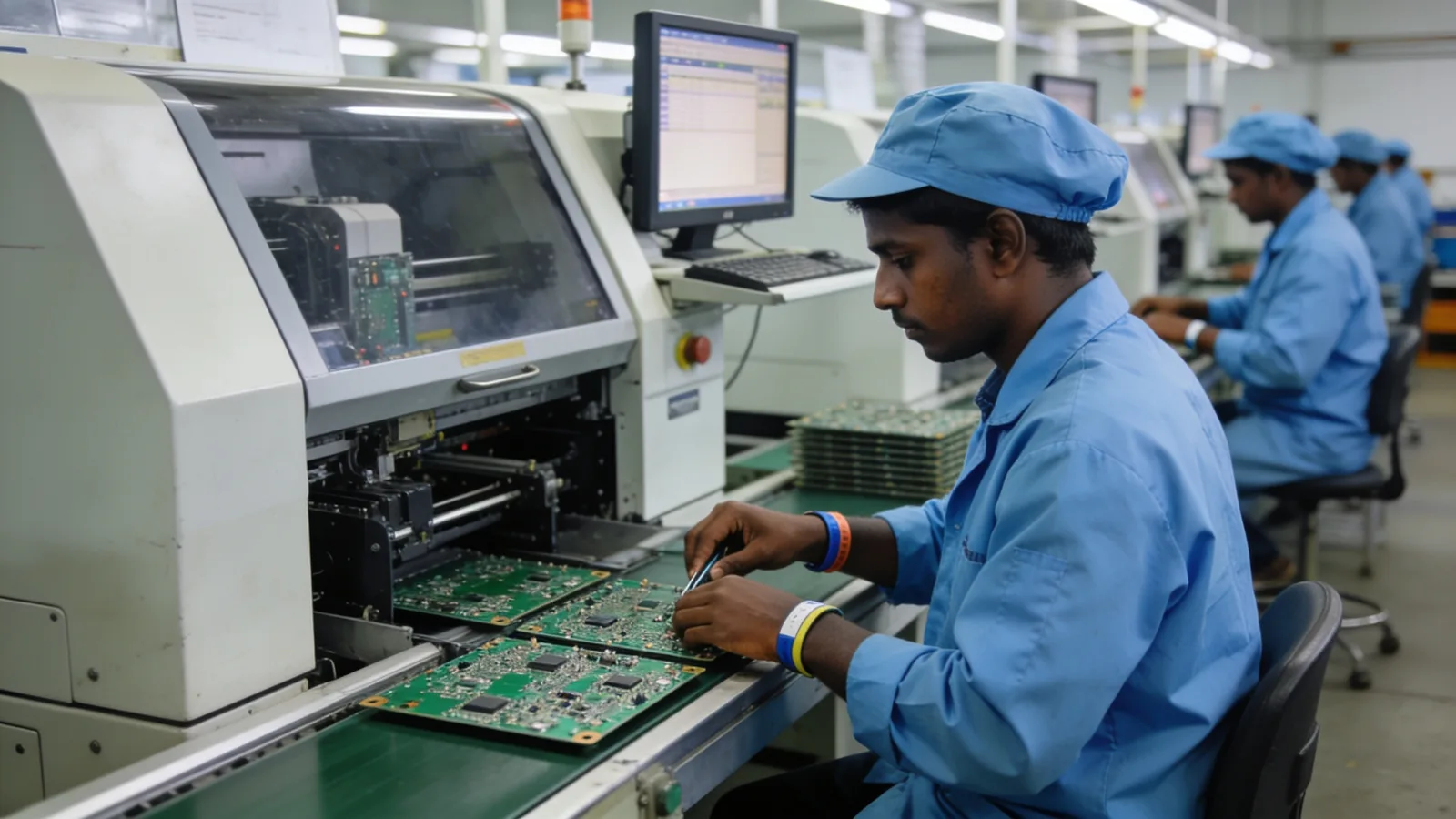
The roles behind an electronics floor
Volume sits in SMT, assembly, test and packing. The scarce roles are process, rework and failure analysis — and those are search mandates, not supply.
- ✓SMT: line loaders, printer and pick-and-place operators, reflow monitoring
- ✓Inspection: AOI and SPI operators, X-ray inspection, manual QC under microscope
- ✓Rework: hand soldering, BGA rework, touch-up technicians
- ✓Assembly, box-build, testing, packing and dispatch teams
- ✓Cleanroom: gowned technicians, wafer and substrate handling, ATMP operators
- ✓Process and equipment: SMT process owners, maintenance and calibration technicians
- ✓Test and NPI: test engineers, jig and fixture support, failure analysis
Yield loss is the invoice nobody sends you
Unlike a shortfall, handling damage does not announce itself. It arrives as a yield number, a customer return, or a field failure traced back to a shift six weeks ago.
No wrist strap discipline, no reel handling training, no gowning routine. Nobody connects the yield dip to the intake batch from last month.
Plus audit findings from a customer who reads your training records and finds nothing behind the headcount.
Vision and dexterity screening at selection, ESD and gowning training before floor entry, and per-worker competence records your customer auditors can read.
Get a quote →
Screening, handling discipline, ramp
Billed on loaded wage plus service fee. Cleanroom and night-shift patterns carry their own allowances, stated openly.
Electronics assembly rewards dexterity and patience more than physical strength.
Electronics and semiconductor clusters we recruit for
India's electronics build-out is concentrated in a handful of belts, each with its own labour market. Knowing which one you are in decides how you source, house and transport a ramp.
Sriperumbudur, Oragadam, Chengalpattu
Mobile phone assembly, EMS and component plants with large, largely women workforces, many housed in company-arranged hostels.
Hosur and Krishnagiri
Phone enclosure, precision component and EMS plants drawing on both Tamil Nadu and Karnataka commuter pools.
Bengaluru, Devanahalli, Doddaballapur
Phone and electronics assembly around the airport corridor, plus design-led EMS and test roles in the city.
Noida and Greater Noida
A dense cluster of mobile phone, display and component manufacturing, with many workers who migrate in from other districts and States.
Sri City and Tirupati
EMS, consumer electronics and air-conditioner component plants on the Andhra–Tamil Nadu border.
Sanand, Dholera and Jagiroad
India Semiconductor Mission projects: ATMP and OSAT units in Sanand, the fab project at Dholera and an OSAT unit at Jagiroad in Assam, where cleanroom operators are hired and trained from scratch.
The handling standards our operators are trained to
Your customer's quality team will audit against published standards, not against "trained operator". These are the ones our induction is built around; your own work instructions take precedence on your line.
| Standard | What it governs | What an operator must do |
|---|---|---|
| ANSI/ESD S20.20 and IEC 61340-5-1 | ESD control programme for handling electrostatic-sensitive devices | Wrist strap and heel-strap checks at every entry, ESD garments, no ungrounded materials in the protected area |
| IPC-A-610 | Acceptability of electronic assemblies (what a good and a defective joint look like) | Classify solder joints and component placement correctly at inspection and touch-up stations |
| IPC J-STD-001 | Requirements for soldered electrical and electronic assemblies | Hand-solder and rework to the specified process, with the right tools and temperatures |
| IPC/JEDEC J-STD-033 | Handling of moisture-sensitive devices | Track floor life, reseal dry packs, follow bake instructions and record them |
| ISO 14644 | Cleanroom classification and operation | Gowning sequence, material entry, movement discipline and contamination control |
Operator-level IPC certification (for example, Certified IPC Specialist) is a separate paid programme; we can put nominated operators through it on request.
Our pre-deployment path for electronics operators
Every operator goes through the same short path before reaching your line. The records travel with the worker and sit in the file your customer auditor asks for.
-
1Selection
Dexterity and vision screen
Fine-motor task, near-vision and colour-discrimination check, and a tweezer or microscope task for inspection and rework candidates.
-
2Days 1–2
ESD and 5S basics
Why ESD damage is invisible, grounding checks, handling of reels, trays and boards, and workstation discipline.
-
3Days 2–3
Visual standards
IPC-A-610 acceptable and defect conditions with sample boards; MSD floor-life and bake rules.
-
4Cleanroom roles
Gowning and entry
Gowning sequence practised and checked before any cleanroom entry; contamination-control rules.
-
5On your line
Station OJT and sign-off
Your trainer signs off each station; the skill matrix is updated weekly and shared with your production planner.
Running three shifts with a largely women workforce
Electronics assembly lines in India employ large numbers of women, and most run round the clock. The OSH Code allows women to work before 6 am and after 7 pm with their written consent, subject to the safety conditions the appropriate Government prescribes, such as safe transport, lighting, CCTV and washrooms. We plan for that from the start.
Written consent, per worker
Night-shift consent collected individually and kept on file; no worker is rostered to nights without it.
Door-to-door transport
Pick-up and drop routes planned with your transport vendor, with a woman escort or guard where the route or timing needs one.
Hostel coordination
For migrant intakes, we work with your hostel operator on room allocation, food and grievance handling, and track hostel exits as attrition risk.
Grievance and POSH
Workers are told how to reach the Internal Committee under the POSH Act 2013 and our own helpline, in their language, at induction.
Questions plant and HR heads ask us
Answers we give in the first call, written down so you can compare vendors on the same terms.
Get a quote →Which electronics roles do you supply at volume?+
SMT line operators, AOI and SPI operators, manual inspection, hand soldering and rework technicians, box-build assembly, testing, packing and material handling — plus cleanroom technicians for ATMP and substrate work.
Do you screen for dexterity and vision?+
Yes. Fine-motor testing, near vision and colour discrimination checks and a microscope or tweezer task are part of selection for inspection and rework roles, because those failures are expensive and invisible.
Can you support a PLI-linked capacity ramp?+
Yes — batch mobilisation dated against your customer qualification milestones, with pre-employment training, hostel and transport coordination and a trained bench for the inevitable early attrition.
Do you supply SMT process engineers and failure analysis specialists?+
Those are search mandates rather than supply, and we run them as niche skill hiring, because the qualified population is small enough to map by name.
How is cost structured for cleanroom and three-shift work?+
Loaded wage plus service fee, with night-shift and cleanroom allowances shown as separate line items rather than buried in the markup, so you can compare vendors honestly.
Can women operators work night shifts on electronics lines?+
Yes. Under the OSH Code women can be employed before 6 am and after 7 pm with their written consent, and the employer must provide safe transport, lighting, CCTV, washrooms and the other safeguards in the applicable rules. We collect consent individually and plan transport with you before any night roster.
Do your operators need IPC certification?+
Not for most assembly roles. We train every operator on IPC-A-610 visual standards and ESD handling during induction. Formal IPC certification is a separate paid programme; if your customer requires certified inspectors or rework technicians, we put nominated operators through it.
Can you staff a semiconductor ATMP or OSAT unit?+
Yes for operators, material handlers and cleanroom support staff, who are usually hired fresh and trained on your process. Equipment, process and yield engineers for ATMP are search mandates handled as niche skill hiring.
How do you reduce early attrition on a new electronics line?+
The first 90 days carry the most exits. We source closer to the plant where we can, brief candidates honestly on shift and hostel conditions before offer, pay wages on a fixed date, and keep a trained reliever bench so one exit does not stop a station.
Staff the line without paying for it in yield
Tell us the process steps and headcount. We propose screening criteria, the handling training gate and a dated ramp.