
Data entry operator staffing measured on accuracy, not typing speed alone.
A fast operator with a two percent error rate creates more work than a slower one with none, and nobody finds out until a report is wrong. Data entry operator staffing is easy to fill and easy to get wrong, because speed is visible and accuracy is not. Godstone Consultech screens for typing speed with an accuracy threshold, system navigation and confidentiality discipline, employs every worker on our own payroll, and keeps PF, ESI and contract-labour records with us — so the person on your floor is documented, replaceable and accountable from day one.
Volume, systems and shift pattern are enough to plan the batch.
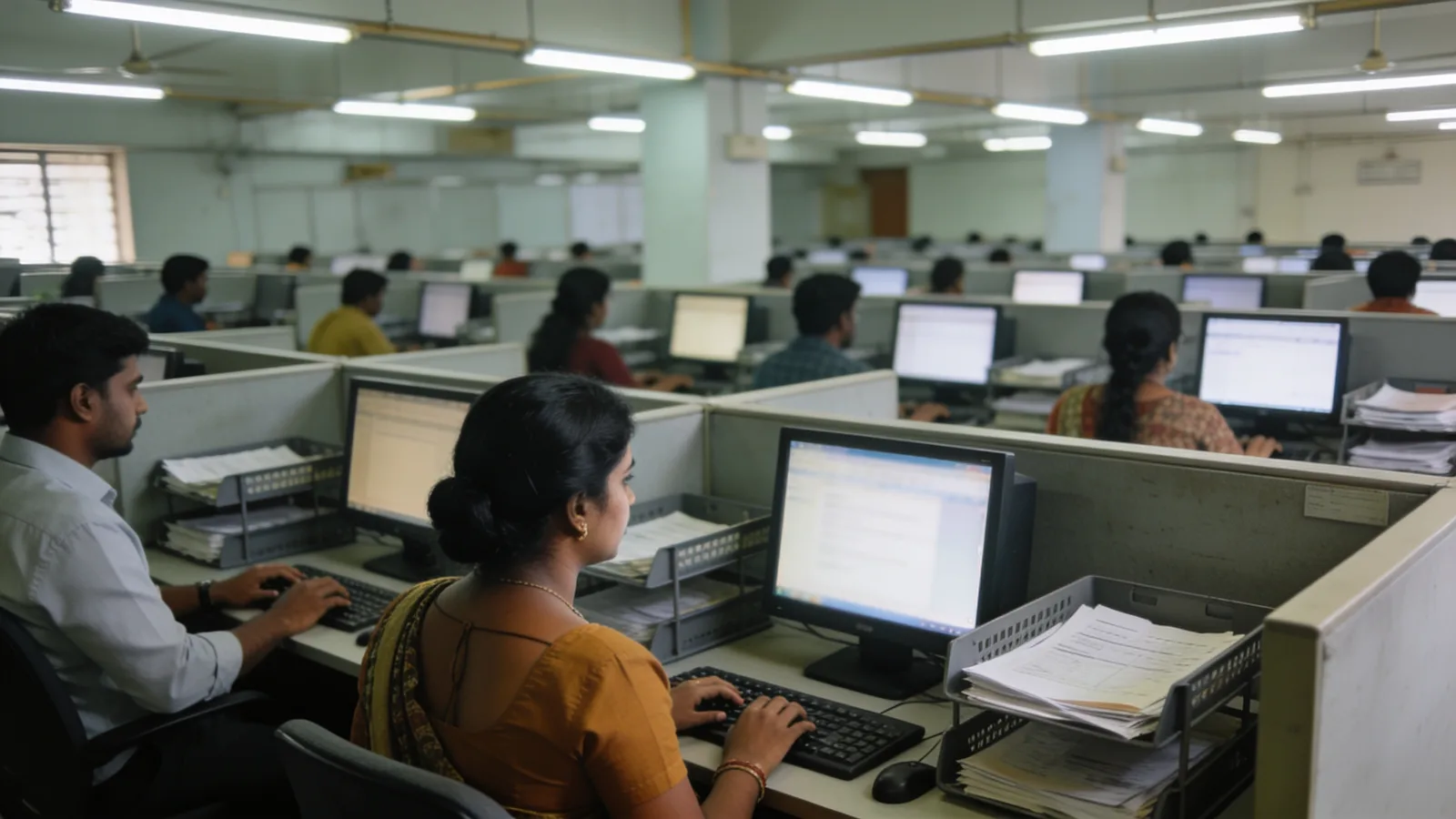
Entry, verification, digitisation and back-office support.
Back-office work is graded by error rate. We test speed against an accuracy floor, screen system navigation, and take a signed confidentiality undertaking before anyone touches your data.
- ✓Data entry into ERP, CRM or client systems
- ✓Document digitisation, scanning and indexing
- ✓Verification, de-duplication and data cleaning
- ✓Invoice, KYC and form processing support
- ✓MIS preparation and basic Excel reporting
Error rate is the only metric that matters
Volume without accuracy is rework wearing a productivity badge.
An operator hired on words per minute alone enters a month of records with a systematic field error nobody audits until reporting breaks.
Corrupted master data, reports that cannot be trusted, rework hours, and in KYC or invoice processing a compliance exposure.
Speed tested against an accuracy threshold, system navigation screened, confidentiality signed, and output sampled and audited weekly rather than trusted.
Get a rate card →How we test data entry operators
Words-per-minute tests on a paragraph of prose are the most common screen in the market and the least useful. Data entry is fields, codes, dates and numbers, so we test on material that looks like your work and score accuracy field by field.
| Test | How it runs | Typical pass bar |
|---|---|---|
| Speed on form fields | A timed entry test on forms like yours — invoices, KYC fields, survey sheets — measured in key depressions per hour (KDPH), not words per minute of prose. | Set per process. For reference, the government’s SSC skill test for data entry operator posts uses 8,000 KDPH. |
| Field-level accuracy | Every field in the test is checked against the source; errors are counted per field, not per page. | Typically 98% or better, and higher for financial or KYC data — agreed with you before screening. |
| System and Excel navigation | Moves between screens of a sample ERP or CRM, uses filters, lookups and basic formulas, and saves in the right format. | Completes the task without prompting. |
| Comprehension and instruction-following | Applies a short written rulebook — date formats, abbreviations, what to do with an illegible field. | Follows the rule every time, and flags what it does not cover. |
| Language (if needed) | Entry in Hindi or a regional language script, or reading handwritten regional-language forms. | Tested only where the process needs it. |
| Verification and confidentiality | Identity, address and reference checks; signed confidentiality undertaking. | Complete before system access is granted. |
Data-handling controls that should come with every operator
Data entry teams see more personal and commercial data than almost anyone else in a company. These are the controls we build into deployment, whichever system the work happens on.
Least access by default
Operators get the screens and records the process needs, on named logins, and nothing else. Shared logins make errors and leaks impossible to trace.
Clean-desk, no-phone floors where needed
For KYC, health or financial data, a clean-desk rule and a phone locker at the floor entrance are simple and effective controls.
Confidentiality in writing
Every operator signs a confidentiality undertaking before access, and it is part of the induction they repeat back to a supervisor.
Built for the DPDP Act
The Digital Personal Data Protection Act, 2023 expects reasonable security safeguards for personal data; most obligations apply from 13 May 2027. Access logs, training records and prompt exit de-provisioning are the evidence.
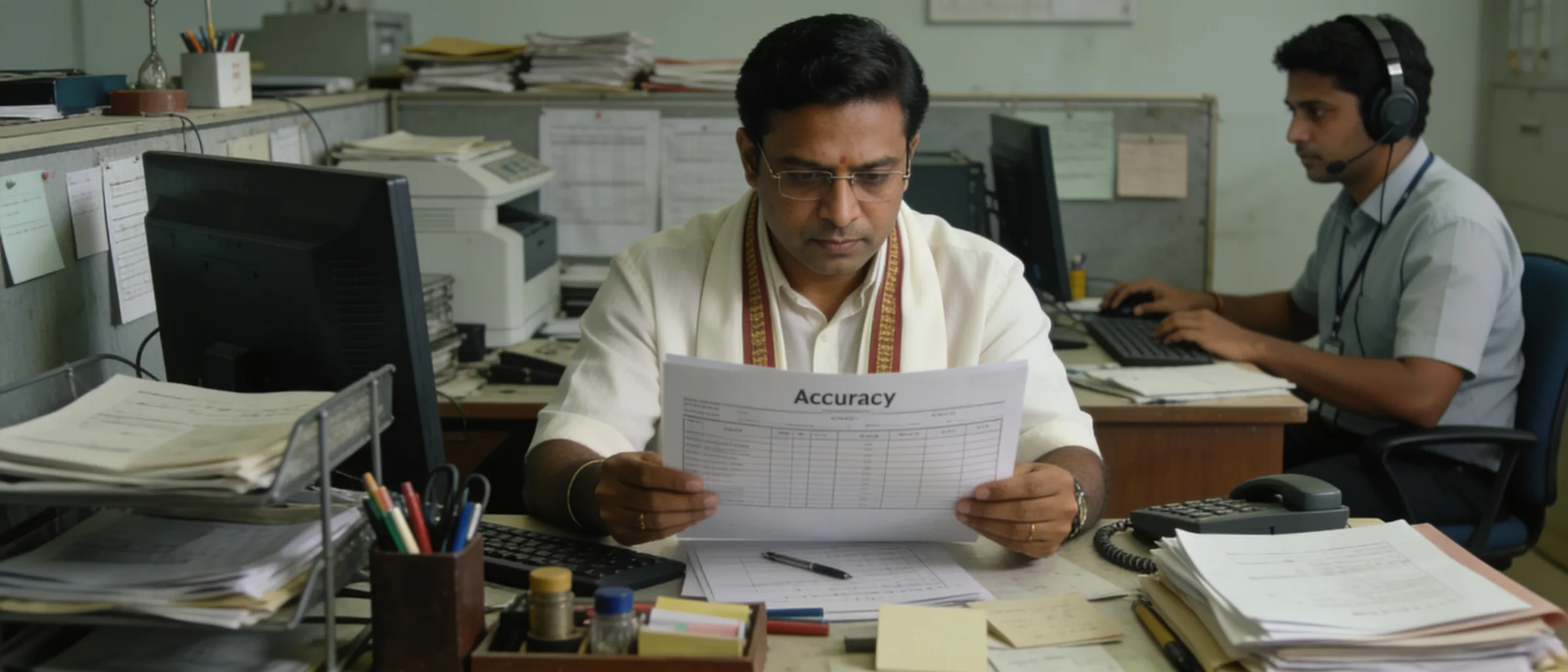
What contract data entry operators cost, and how the work is run
Move the slider for an indicative monthly bill at an illustrative 12% service fee (your actual fee is set out in the rate card), built on a typical gross wage of ₹19,000 a month per operator. Firm rates depend on the city, shift pattern, language and system skills, and the State minimum wage for clerical staff.
What clears before the worker reaches your gate.
Data entry bands and an indicative wage basis
These are indicative starting points from published salary data, not quotes. Our estimator uses ₹19,000 a month as a typical operator wage, between the legal floor and the national average.
| Band | Typical scope | Indicative gross wage basis |
|---|---|---|
| Data entry operator (0–2 years) | Form and invoice entry, scanning and indexing, simple verification. | At or a little above the State minimum wage for clerical staff, which is the legal floor. |
| Senior operator / verifier (2–5 years) | Second-level checking, exception handling, ERP or CRM work, basic MIS. | Around the Indeed India data entry clerk range of about ₹14,500–₹34,200 a month; the national average of about ₹22,300 is pulled up by metro and corporate roles. |
| Team lead / QA (5+ years) | Sampling and error reporting, rulebook upkeep, training new batches. | Above the operator band; metro averages such as Mumbai (about ₹37,000 a month on Indeed) sit at the top of the range. |
Indicative only. Gross monthly figures before deductions, from Indeed India’s data entry clerk salary page (average ₹22,299 a month from about 2,800 salaries, updated 22 June 2026). Piece-rate or per-record pay must still add up to at least the minimum wage under the Code on Wages. Check your State’s floor with our minimum wage calculator.
KPIs and backfill SLAs for data entry
Accuracy is invisible unless someone samples it. These are the measures we suggest reporting, and the cover terms we agree before the first batch starts.
KPIs for data entry teams
- →Field-level accuracy on a random QA sample each week, reported per operator
- →Throughput — records or key depressions per hour — against the target for that process
- →Turnaround time from document received to record completed
- →Rework rate: records sent back by downstream teams
- →Attendance and login hours against the roster
Backfill and batch SLAs
- →Batches of 10 to 50: we aim to deploy within five to ten working days, matched to your training and access calendar
- →Buffer candidates for day-one drop-outs in every batch
- →Replacement for early exits: we aim to replace within 15 days
- →Access removed on the operator’s last day, confirmed in writing
- →Weekly accuracy and productivity report alongside the monthly compliance pack
Common mistakes when hiring data entry operators
Typing tests on prose
A fast typist of paragraphs can still be slow and error-prone on codes, dates and amounts. Test on your fields.
No QA sampling
Without a weekly sample, a systematic error — a date format, a wrong code — can run for a month before anyone notices.
Piece rates below minimum wage
Paying per record is allowed, but monthly earnings must still meet the minimum wage. Check before you sign.
Shared logins
They make it impossible to trace an error or a leak to a person. Named access is a basic control.
Night batches without planning
Night shifts are workable, but women working before 6 am or after 7 pm need consent and the safety and transport arrangements the OSH Code rules require.
Automatable work staffed manually
If the source is already digital, OCR or a simple integration may beat a manual team. We will say so if we see it.
Data entry operator staffing FAQs
Screening, cost basis, replacement and deployment speed.
Get a rate card →How are data entry operators tested?+
Typing speed measured against an accuracy threshold rather than in isolation, plus a system and Excel navigation test and a comprehension check. A signed confidentiality undertaking and background verification complete before deployment.
Can you supply operators in batches?+
Yes. For batches of 10 to 50 we aim to deploy within five to ten working days, matched to your training and system-access calendar, with buffer candidates for day-one drop-outs.
How is accuracy monitored after deployment?+
Output is sampled and audited weekly with error rates reported per operator, so a systematic mistake is caught in days rather than at month end.
Do operators work on client systems or ours?+
Either. Where operators access your systems, access control, data-handling discipline and confidentiality undertakings are part of the deployment.
Can work be run from a shift or night pattern?+
Yes. Rotational and night shifts are supported with transport-desk coordination and the compliance requirements applicable to night working.
What typing speed should a data entry operator have?+
It depends on the work. For form-based entry we measure key depressions per hour rather than words per minute; the government’s SSC skill test for data entry operator posts uses 8,000 key depressions per hour as its benchmark. Accuracy matters more — we agree an accuracy floor with you, typically 98% or better.
How much does a data entry operator earn in India?+
Indeed India reported an average of about ₹22,300 a month for data entry clerks in 2026, with most figures between about ₹14,500 and ₹34,200. Many operator roles pay closer to the State minimum wage for clerical staff, which is the legal floor. These are indicative figures, not a quote.
How do you protect our data?+
Named logins with only the access the process needs, signed confidentiality undertakings, clean-desk and phone-free rules where the data is sensitive, and access removed on the last day. These controls also support your obligations under the DPDP Act, 2023.
Backlog of entry work?
Send the role, headcount and site city. We aim to send an itemised rate card and deployment date within one working day.