
Carpenter manpower supply for packing, crating and fit-out work.
An export consignment packed in a badly built crate arrives damaged, and the claim conversation starts with your packing standard. Carpenter manpower supply in industry is mostly about packing, crating and maintenance joinery, not furniture. Godstone Consultech screens for measurement accuracy, joinery method and finish quality, employs every worker on our own payroll, and keeps the PF, ESI, wage and contract-labour records — so the person on your floor is documented, replaceable and accountable from day one.
Work type, volume and shift pattern are enough to price.
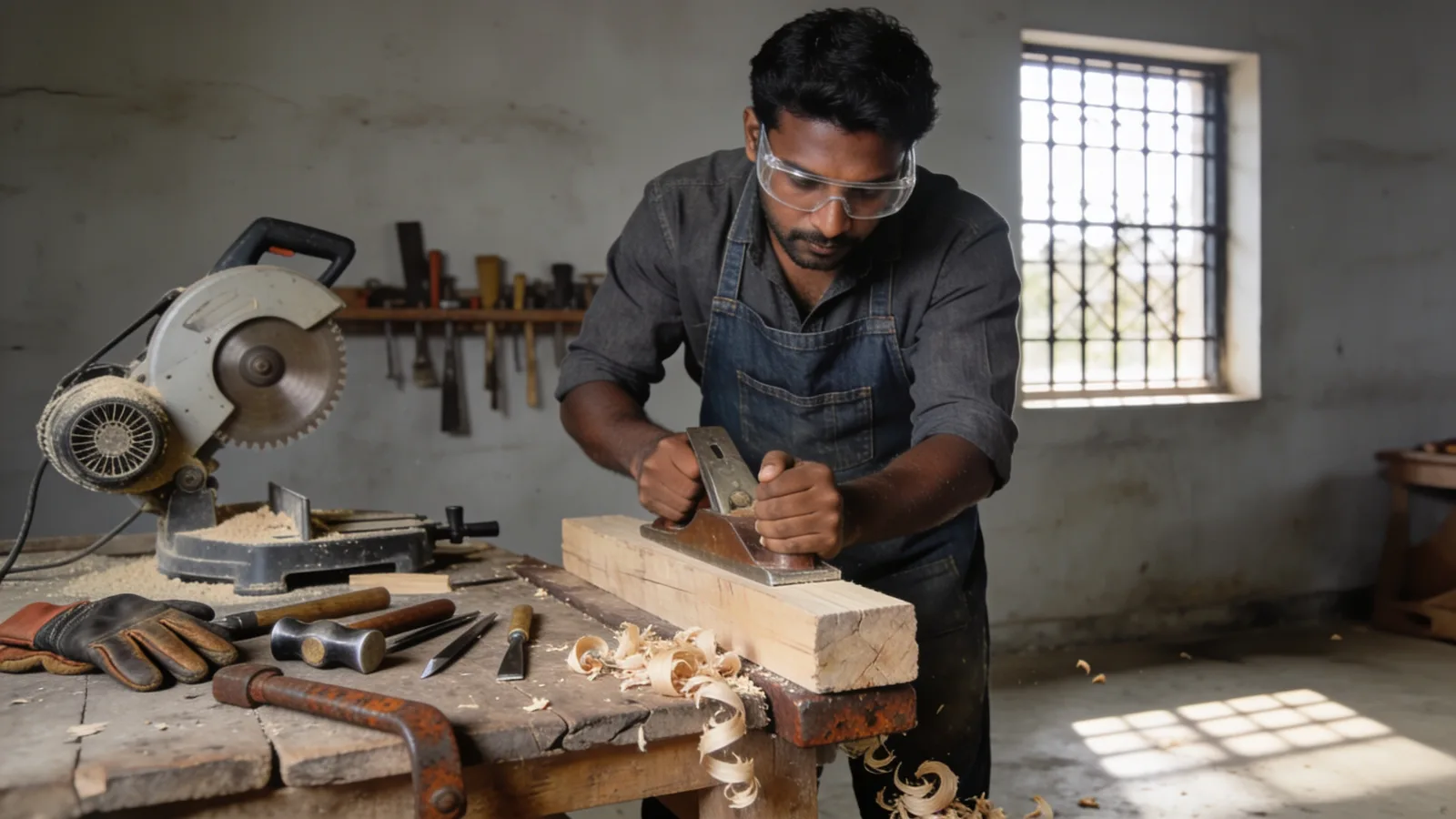
Crating, packing, fit-out and maintenance joinery.
Industrial carpentry is measured in whether the crate survives the journey and the fit-out passes handover. We screen on method and finish, and induct on power-tool safety before deployment.
- ✓Export packing, crating and pallet fabrication
- ✓Plywood and timber cutting to drawing
- ✓Interior fit-out and partition work
- ✓Maintenance joinery: doors, frames, fixtures
- ✓Scaffold decking and shuttering support
Packing is the last thing you touch and the first thing a customer sees
A weak crate undoes everything the plant did right.
A hand with no crating standard builds to memory rather than drawing, and the consignment shifts in transit.
Transit damage, a rejected consignment, insurance argument and a customer who now inspects every shipment from you.
Joinery and measurement testing before deployment, crating built to your drawing and standard, and power-tool safety inducted and recorded.
Get a rate card →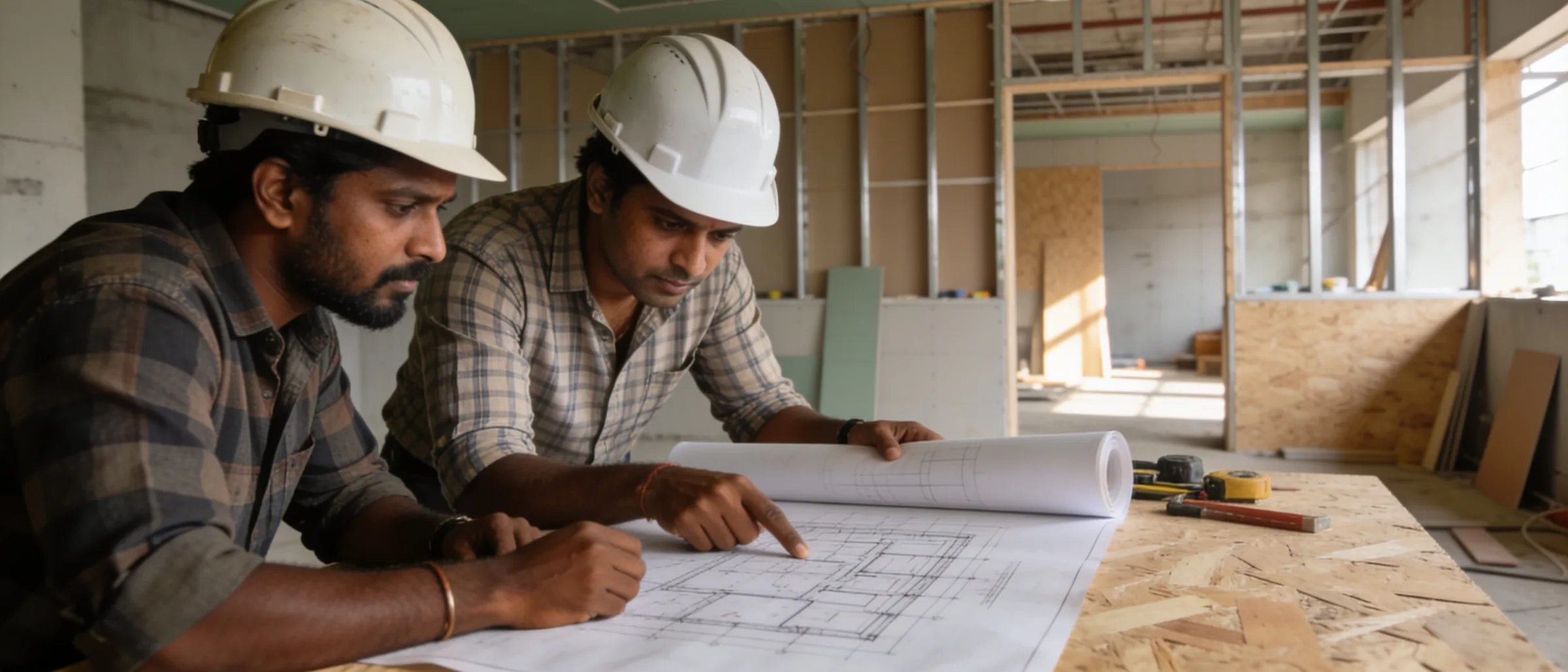
Screening, deployment and compliance
Move the slider for an indicative monthly bill for carpenters at a ₹21,000 gross wage, statutory costs and an illustrative 12% service fee (your actual fee is set out in the rate card). Firm rates follow your State's minimum wage for the skill category, the type of work and the shift pattern.
What clears before the worker reaches your gate.
What industrial carpenters actually do
Most carpenters hired by plants and projects in India are not furniture makers. They build export crates and skids to a packing drawing, make and repair pallets, fit timber and plywood dunnage, build shuttering and formwork on construction sites, install partitions, doors and fixtures in fit-outs, and keep a plant's doors, frames and wooden fixtures in repair. Each needs a different skill mix, so we staff crating, shuttering and fit-out carpenters as separate bands.
For export consignments, solid-wood packaging must meet ISPM 15: timber is heat-treated or fumigated by an accredited provider and carries the IPPC mark. Manufactured wood such as plywood and particle board is exempt. The carpenter's job is to build with the right marked material and not mix in untreated offcuts. Related roles:
Riggers
Slinging and lifting heavy crated equipment onto trucks and containers.
Rigger manpower supply →Warehouse manpower
Packing, loading and dispatch teams around the crating bay.
Warehouse manpower supply →Project manpower
Fixed-window crews for construction, shuttering and fit-out work.
Project manpower supply →Carpenter bands we supply
Tell us the work type and the drawings or standards it follows.
| Band | Typical background | Works independently on | Usual minimum-wage category |
|---|---|---|---|
| Carpenter helper | Trained on site | Carrying, stacking, nailing under supervision, cleaning the bay | Semi-skilled (unskilled in some schedules) |
| Crating and packing carpenter | ITI Carpenter or 2+ years in export packing | Crates, skids and pallets built to a packing drawing, dunnage and blocking | Skilled |
| Shuttering / formwork carpenter | 2+ years on construction sites | Plywood formwork, props and alignment, de-shuttering in sequence | Skilled |
| Fit-out and maintenance carpenter | ITI Carpenter or 3+ years in interiors | Partitions, doors and frames, fixtures, laminate and hardware fitting | Skilled |
| Carpentry supervisor | Senior carpenter, 6+ years | Material take-off, cutting lists, crew supervision and sign-off | Highly skilled |
Skill categories come from each State's minimum-wage notification under the Code on Wages, 2019; the mapping is typical, not universal.
The carpenter trade test, station by station
Stations 1, 2 and 6 for every band; station 3, 4 or 5 depending on the work type.
Drawing and cutting list
Read a crate, formwork or joinery drawing and produce a cutting list with minimal waste.
Measuring and cutting
Cut timber and plywood to size and square with a circular or panel saw, within the drawing tolerance.
Crating
Build a skid and crate section: runners, bracing, nailing pattern, fixing the load to the base, and moisture-barrier wrapping.
Joinery and fit-out
Make a mortise-and-tenon or halving joint, hang a door and fit hardware square and flush.
Shuttering
Erect and align a plywood form with props, and explain the de-shuttering sequence and when it is safe.
Tool safety
Blade guards and riving knife in place, push sticks, nail-gun safety, dust extraction and eye protection.
PPE, wood dust and the compliance behind each carpenter
PPE issued and checked
- ✓Safety glasses and hearing protection at saws
- ✓Dust masks, with extraction at the saw — hardwood dust is a recognised carcinogen
- ✓Safety shoes and cut-resistant gloves for handling timber
- ✓Full-body harness for shuttering and fit-out work at height
Workshop and site rules we brief
- ✓Guards on every saw; no removing the riving knife
- ✓Nail guns never pointed at people, disconnected when clearing jams
- ✓Only ISPM 15-marked solid wood in export crates
- ✓Construction work follows the building-worker safety rules now under the OSH Code, 2020
Compliance we carry as employer
- ✓EPF and ESI enrolment before day one; ESI covers gross wages up to ₹21,000 a month
- ✓Wages at or above the State minimum for the category, paid by the 7th of the following month
- ✓Overtime at twice the ordinary wage rate (OSH Code, section 27)
- ✓Contract-labour registers under the OSH Code (which replaced the CLRA Act, 1970), shared monthly
Work patterns and the wage basis
Crating bays usually run a general shift, stretching to a second shift before large dispatches. Shuttering and fit-out crews work to the project schedule. The OSH Code caps ordinary hours at eight a day; dispatch-week overtime is paid at twice the ordinary rate, so plan the crew size before the vessel cut-off, not during it.
| Basis | Figure | Source and notes |
|---|---|---|
| Legal floor (example) | Haryana: semi-skilled ₹16,781 a month, skilled ₹18,501 a month | Haryana notification effective 1 April 2026. Your State, zone and scheduled employment decide the real floor. |
| Karnataka | Skill-and-zone structure with steep increases, notified 22 May 2026 | Its legal validity is being contested; check before budgeting a site in Karnataka. |
| Market reference | Carpenter average ₹32,292 a month; range ₹18,182–₹57,353 | Indeed India, only 39 reports and skewed by a few high-paying listings — treat as a loose upper reference, not a norm. |
| Our estimator | ₹21,000 gross a month for a skilled crating or maintenance carpenter | Planning figure. Supervisors and specialist fit-out carpenters are quoted separately. |
Indicative only, not an offer or a legal rate. A national floor wage under the Code on Wages is still being fixed; until then State rates apply. Check your State's rate with the minimum wage calculator.
What to hold carpenters, and us, to
Transit damage
Consignments damaged in transit where the crate or blocking was the cause.
Crates per shift
Output against the standard time for each crate design.
Material yield
Timber and plywood used against the cutting list, and offcut reuse.
Snags at handover
For fit-out work: snag items found at inspection, and days to close them.
Our service targets
We aim to deploy tested carpenters in 5–9 working days, scale crews ahead of known dispatch peaks, and replace an exit within 15 days. Targets are written into the SLA schedule.
Carpenter staffing FAQs
Scope, testing, export crating, project crews and cost basis.
Get a rate card →What carpentry work do you staff?+
Export packing, crating and skids, pallet making and repair, timber and plywood cutting to drawing, shuttering and formwork, interior fit-out and partitions, and maintenance joinery for doors, frames and fixtures.
Are carpenters trade-tested?+
Yes. Drawing reading and cutting lists, measuring and cutting accuracy, crating or joinery or shuttering by band, and power-tool safety are tested, with ITI or trade certificates verified.
Do export crates need ISPM 15 timber?+
Solid-wood packaging for export must be treated and marked under ISPM 15 by an accredited provider. Plywood and other manufactured wood are exempt. Our crating carpenters are briefed to use only marked solid wood and to keep untreated offcuts out of export crates.
Do you handle export crating standards?+
Crates are built to your drawing and packing standard, with supervisor sign-off per consignment so the standard is verifiable rather than assumed.
Can you supply crews for a fixed project?+
Yes. Fit-out, shuttering and packing crews are supplied for fixed windows with a supervisor, and released at handover with settlement handled by us.
What qualification should a carpenter have?+
An ITI Carpenter certificate helps, but many good crating and shuttering carpenters learned on the job. The trade test decides the band.
How quickly can carpenters be deployed?+
We aim for 5–9 working days including the trade test, with crews scaled in waves for large dispatches or projects.
How is carpenter staffing priced?+
The gross wage for the band (at or above the State minimum), plus employer PF, EDLI and admin charges, ESI where gross is up to ₹21,000, bonus and gratuity provisions, and the service fee. Project crews are often priced per crew for the window. See how staffing fees are calculated.
Packing or fit-out work ahead?
Send the role, headcount and site city. We aim to send an itemised rate card and deployment date within one working day.