
NAPS apprenticeship services, run so the stipend support actually reaches your apprentices
The National Apprenticeship Promotion Scheme lets you build your own operator supply at a stipend, with the government paying up to ₹1,500 a month per apprentice directly by DBT. Most employers stall on the portal work — seat plans, contracts, basic training, monthly stipend proofs. We run that machinery with you and put trained apprentices on your floor.
Trades, batch size and start month. We aim to send a costed programme plan within one working day.
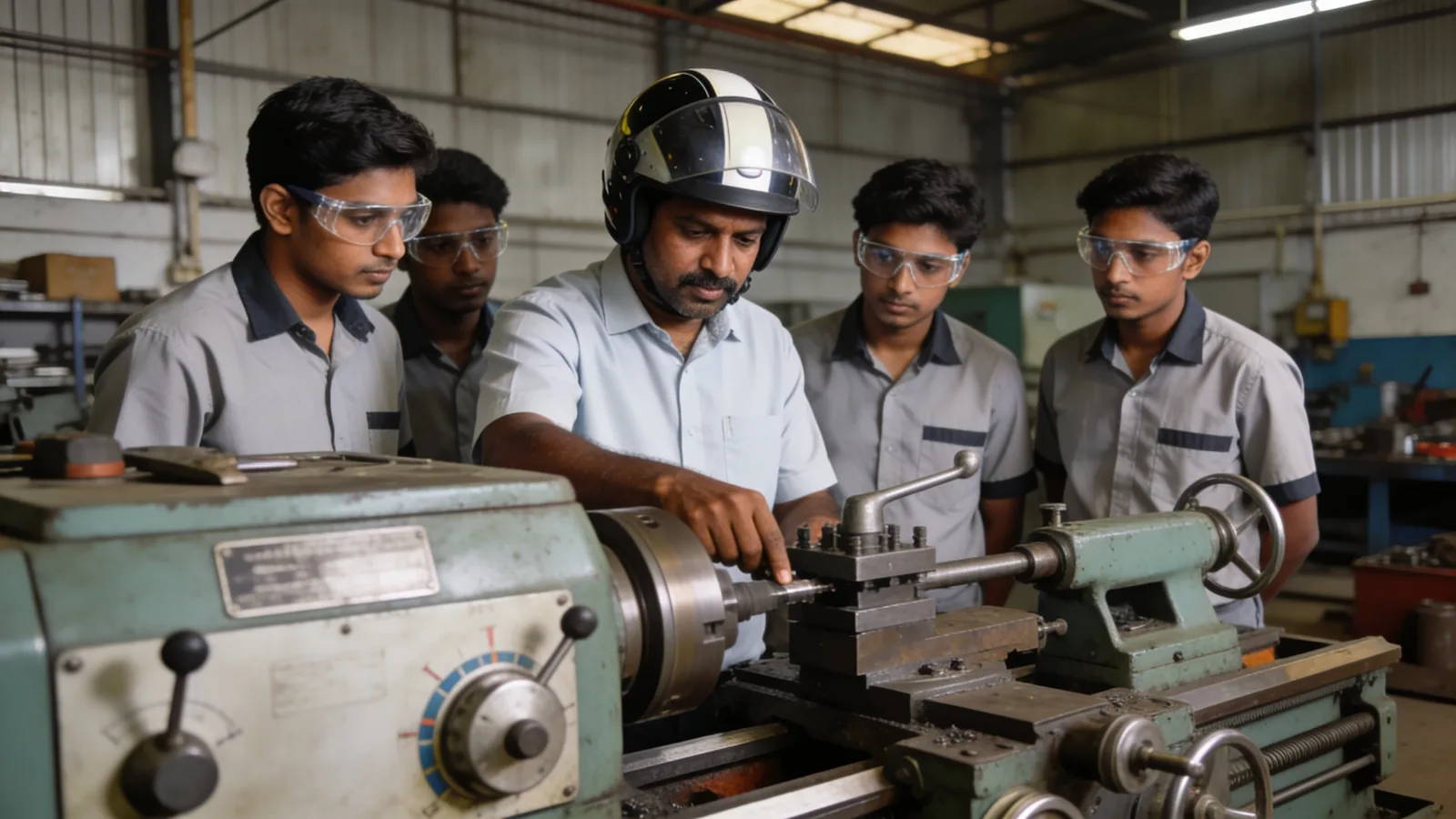
Everything between the scheme and your shop floor
The scheme is useful and the paperwork is unforgiving. A contract executed late, a bank account not seeded with Aadhaar, or a stipend below the notified minimum, and the government share never reaches the apprentice.
- ✓Establishment registration and trade seat declaration on the portal
- ✓Candidate sourcing from ITIs, schools and source districts
- ✓Apprenticeship contract in the standard format, executed on the portal before training starts
- ✓Basic training delivered in-house or with a partner, with attendance evidence
- ✓On-the-job training log books maintained per apprentice per trade
- ✓Monthly stipend paid to Aadhaar-seeded bank accounts, with proof uploaded to trigger DBT
- ✓DBT status tracked apprentice by apprentice, failures resolved
- ✓Assessment, certificate of proficiency and absorption decision support at term end
Operator supply is the constraint nobody budgets for
Every plant in the belt is hiring the same experienced operators from the same pool, at rising wages, with the same six-month attrition. Nobody is making new operators.
Establishments are registered but seats are never declared, contracts are executed late, and the government stipend share stops without anyone noticing why.
Establishments with 30 or more workers must engage apprentices at 2.5%–15% of total strength, so the unused scheme is a compliance exposure as well as a missed supply channel.
Seats declared, contracts executed on time, basic training evidenced, stipends paid traceably, DBT tracked — and a trained cohort you can absorb at the end.
Plan a batch →
Set up, run, track the DBT
Programme management is priced per apprentice per month on top of the stipend. You fund your share of the stipend; the government share of up to ₹1,500 goes straight to the apprentice by DBT.
Done once, properly, so nothing downstream gets rejected.
The National Apprenticeship Promotion Scheme at a glance
NAPS (now run as PM-NAPS under the Skill India Programme) supports establishments that engage apprentices under the Apprentices Act, 1961, through the portal at apprenticeshipindia.gov.in. The rules that decide whether a batch works:
| Topic | The rule |
|---|---|
| Who must engage apprentices | Establishments with 30 or more workers must engage apprentices at 2.5%–15% of total strength, counting contractual staff; those with 4–29 workers may engage them voluntarily |
| Trades | Designated trades notified by the government, or optional trades designed by the employer (typically 6–12 months) with at least two weeks of basic training built in |
| Apprentice eligibility | Minimum age 14 (18 for hazardous industries) and at least Class 5 pass; government stipend support is for apprentices up to 35 years at registration |
| Minimum stipend | Revised from 11 September 2025 — see the table below; 10% more in the second year and 15% more in the third |
| Government support | 25% of the stipend, up to ₹1,500 per apprentice per month, paid by DBT directly into the apprentice's bank account after the employer pays its share |
| Not supported | Government departments and PSUs do not receive stipend support; NAPS-2 does not reimburse basic-training costs; support applies to NSQF-aligned courses |
| Legal status | Apprentices are trainees, not workers (Apprentices Act s.18): the Labour Codes, PF and ESI do not apply to them. The employer remains responsible for their safety and for compensation if they are injured during training |
| If you fall short | Establishments that do not meet the engagement obligation can be fined under the Act for each month of shortfall |
The NAPS-2 guidelines of August 2023 set a sunset date of 31 March 2026, and the Skill India Programme approval covered 2022-23 to 2025-26; the government has reported apprentices still being engaged under NAPS-2 in 2026-27 while the next phase is settled. We check the current guidelines on the portal before each batch is planned.
Minimum stipend and your share, by qualification
Minimum monthly stipends under the Apprenticeship (Amendment) Rules, 2025, with the government's NAPS share of up to ₹1,500. Because 25% of every band exceeds ₹1,500, the cap applies across the board.
| Apprentice's qualification | Minimum stipend (year 1) | Government share via DBT | Your share (year 1) | Minimum stipend (year 2) |
|---|---|---|---|---|
| Class 5 to 9 | ₹6,800 | ₹1,500 | ₹5,300 | ₹7,480 |
| Class 10 | ₹8,200 | ₹1,500 | ₹6,700 | ₹9,020 |
| Class 12, ITI (NCVT/SCVT) or vocational certificate | ₹9,600 | ₹1,500 | ₹8,100 | ₹10,560 |
| Diploma | ₹10,900 | ₹1,500 | ₹9,400 | ₹11,990 |
| Graduate or degree | ₹12,300 | ₹1,500 | ₹10,800 | ₹13,530 |
You may pay more than the minimum; the government share stays capped at ₹1,500. No PF or ESI is payable on stipend, but budget for training materials, PPE, uniform, insurance cover and any aggregator or management fee. Graduate and diploma apprentices can also be engaged under NATS, where the government pays half the stipend up to its own cap.
How a NAPS batch runs
Every step happens on the apprenticeship portal, and each one is evidence for the next. Timelines assume your establishment is already registered.
Seat plan
Total strength (including contract staff) used to compute your 2.5% minimum and 15% maximum; trades and seats declared by department.
Sourcing and selection
Candidates from ITIs, schools and source districts register with Aadhaar, apply on the portal and are selected against your criteria.
Contract on the portal
Apprenticeship contract in the standard format executed online before training starts — an unregistered start date cannot be supported.
Basic training
Safety, hygiene, hazardous-material handling and trade basics, in-house or with a partner, with attendance evidenced.
On-the-job training and stipend
Log books maintained; your share of the stipend paid to an Aadhaar-seeded bank account, which triggers the government's DBT share.
Assessment and absorption
Assessment and certificate of proficiency; absorption decision on twelve months of evidence instead of a one-hour interview.
Mistakes that block the DBT share — and how we prevent them
When the government share does not reach apprentices, they notice within a month and attrition follows. The usual causes are administrative:
Common causes
- ✕Apprentice's bank account not seeded with Aadhaar
- ✕Training started before the contract was executed on the portal
- ✕Stipend paid below the revised 2025 minimum, or in cash
- ✕Employer share paid late or not uploaded, so DBT is never triggered
- ✕Apprentice above the age limit for support, or course not NSQF-aligned
- ✕Apprentice count above 15% of total strength
What we put in place
- ✓Bank and Aadhaar seeding checked at selection, not after the first stipend
- ✓No start date without an executed contract
- ✓Stipend bands locked to the current notification
- ✓Monthly payment run with proof uploaded the same week
- ✓Eligibility screen for age and course before the offer
- ✓Seat plan recalculated when your headcount changes
Questions employers ask before starting a batch
Answers we give in the first call, written down so you can compare providers on the same terms.
Plan a batch →What is NAPS and what does the government pay?+
The National Apprenticeship Promotion Scheme supports employers engaging apprentices under the Apprentices Act. The government pays 25% of the stipend, up to ₹1,500 per apprentice per month, directly into the apprentice's bank account by DBT once the employer has paid its share. It is no longer reimbursed to the employer, and basic-training costs are not reimbursed under NAPS-2.
How many apprentices can we engage?+
Between 2.5% and 15% of total strength, counting contractual staff. The band is mandatory for establishments with 30 or more workers and optional for those with 4 to 29. We compute your minimum and maximum before seats are declared.
Are apprentices employees?+
No. Under section 18 of the Apprentices Act an apprentice is a trainee, not a worker, and the Labour Codes exclude apprentices — so PF, ESI and bonus do not apply, and the engagement ends with the term unless you absorb them. That is precisely why the paperwork has to be exact.
What does the programme management fee cover?+
Portal work, candidate sourcing, contracts, basic training coordination, stipend payment runs, log books and DBT tracking — priced per apprentice per month. The stipend itself is funded by you, less the government share paid by DBT.
Can we absorb apprentices at the end of the term?+
Yes, and that is the point of running the programme. Absorption is at your discretion, with assessment results and OJT records to base the decision on; there is no absorption fee.
What is the minimum stipend for apprentices in 2026?+
Under the Apprenticeship (Amendment) Rules, 2025, in force from 11 September 2025, the monthly minimum is ₹6,800 for Class 5–9, ₹8,200 for Class 10, ₹9,600 for Class 12 or ITI certificate holders, ₹10,900 for diploma holders and ₹12,300 for graduates, rising by 10% in the second year and 15% in the third.
Is there a penalty for not engaging apprentices?+
Yes. The Apprentices Act makes establishments with 30 or more workers engage apprentices at 2.5%–15% of their total strength, and a shortfall can attract a fine for each month it continues. The practical cost is usually larger: an unused pipeline of trained entrants.
What is the difference between NAPS and NATS?+
NAPS is run by the Ministry of Skill Development for trade apprentices — school leavers, ITI holders and others — with government support of up to ₹1,500 a month. NATS is run by the Ministry of Education through the Boards of Apprenticeship Training for graduates, diploma holders and vocational certificate holders, with the government paying half the stipend up to its own cap.
Declare your seats before the next intake window
Send trades and headcount. We will compute your permissible apprentice numbers, the stipend cost and the government share paid by DBT.