
EV and battery staffing for plants that are still writing their own standards
Battery manufacturing in India is being staffed from scratch. There is no deep pool of cell-line operators, dry-room discipline is new to most workers, and the EHS consequences of a mistake are severe. We supply from adjacent sectors and train into the standard rather than pretending experience exists.
Roles, headcount and plant city. We aim to send a costed proposal within one working day.
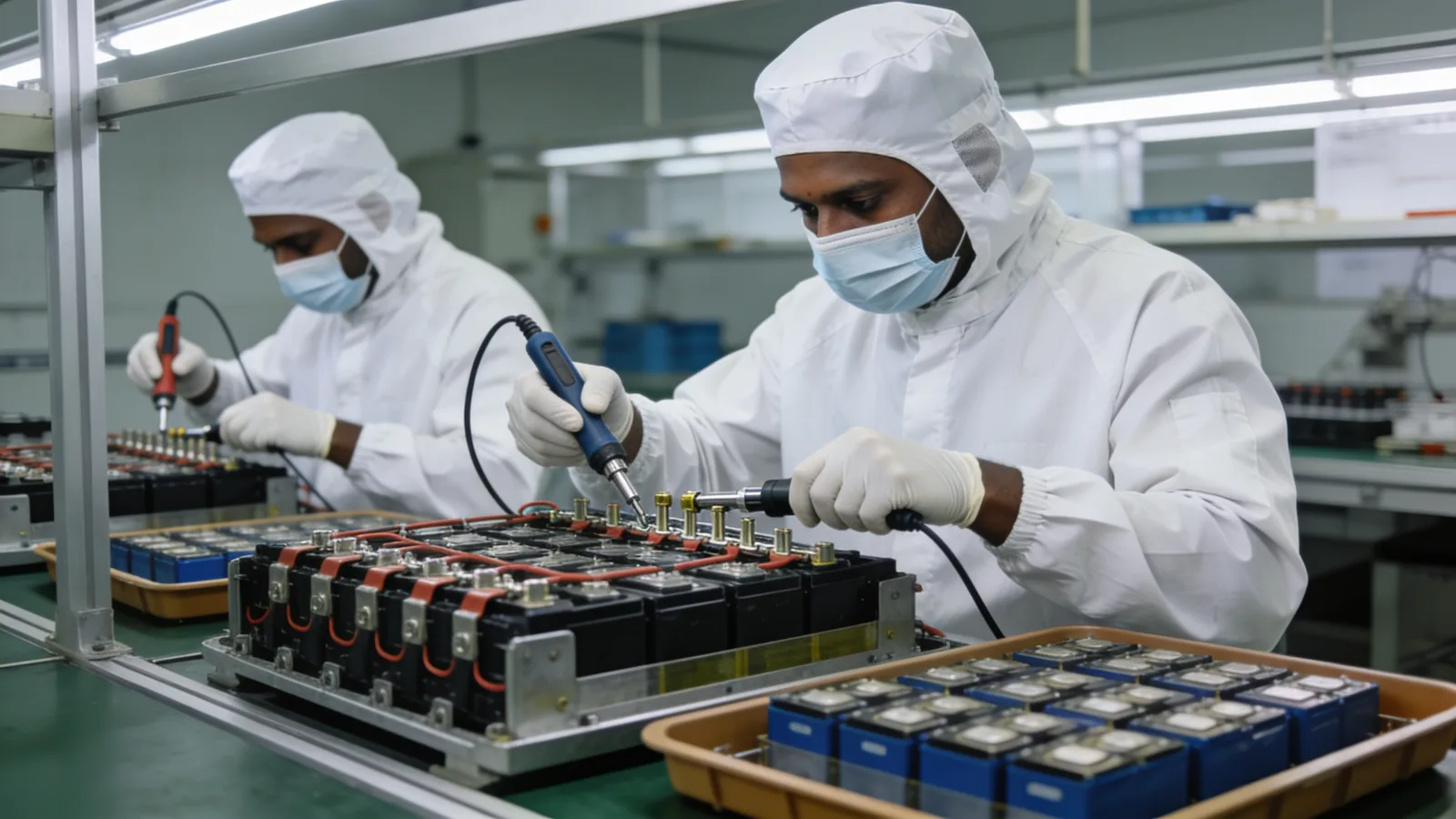
Where the headcount actually sits
Cell manufacturing is capital-heavy and operator-light; module, pack and testing are where volume manpower is needed, alongside a fast-growing service and charging network.
- ✓Cell line: electrode handling, winding and stacking, formation, dry room operators
- ✓Module and pack assembly: welding, busbar, torque, glue and gasket stations
- ✓Testing: BMS test, EOL test, insulation resistance and safety validation
- ✓Quality: incoming material, in-process, CT and X-ray inspection support
- ✓EHS-critical roles: thermal event response, chemical and electrolyte handling
- ✓Service network: EV service technicians, battery diagnostics, roadside support
- ✓Charging infrastructure: installation electricians, commissioning and O&M technicians
You cannot hire experience that the country has not built yet
Job posts asking for three years of cell-line experience return nothing, so the ramp waits while the equipment sits commissioned and idle.
The qualified population is small enough to name, already employed at the few plants that trained them, and not moving for a marginal raise.
With borrowed capital, committed OEM volumes and an EHS risk profile that makes untrained improvisation genuinely dangerous.
Electronics, pharma cleanroom and precision assembly workers already have the discipline. We source there, run dry-room, ESD and EHS training before floor entry, and staff to your standard.
Get a quote →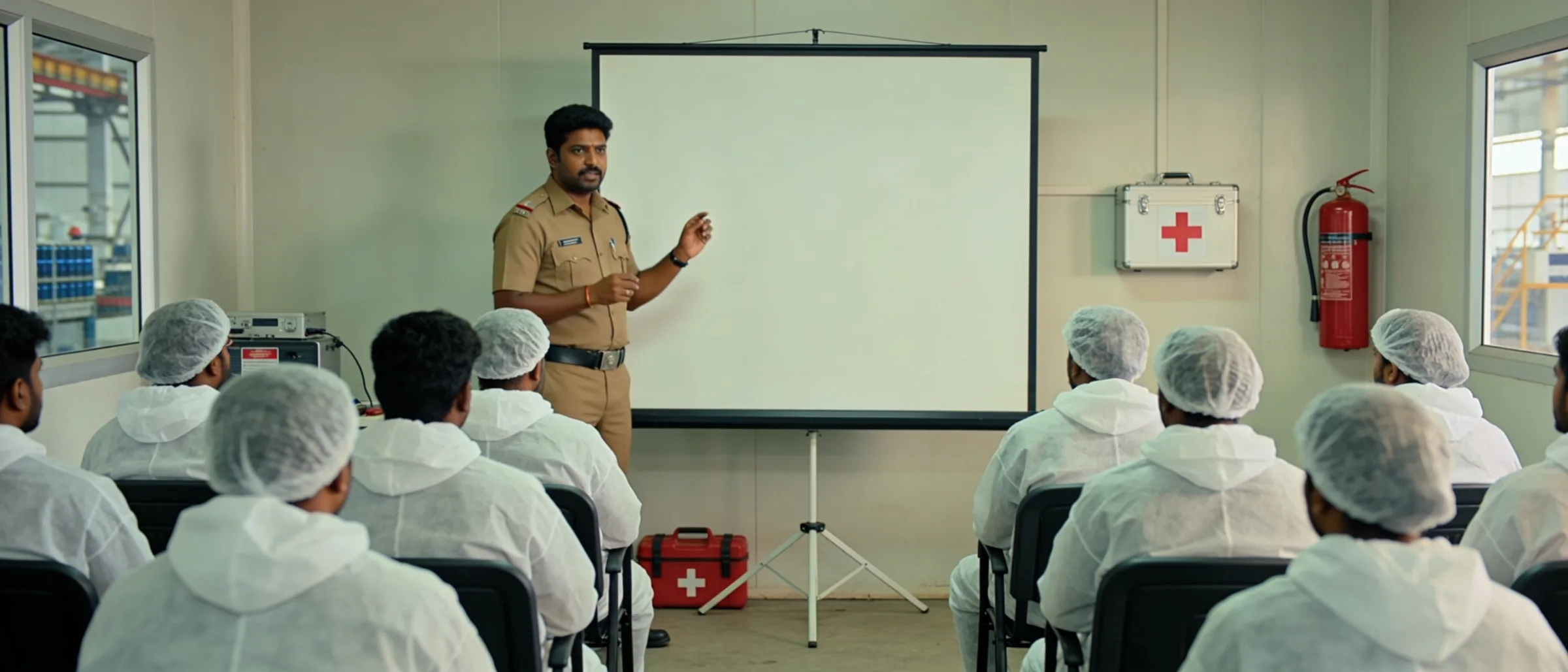
Sourcing, training, deployment
Billed on loaded wage plus service fee, with the pre-deployment training module priced per worker or absorbed into the fee at volume.
Cleanroom, ESD and documentation habits transfer. Battery-specific process knowledge is taught.
EV and battery clusters we recruit for
EV assembly has grown out of the existing automotive belts, while cell manufacturing is coming up in a few new giga-scale locations. The labour market in each is different.
Hosur and Krishnagiri
Electric two-wheeler assembly and a cell gigafactory project, drawing on the existing Hosur component workforce.
Chennai, Oragadam, Sriperumbudur
Electric car and commercial-vehicle lines inside established OEM plants, plus pack and motor suppliers.
Bengaluru
Pack assembly, BMS and power-electronics firms and EV start-ups, with strong demand for test and diagnostics technicians.
Pune and Chakan
Electric two-, three- and four-wheeler lines and suppliers within the Pune auto belt.
Sanand, Dholera and Jamnagar
Large cell-manufacturing projects in Gujarat, where operator pools are being built almost from zero.
Mahabubnagar and Hyderabad
Cell and pack manufacturing on the Hyderabad–Bengaluru corridor, alongside established battery makers.
Where we source each battery station from, and what we retrain
There is no deep pool of experienced cell-line operators in India yet. Each station has a nearest adjacent skill; the gap between the two is what our pre-deployment training covers.
| Station | Nearest adjacent pool | What must be retrained |
|---|---|---|
| Electrode handling and dry room | Pharma and semiconductor cleanroom operators | Dew-point discipline, lithium and electrolyte hazards, moisture-ingress rules |
| Stacking, winding, cell assembly | Electronics SMT and precision assembly operators | Separator and foil handling, contamination control, machine-tending routines |
| Formation and ageing | Chemical and pharma utility operators | Charge-cycle monitoring, abnormal temperature and swelling escalation |
| Module welding (laser, ultrasonic) | Automotive weld-shop operators | Process parameters, weld inspection criteria, fume and laser safety |
| Pack assembly and torque | Automotive assembly operators | High-voltage awareness, insulated tools, busbar and connector discipline |
| EOL, BMS and insulation testing | Diploma electrical and electronics technicians | HV test safety, test-bench procedure, data logging |
| Charger installation and O&M | Licensed electricians | DC charger commissioning, earthing checks, site safety and permits |
The EHS gates before anyone enters a battery floor
A battery plant cannot absorb learning by mistake. These are the gates every worker passes before deployment, with the record kept per worker for your EHS and customer audits.
High-voltage awareness
Car and bus packs run at hundreds of volts. Operators learn isolation, the authorised-person concept, insulated tools and what they must never touch.
Thermal event response
Recognising heat, smoke, venting and swelling, raising the alarm, evacuation routes and the role of the designated responder. Drilled, not just explained.
Electrolyte and chemical handling
Electrolyte can release hazardous gases if it meets moisture. PPE, spill response and eyewash drills are part of induction.
Dry room and gowning
Entry sequence, dew-point rules and material transfer, checked before first entry.
Product safety standards
Packs sold in India are tested against AIS-156 (two- and three-wheelers) and AIS-038 Rev 2 (cars and commercial vehicles); operators learn which of their steps are safety-critical.
End-of-life and recycling
Battery Waste Management Rules 2022 put extended producer responsibility on manufacturers; we staff collection, sorting and recycling-line roles with the same safety gate.
Questions plant and HR heads ask us
Answers we give in the first call, written down so you can compare vendors on the same terms.
Get a quote →Do you have workers with cell manufacturing experience?+
Very few people in India do, and we will not pretend otherwise. Our approach is adjacent-skill sourcing from electronics, semiconductor, pharma cleanroom and precision assembly, with structured pre-deployment training into your process.
Which EV roles do you staff most?+
Module and pack assembly operators, EOL and BMS test technicians, quality inspectors, material handlers, plus the service side — EV service technicians, battery diagnostics and charger installation and O&M electricians.
How do you handle EHS risk with new workers?+
No worker enters the floor without documented induction covering chemical handling, thermal event response, PPE and gowning protocol. Evidence is retained per worker for your safety and customer audits.
Can you support a gigafactory ramp?+
Yes, as a phased mobilisation plan dated backwards from your commissioning milestones, with batch-wise training and hostel and transport coordination for migrant intake.
What about charging infrastructure manpower?+
We staff installation electricians, commissioning technicians and O&M teams for charging networks, including multi-city deployment where the network expands faster than local hiring can keep up.
Which battery safety standards apply to EV packs in India?+
Traction batteries for two- and three-wheelers are tested against AIS-156, and those for cars and commercial vehicles against AIS-038 Rev 2, both notified under the Central Motor Vehicles Rules. Your process engineers own compliance; we make sure operators know which steps are safety-critical and follow the work instruction exactly.
Do your charger installers hold electrical licences?+
Installation and O&M electricians are screened for a valid State electrical licence or wireman permit where the State requires one, and work under a licensed supervisor. DC charger commissioning training is added on top.
How long does it take to train a batch for a new cell or pack line?+
Plan on about three weeks from selection to floor-ready for a typical operator batch: safety gates, dry-room or HV training and station practice. Your own OJT and sign-off on the line follow.
Why are so many battery and EV plants hiring at once?+
Policy timelines. The production-linked incentive scheme for Advanced Chemistry Cell batteries (₹18,100 crore for 50 GWh of capacity) ties incentives to commissioning capacity and raising domestic value addition within set deadlines, and the PM E-DRIVE scheme funds EV demand and public charging. Several cell, pack and charger ramps therefore land in the same few years and compete for the same small pool of trained people.
How is an EV staffing contract priced?+
On the loaded wage plus a service fee. The loaded wage covers the gross wage at or above the State minimum for the skill category, employer PF and, where gross wages are within ₹21,000 a month, employer ESI, plus bonus and leave provisioning. Pre-deployment training is either priced per worker or absorbed into the fee at volume; the estimator on this page gives an indicative monthly figure.
Staff the line you have just commissioned
Send the station list and your commissioning date. We come back with a sourcing plan, a training gate and a dated ramp.