
Logistics and warehousing staffing measured in throughput, not headcount.
In logistics, staffing is an operations input: lines per hour, trucks per dock, cut-off met or missed. Our logistics and warehousing staffing sizes teams from your throughput plan and holds them through peaks — loaders, pickers, packers, MHE operators, hub and dispatch staff, on our payroll with shift supervisors, safety induction and weekly productivity reporting against your own targets.
Volume, dock profile and shift pattern are enough to size the team.
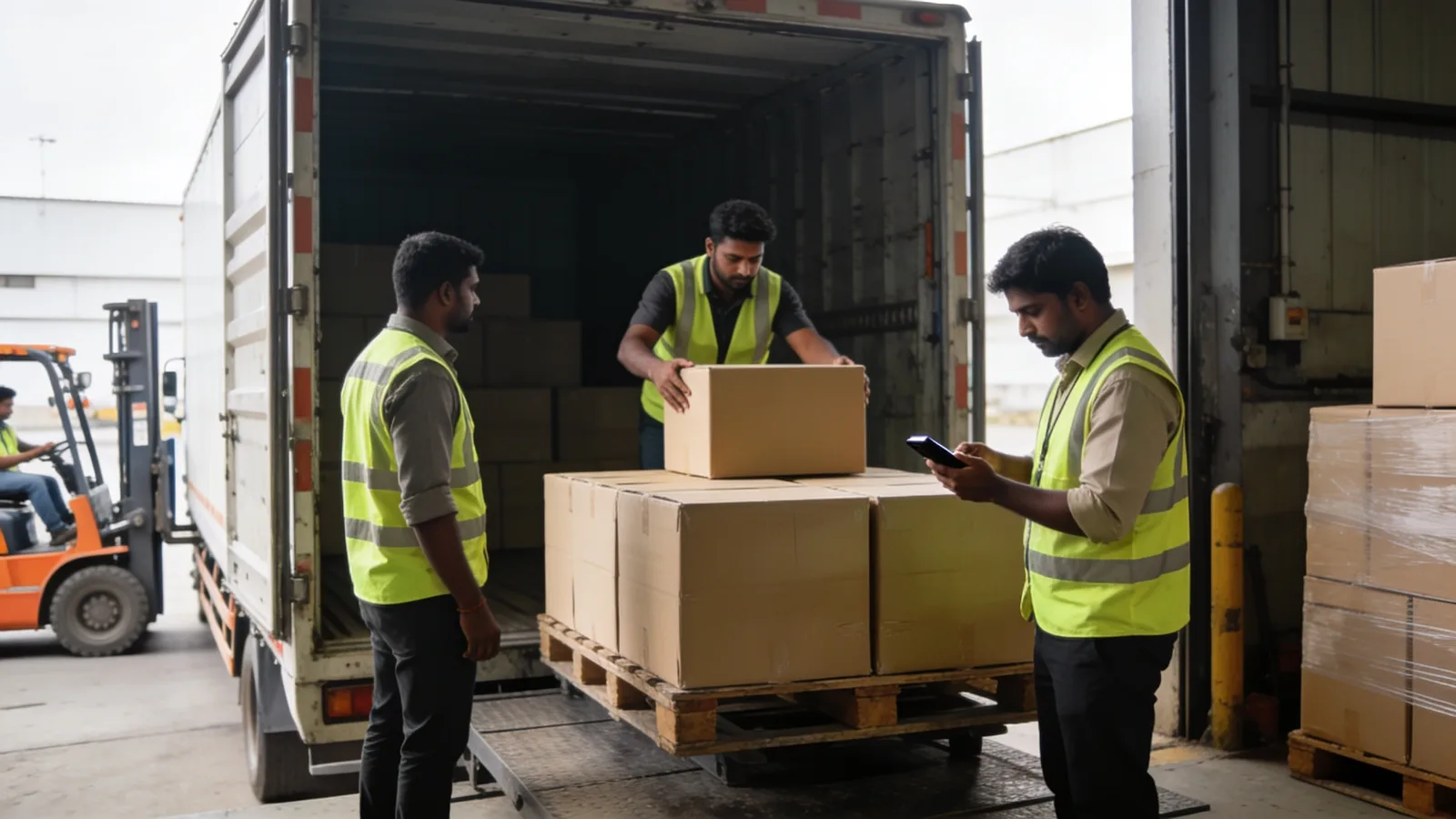
From the dock to the last mile.
A logistics contract usually covers several sites and several shift patterns at once. We staff each node to its own rhythm and report it centrally.
- ✓Loaders, unloaders and dock helpers
- ✓Pickers, packers and scanner operators
- ✓Forklift, reach truck and MHE operators
- ✓Cold-chain handlers with PPE for sub-zero
- ✓Hub, sortation, dispatch and gate documentation staff
Cut-offs are missed on the floor, not in the plan
Volume forecasts are usually right. Staffing to them is where it breaks.
A team sized for average volume is short on every peak day and idle on slow ones, and the ratios between picking, packing and loading are never revisited.
One late truck cascades: a missed customer promise, a penalty clause, and a backlog that consumes the next day's capacity.
Team structure built from lines per hour, peak waves targeted to land within seven days, and productivity reported weekly so drift is corrected in days.
Get a rate card →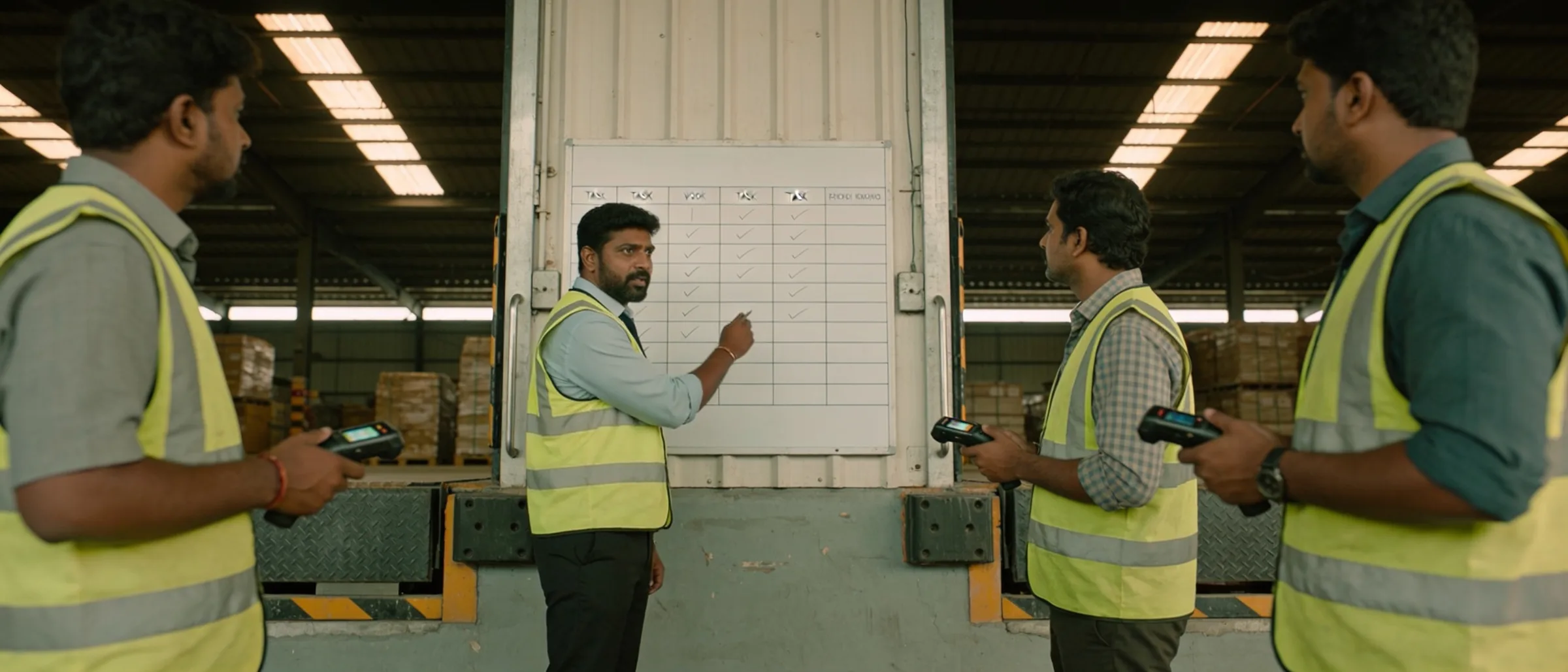
How logistics teams are structured
Slider gives an illustrative monthly bill at an assumed 12% service fee for a general shift; your actual fee is set out in the rate card. Night and cold-chain allowances are billed as actuals.
How the number is derived.
A worked example: from order lines to pickers per shift
Flat headcount is why cut-offs are missed. We size each function from your volume and your measured productivity. Here is the arithmetic for pickers; packing, loading and checking follow the same logic.
| Step | Example input | Result |
|---|---|---|
| Order lines to pick per day | 24,000 lines over two shifts | 12,000 lines per shift |
| Measured pick rate | 60 lines per picker-hour (your WMS data) | |
| Productive hours per 8-hour shift | 7 hours after breaks and briefings | 420 lines per picker per shift |
| Pickers needed on the floor | 12,000 ÷ 420 | about 29 per shift |
| Absenteeism and leave reserve | 10–15% from your attendance history | 32 to 33 pickers rostered per shift |
| Peak-day uplift | Sale-day volume at 2× the average | a temporary wave of about 30 extra pickers per shift |
Illustrative figures. Pick rates vary widely with SKU profile, storage type, WMS and pick method; we use your own data, or a two-week time study where none exists.
The numbers we report every week, per site
You set the targets; we report against them in the same format across every site, and the monthly review is built on these numbers.
| KPI | Definition | Why it matters |
|---|---|---|
| Shift fill rate | Rostered heads present at shift start ÷ heads ordered | The first number that decides whether cut-offs are met |
| Productivity per head | Units, lines or cases per productive hour, by function | Shows whether the ratio between picking, packing and loading still fits the volume |
| Pick and dispatch accuracy | Error-free lines ÷ lines picked or shipped | Mis-picks cost more than slow picks |
| Truck cut-offs met | Scheduled departures that left on time | The customer-facing result of all the above |
| Attrition with reason codes | Exits ÷ average headcount, coded by reason | Tells you whether the problem is wages, commute, supervision or shift |
| Safety incidents and near misses | Recordable incidents and reported near misses | Near-miss reporting falling to zero is a warning, not a success |
Warehousing clusters we recruit for
Grade-A warehousing has consolidated into large regional hubs, which means big sites competing for the same local labour pool.
Bhiwandi and the Mumbai–Nashik corridor
A very large concentration of warehouses serving Mumbai and western India, with a largely migrant workforce.
Chakan, Talegaon, Ranjangaon
Industrial and e-commerce warehousing around Pune, competing with auto plants for the same workers.
Gurugram–Farrukhnagar, Luhari, Kundli
NCR distribution belts along the KMP expressway and NH-44, with extreme summer and winter shift conditions.
Hoskote, Nelamangala, Attibele
Bengaluru's warehousing belts on the Chennai, Tumakuru and Hosur highways.
Sriperumbudur, Oragadam, Red Hills
Chennai's industrial and consumer distribution hubs along the western and northern corridors.
Dankuni, Uluberia, Medchal, Shamshabad
Eastern distribution around Kolkata and Hyderabad's northern and airport-side hubs.
What applies to a warehouse using contract manpower
Warehouses sit in a different legal box from factories, and loading and unloading has a specific place in the contract-labour rules.
Registration
Most warehouses register under the State Shops and Establishments Act, which remains State law; the OSH Code applies to establishments with 10 or more workers.
Loading and unloading is non-core
The OSH Code restricts contract labour in core activities, but its definition of core activity excludes support work such as loading and unloading, so dock and handling teams can be contracted.
Contractor licence
A contractor with 50 or more contract workers across your sites needs a single licence under the OSH Code. We hold the registers, wage records and returns.
Night shifts for women
Women can work night shifts with written consent and the prescribed safeguards: transport, lighting, CCTV and washrooms. Many DCs now run mixed night crews.
MHE operators
There is no single national forklift licence; operators need training, a practical test on the truck class and your site authorisation, plus a driving licence if the truck moves on public roads.
Fire and racking safety
Aisle discipline, racking load limits and fire-exit access are part of every induction, because warehouse fires and racking collapses are catastrophic.
Logistics staffing FAQs
Team sizing, peak scaling, cold chain and multi-site reporting.
Get a rate card →How do you size a warehouse or hub team?+
From your throughput plan — lines per hour, dock profile, SKU mix and shift pattern — converted into picker, packer, loader and checker ratios with a buffer for absenteeism, rather than a flat headcount.
Can you scale for e-commerce and festive peaks?+
Yes. We aim to have peak waves on the floor within seven working days and release them cleanly at the end of the window, which is why many 3PL and e-commerce operators run peaks on a temporary staffing contract.
Do you staff cold-chain facilities?+
Yes. Cold-chain handlers are deployed with sub-zero PPE, shift-duration limits and rotation discipline appropriate to the chamber temperature.
How is performance reported across multiple sites?+
Productivity per head against your target, attendance and absenteeism, and attrition with coded reasons — reported per site weekly and consolidated monthly for the network.
Do you supply MHE operators as well?+
Yes. Forklift, reach truck and stacker operators are supplied with training-record verification and a practical test on the truck class in use, on the same contract as the general team.
Can we outsource loading and unloading to a contractor?+
Yes. Loading and unloading is listed among the support activities excluded from "core activity" under the OSH Code, so it can be contracted. The contractor still needs a licence if it employs 50 or more contract workers, and wages, PF, ESI and welfare obligations apply in full.
Do forklift and reach truck operators need a licence in India?+
There is no single national forklift licence. Operators should be trained and tested on the specific truck class and authorised by the site; if the truck is driven on public roads, a valid driving licence for that vehicle class is also needed. We verify training records and run a practical test before deployment.
How much notice do you need for a new warehouse go-live?+
Four to six weeks is comfortable for a new site: time to agree the throughput model, source locally, induct and run a trial week. Shorter is possible if the site is in an established warehousing belt and the roles are standard.
Peak season or a new DC?
Send the throughput plan and sites. We aim to send a team structure and rate card within one working day.