
Delivery rider staffing that keeps the fleet on the road, not just on the roster.
Rider supply is a leaky bucket: onboard a hundred, and utilisation tells you how many are actually riding in week three. Our delivery rider staffing runs onboarding as an operation — licence and vehicle checks, document collection at doorstep camps, app activation before day one, weekly payout options because riders live weekly — with utilisation and drop-off reported per wave so you top up before the fleet dips.
Cities, weekly rider target and payout cycle are enough to plan waves.
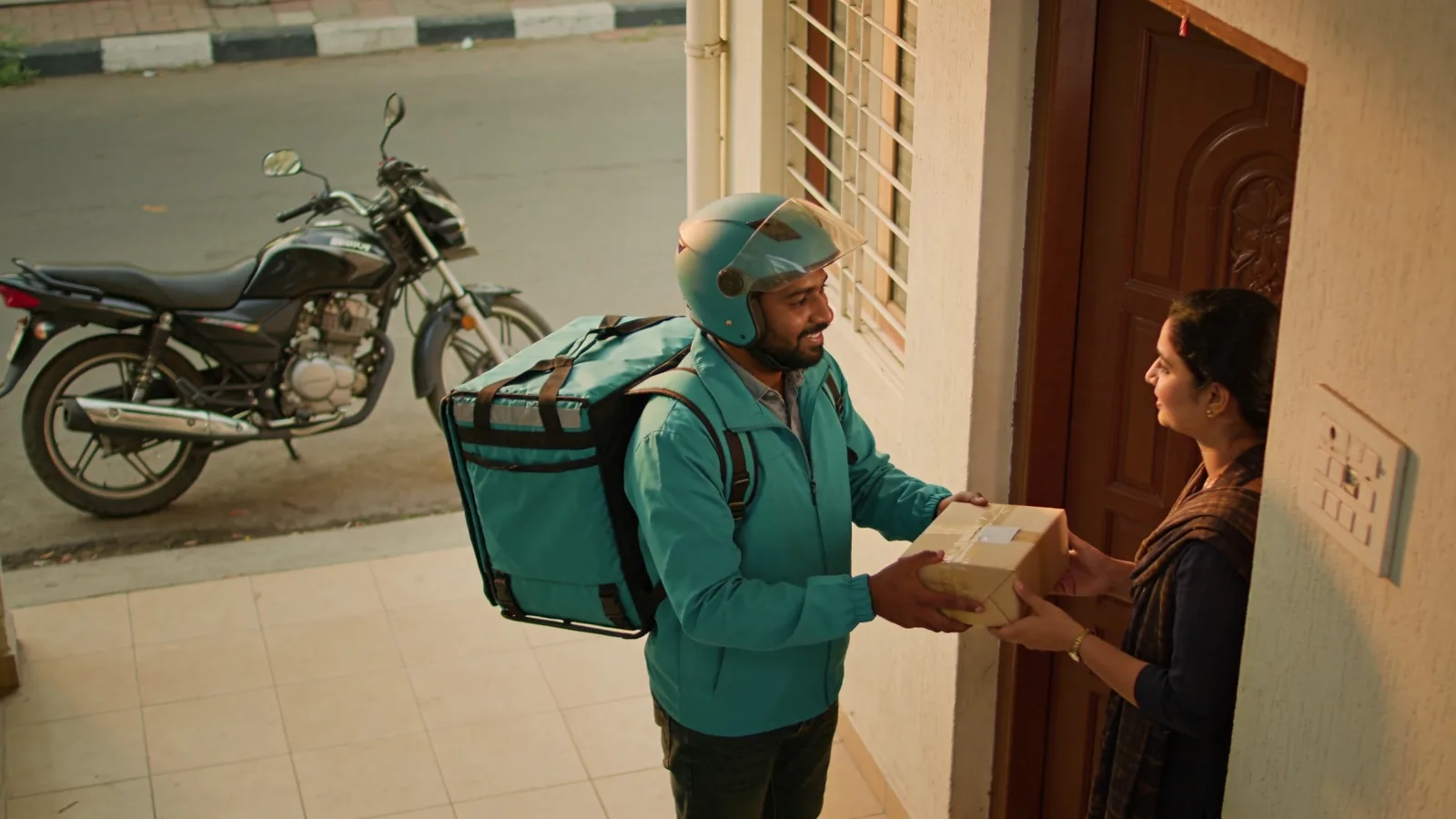
Riders, captains and hub staff on one contract.
A last-mile operation is more than riders. Hubs need staff, riders need captains, and both need someone who can restart onboarding the week utilisation drops.
- ✓Two-wheeler delivery riders, own or leased vehicle
- ✓Bike captains and fleet coordinators
- ✓Hub, sortation and dark-store associates
- ✓Loaders and dispatch helpers
- ✓City-level onboarding and training coordinators
Onboarding a hundred riders is not the same as having a hundred riders
Utilisation, not headcount, is what your delivery promise depends on.
Riders sign up, never complete documents, never activate the app, and appear on a roster that does not reflect the road.
Under-fleeted hubs miss slots, customer promises break at exactly the moment volume peaks, and the cost of a failed festive week is not recoverable.
Doorstep document camps, app activation before day one, weekly payouts, and drop-off reporting per wave so top-ups happen before the dip.
Get a rate card →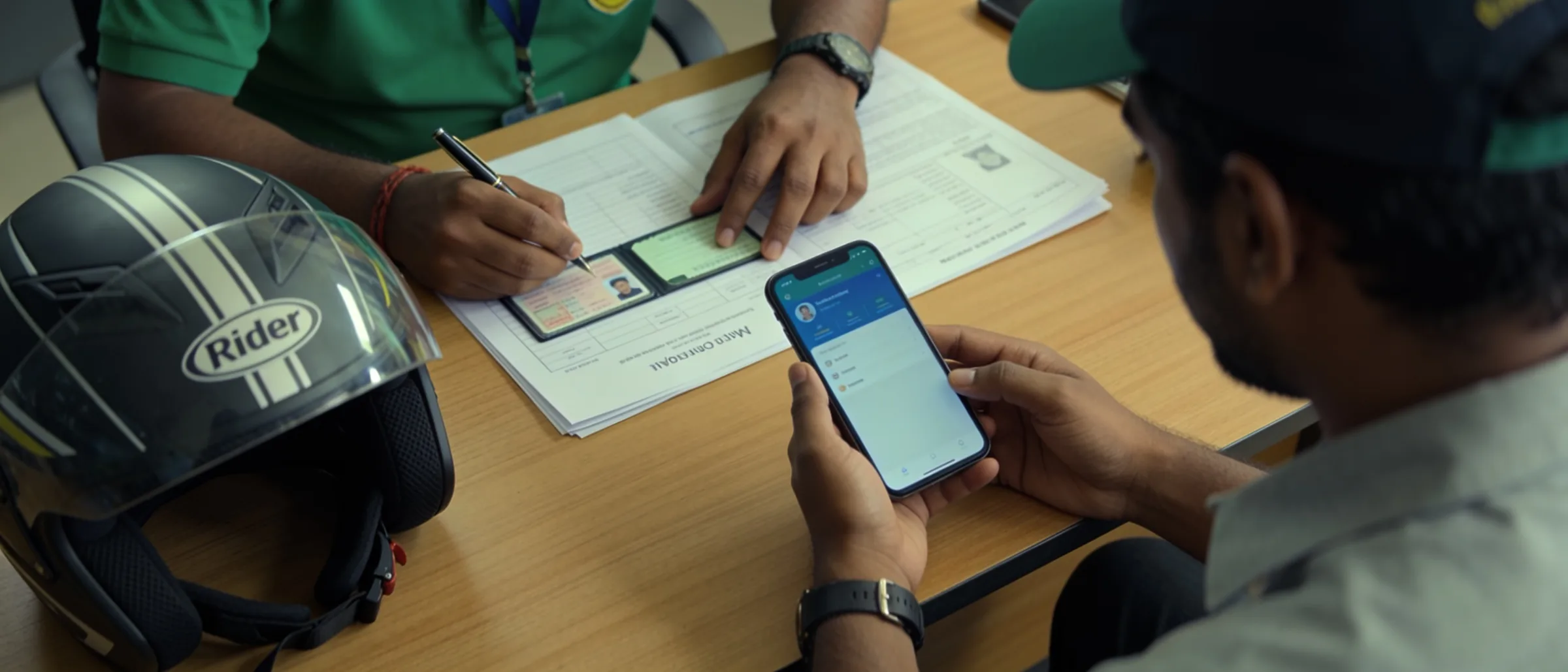
How rider waves are run
Slider gives an indicative monthly bill at an illustrative 12% fee on a fixed-pay model; your actual fee is set out in the rate card. Per-order and hybrid models are priced separately.
How a hundred riders actually get on the road.
Payroll riders or gig riders — what changes
Both models are legal, and they suit different fleets. The difference shows up in cost, control and compliance:
| Aspect | Payroll rider (our model) | Gig or platform rider |
|---|---|---|
| Status | Employee of the staffing company, deployed to your hub | Independent worker on an app, outside an employment relationship |
| Pay | At least the State minimum wage, plus incentives | Per-order earnings; no minimum-wage guarantee |
| PF, ESI, leave | Yes | Social-security schemes funded partly by aggregator contributions |
| Shift control | Fixed shifts and rosters you can plan around | Riders log in when they choose |
| Best for | Dedicated hub fleets, dark stores, B2B and pharmacy routes | Variable demand spread across a city |
Rider and vehicle documents we verify
Every document is collected at the onboarding camp and re-checked on a schedule, because licences, insurance and pollution certificates expire mid-contract.
| Item | What we check |
|---|---|
| Driving licence | Motorcycle with or without gear, matching the vehicle; validity checked online on Parivahan Sarathi; rider aged 18 or above |
| Vehicle papers | Registration certificate, insurance (third-party is the legal minimum; own-damage recommended) and pollution certificate |
| Electric vehicles | Low-speed e-bikes exempt; faster EVs need licence, registration and insurance like any motorcycle |
| Helmet | BIS-certified (ISI-marked) helmet, as mandated for two-wheeler riders; issued if the rider has none |
| Identity and bank | Aadhaar, address, and a bank account in the rider's name for payouts |
| Verification | Police or address verification where riders enter homes — pharmacy and home-service routes |
Safety rules riders are briefed on before the first trip
Last-mile speed promises are met by routing and staffing, never by pressure on the rider. Every rider is briefed on:
Helmet, always
Strapped, ISI-marked helmet on every trip — riding without one is an offence under the Motor Vehicles Act, and pillion helmets too.
No handheld phone
Navigation on a fixed mount; no calls or app taps while moving. Customer calls happen at the stop.
No speed incentives
We do not run per-delivery time penalties; late orders are a routing problem to fix with you, not a rider's fine.
Rain and night kit
Rain gear and reflective vests issued; accidents reported the same day so ESI and insurance claims start on time.
Rider pay: the statutory floor and advertised earnings
A payroll rider's fixed wage cannot fall below the State minimum; incentives and fuel sit on top. Indicative figures:
| Basis | Amount | Date | Notes |
|---|---|---|---|
| Haryana — unskilled / semi-skilled | ₹15,220.71 / ₹16,780.74 a month | 1 Apr 2026 | Riders are commonly placed in one of these grades |
| Tamil Nadu — shops & commercial establishments, general worker | ₹14,044 a month (Zone A) | 1 Apr 2026 | Basic plus VDA |
| Advertised earnings — delivery driver (Indeed India) | Average ₹36,544; range ₹18,067–₹73,918 | 325 postings, Jul 2026 | Incentive-heavy “earn up to” figures, usually before fuel costs |
Sources: Haryana revision of 1 Apr 2026; Tamil Nadu notification of 18 Feb 2026; Indeed India. Riders compare take-home after fuel, not headline earnings — publishing fixed pay, incentive slabs and fuel reimbursement up front cuts early drop-off.
SLAs and what your hub provides
Numbers are agreed per city and written into the contract.
Service levels we aim to hold
- ✓A city-wise wave plan against your weekly rider target
- ✓Per-wave report: onboarded, activated, riding, dropped
- ✓Top-up waves triggered before utilisation dips
- ✓Wages and incentives paid on a fixed date
- ✓Monthly pack: wage proof, PF and ESI challans
What your hub provides
- ✓Parking, and charging points for EV fleets
- ✓Drinking water, toilets and a rest area at the hub
- ✓App access, route training and a hub contact
- ✓Clear incentive slabs and order-allocation rules
- ✓Delivery bags and branded T-shirts, unless we supply them
How fast can you onboard delivery riders?+
We aim to put the first wave on the road within a week of the city drive, with bulk requirements built up through rolling weekly waves rather than one intake. Festive ramps start earlier, because licence, vehicle and bank checks take the same time whatever the season.
Do riders bring their own vehicles?+
Both models are supported. Own-vehicle riders are verified on licence, RC and insurance; leased or client-provided vehicle models are onboarded with a separate handover and damage protocol.
How are riders paid?+
On a fixed-pay, per-order or hybrid structure as your process requires, with weekly or fortnightly payout options because rider retention is highly sensitive to payout frequency.
How do you report fleet utilisation?+
Per wave: onboarded, activated, riding and dropped, with coded drop-off reasons, so top-up waves are triggered before utilisation dips below your delivery promise.
Are riders covered for accidents?+
Yes. Riders on our payroll are covered by ESI, which pays for employment injury including accidents on duty, and we recommend a personal-accident policy on top for riders above the ESI wage ceiling. Helmet and safety-kit issue is recorded per rider.
Are delivery riders gig workers under the Code on Social Security?+
Not when they are on our payroll. The Code on Social Security 2020, in force since 21 November 2025, defines gig and platform workers as people outside a traditional employer–employee relationship, and funds their social security partly through aggregator contributions of 1–2% of turnover, capped at 5% of what the platform pays them. Payroll riders are employees: minimum wage, PF, ESI, overtime and leave apply.
Do delivery riders need a commercial licence?+
No separate commercial licence exists for two-wheelers. A rider needs a valid licence for the vehicle — motorcycle with or without gear — plus the vehicle's registration, insurance and pollution certificate. Low-speed electric bikes (up to 25 km/h and 250 W) are exempt from licensing and registration. Check your State's rules on commercial use of private two-wheelers.
Can riders be paid weekly?+
Yes. The Code on Wages 2019 allows daily, weekly, fortnightly or monthly wage periods; weekly wages must be paid before the weekly holiday. Many fleets pay fixed wages monthly and incentives weekly — whatever you choose, it goes in the appointment letter.
Festive quarter coming?
Send the cities and weekly rider target. We aim to send a wave plan and camp schedule within one working day.