
FMCG and food processing staffing that survives a hygiene audit and a demand spike
Food plants run on two pressures at once: hygiene discipline that cannot slip, and volume that swings with season, festival and promotion. We staff production, packing, sanitation and dispatch with hygiene-trained workers, and flex the headcount up and down without leaving you with permanent cost.
Roles, headcount and plant city. We aim to send a costed proposal within one working day.
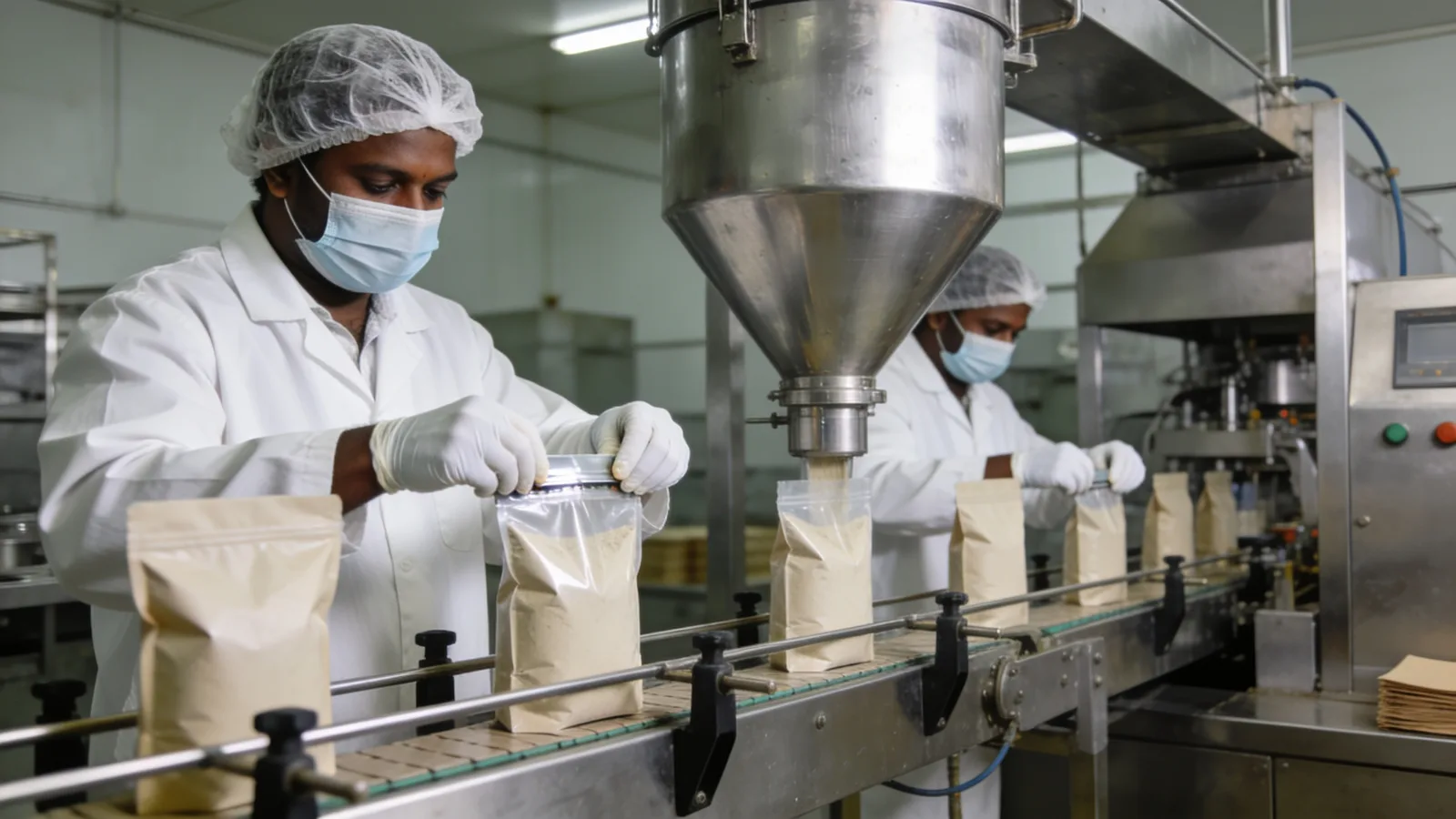
Roles across the plant and the route
Food companies buy manpower for the plant and for the market. Both are seasonal, and both are judged on hygiene and compliance.
- ✓Production: process operators, batching, mixing, filling and sealing lines
- ✓Packing: primary and secondary packing, labelling, coding, cartoning, palletising
- ✓Hygiene and sanitation: CIP support, line cleaning, pest-control coordination
- ✓Cold storage and chilled area handlers with cold-exposure screening
- ✓Dispatch and logistics: loaders, forklift operators, stores and FIFO discipline
- ✓Quality support: line QC, metal detection and checkweigher monitoring
- ✓Market side: merchandisers, promoters, van sales support, ISD staff
Festival volume arrives whether the manpower does or not
Diwali, Ramzan, harvest and school reopening set the demand curve. A plant that cannot double its packing headcount for six weeks simply sells less.
Late hiring means the peak is served at 70% output. Permanent absorption means paying for peak capacity for twelve months to use it for two.
Plus hygiene incidents from rushed intake with no induction, which in food manufacturing is a recall risk and not merely an audit finding.
Volume forecast to a dated mobilisation plan, returning workers recalled year on year where possible, hygiene induction before every deployment, and release dates agreed before the peak starts.
Get a quote →
Hygiene, flex, compliance
Loaded wage plus service fee, with seasonal peaks priced on the terms set out in your rate card.
Hygiene is trained, screened and recorded, because audits and recalls both look here.
The Indian food and FMCG peak calendar, and when to start hiring
Most peaks are predictable to the month. The plants that serve them at full output are the ones that start the manpower plan four to eight weeks ahead.
| Season | Categories that surge | Roles that surge | Start the plan |
|---|---|---|---|
| February to May (summer) | Beverages, ice cream, dairy drinks, edible ice | Filling and packing operators, cold-room handlers, loaders | December–January |
| May to July | Mango pulp and fruit processing in Krishnagiri, Chittoor and other fruit belts | Sorting, pulping, filling and retort operators, sanitation crews | March–April |
| Ramzan (dates move each year) | Dates, dry fruit, vermicelli, beverages, ready-to-cook mixes | Packing, gift-pack assembly, dispatch | Six to eight weeks ahead |
| September to November (festive) | Sweets, snacks, confectionery, edible oil, gift packs, personal care | Packing and cartoning, coding and labelling, loaders, merchandisers | July |
| Harvest seasons (crop-specific) | Rice, pulses, spices, seafood landings | Grading, sorting, peeling, weighing and bagging | Tied to crop or catch forecast |
Dates are indicative; your own sales and production plan decides the mobilisation dates.
FSSAI and customer-audit requirements for food handlers
In a food plant, every worker who touches product or packaging is a food handler under FSSAI rules, whoever employs them. These are the requirements we build our induction and records around.
Schedule 4 hygiene practices
The FSS (Licensing and Registration of Food Businesses) Regulations 2011, Schedule 4, sets general hygienic and sanitary practices: clean protective clothing, head covering, no jewellery, hand-washing and no eating or smoking in handling areas.
Annual medical examination
Food handlers are medically examined, and records are kept for inspection. We arrange the examination before first deployment and track renewal dates.
Trained food safety supervisors
FSSAI expects licensed food businesses to have FoSTaC-trained food safety supervisors, commonly one for every 25 food handlers. We can place FoSTaC-trained supervisors with larger crews.
Packaging and labelling
Coding and labelling staff are trained on the declarations required under the Legal Metrology (Packaged Commodities) Rules 2011 and FSSAI labelling rules: batch, dates, MRP and net quantity.
Customer and certification audits
FSSC 22000, BRCGS and retailer audits ask for training records, medical fitness and hygiene monitoring for contract workers exactly as for your own.
Allergens and foreign bodies
Allergen segregation, glass and brittle-plastic policy, and metal-detector reject handling are part of every induction.
Where we recruit for food and FMCG plants
Food and FMCG manufacturing is spread more widely than engineering, and much of it sits close to farm output or to tax-incentive belts.
Haridwar, Rudrapur, Baddi
Large FMCG plants for personal care, foods and beverages in the Uttarakhand and Himachal industrial belts.
Punjab, Haryana, western UP
Dairy, grain milling, rice, biscuits and snacks around Ludhiana, Sonipat and the NCR fringe.
Gujarat and Maharashtra
Dairy cooperatives in north and central Gujarat; snacks, beverages and packaged foods around Pune, Nashik and Mumbai.
Tamil Nadu, Karnataka, Andhra
Mango pulp in Krishnagiri and Chittoor, dairy and beverages around Chennai and Bengaluru, and FMCG plants near Mysuru.
Coastal Andhra, Kerala, Gujarat coast
Seafood peeling and processing, which relies heavily on women workers and on seasonal migration.
Assam and the east
Tea, packaged foods and FMCG plants around Guwahati, plus edible oil and snacks near Kolkata.
How a seasonal pool comes back trained each year
The cheapest peak worker is one who already knows your line. This is how we keep that pool warm between seasons.
-
1End of peak
Rate and release
Line supervisors rate each worker; good performers are flagged for recall and settled in full on the release date.
-
2Off-season
Stay in touch
Workers are offered deployments with other clients where possible, and kept on a recall list with current contact and bank details.
-
36–8 weeks before
Recall and top-up
Returning workers are recalled first; the gap is filled with fresh hires from the same catchment.
-
42 weeks before
Medicals and refresher
Medical fitness renewed where due, hygiene refresher and any line changes since last season.
-
5Peak start
Staggered joining
Workers join in waves matched to your production build-up, not all on day one.
Questions plant and HR heads ask us
Answers we give in the first call, written down so you can compare vendors on the same terms.
Get a quote →How quickly can you add packing headcount for a festival peak?+
We aim for seven days on a planned peak where the forecast is shared in advance, drawing first on workers who have served earlier peaks. Unplanned surges take ten to fourteen days in most belts.
Do workers receive food hygiene training?+
Yes, before deployment: personal hygiene and gowning, hand-wash protocol, foreign-body and glass policy, allergen awareness, plus food-handler medical screening. Evidence is retained for your FSSAI and customer audits.
Can you staff cold storage and chilled areas?+
Yes, with cold-exposure medical screening, appropriate PPE and shorter rotation cycles inside chilled zones, which is what keeps attrition and safety incidents down in those areas.
Do you supply merchandisers and promoters as well as plant manpower?+
Yes — merchandisers, in-shop promoters, van sales support and activation staff, on our payroll with attendance and beat coverage reporting.
What happens to the workers after the season ends?+
They go back into the pool and are offered the next deployment, which is why the same faces can return each peak. As their employer we run the full-and-final settlement on the release date, so peak headcount never sits on your own rolls.
Can we use contract workers on our core production line during a festive peak?+
The OSH Code generally restricts contract labour in core activities, but one of its exceptions is a sudden increase in the volume of work in a core activity that has to be completed in a specified time. A dated seasonal peak usually fits that exception; year-round core stations usually should not be staffed through a contractor.
Do contract food handlers need medical certificates?+
Yes. FSSAI hygiene rules require food handlers to be medically examined and the records kept. We arrange the examination before first deployment and renew it on schedule, and the certificates sit in the file your auditor asks for.
Can women work night shifts in our food plant?+
Yes, under the OSH Code, with each woman's written consent and the safeguards the rules require, including safe transport, lighting, CCTV and washrooms. Many packing and seafood units depend on women workers, so we plan transport and consent before the roster is set.
Plan the peak before the peak plans you
Share your demand calendar. We will build a dated mobilisation plan with a returning-worker pool and hygiene training built in.