
Background verification that closes the check, not just opens a case
Most verification vendors report 'unable to verify' and invoice anyway. We chase the previous employer's HR, walk the address, pull the court record and tell you plainly what came back green, amber or red — for white-collar hires and for the hundred workers joining your line next Monday.
Headcount, states and current setup. We aim to send a costed proposal within one working day.
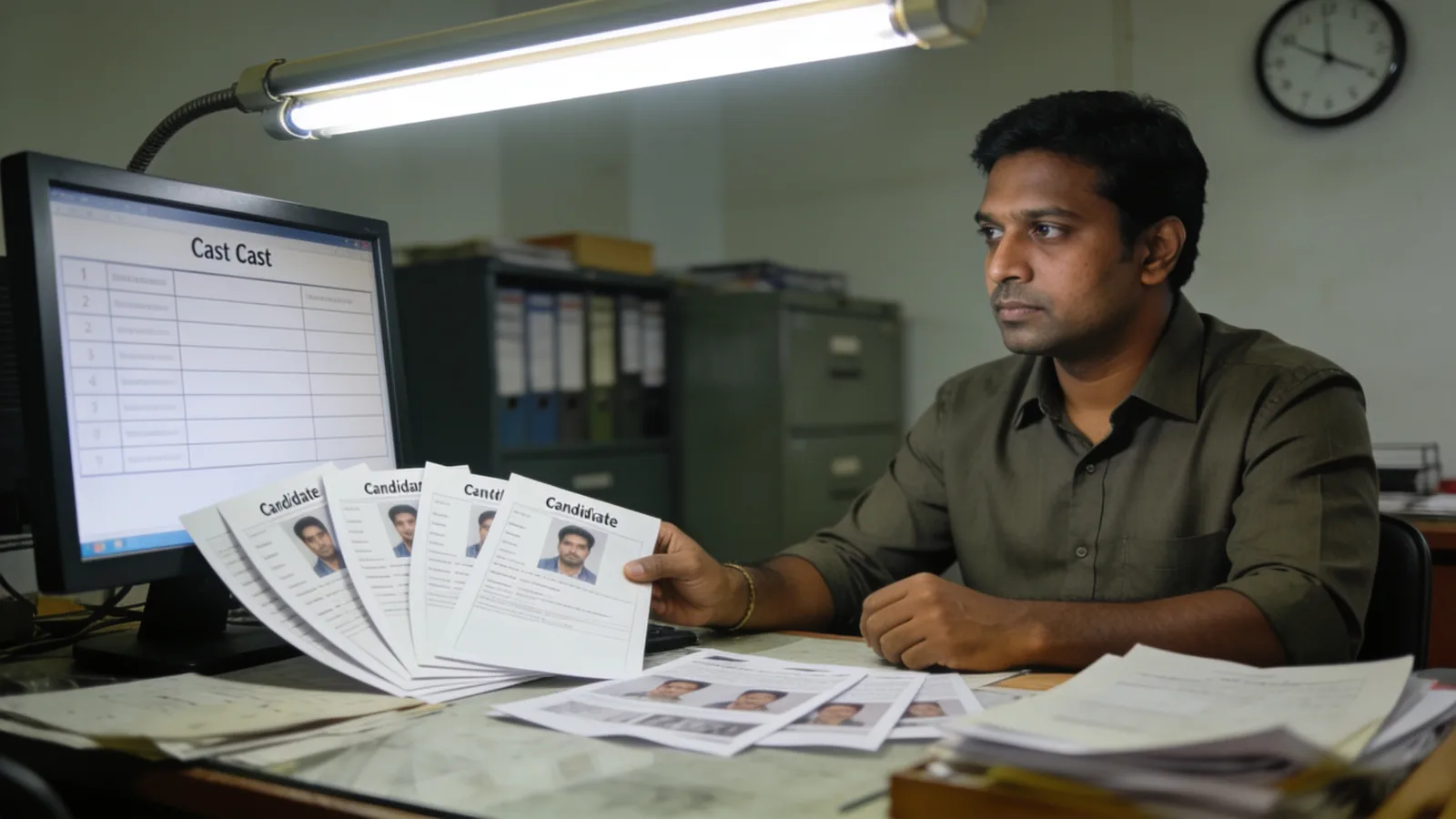
Eleven checks, run to closure
You pick the package by role risk. A machine operator needs identity, address and police. A finance controller needs employment, education, court records and credit.
- ✓Identity: Aadhaar offline verification (masked copy only), PAN and voter ID
- ✓Address verification by physical visit or digital confirmation
- ✓Employment: dates, designation, exit reason, rehire eligibility
- ✓Education: degree and diploma verification with the institute
- ✓Police verification through the local station or state portal
- ✓Criminal database and court record search across jurisdictions
- ✓Reference checks, credit check and drug screening where relevant
One bad hire inside the plant is a security incident, not an HR issue
Fake experience certificates are an industry in themselves. So is the worker terminated for theft at one plant walking into the next one with a clean-looking file.
Volume makes it feel impractical, so identity and address go unchecked for exactly the workers who have unsupervised access to material, stores and machines.
Plus the cost of terminating and replacing a mis-hired white-collar employee, and the customer audit finding that your screening process exists only on paper.
Identity, address and police for the floor, deeper checks for finance, stores and leadership, with insufficiencies escalated instead of quietly reported as unverifiable.
Get a quote →
Packages, process, reporting
Verification is priced per check, or as a role-based package per candidate. Bulk blue-collar screening is priced per head at volume.
Paying for a court record search on a helper is waste; skipping it on a stores in-charge is negligence.
What each check verifies, how, and how long it takes
Turnaround depends on the source, not on the vendor's dashboard. These are typical ranges in India; prices are indicative market ranges per check, not our rate card.
| Check | How it is verified | Typical TAT | Indicative market price |
|---|---|---|---|
| Identity | Aadhaar offline verification (QR or XML) with consent, masked copy only; PAN and voter ID validated at source | Same day | ₹50–200 |
| Address | Physical visit with geo-tagged photo, or digital confirmation by the candidate | 2–7 days | ₹500–1,500 |
| Employment | Written confirmation from the previous employer's HR; EPFO service history via UAN with consent | 2–7 days | ₹500–2,000 per employer |
| Education | Confirmation from the university or board; DigiLocker records where issued | 1–15 days | ₹500–1,500 |
| Court records | Search of civil and criminal case records in the relevant courts | 3–10 days | ₹800–3,000 |
| Police verification | Through the State police's employee or tenant verification service, or a police clearance certificate | Varies by State | Varies |
| Credit | Credit information report with explicit consent — finance and cash-handling roles only | 1–3 days | Varies |
| Drug screen | Sample collected at an accredited lab | 1–3 days | ₹1,000–3,000 |
| Directorship and media | Company registry search and adverse-media search — leadership roles | 1–2 days | Varies |
Market price ranges are drawn from published 2026 Indian pricing guides and are indicative. Standard packages typically land between ₹2,500 and ₹8,000 per candidate depending on depth; blue-collar identity-address packages cost far less.
Court record check, FIR search, police verification and PCC
Buyers often ask for 'police verification' when they mean something else. Each check answers a different question, and the right one depends on the role.
Is the person a party to a case?
Searches court case records for civil and criminal matters against the name and address. Fast and national in reach, but only finds cases that reached a court.
Has a complaint been registered?
Looks for first information reports where available online. Finds matters that have not reached court, but coverage varies by State and an FIR is an allegation, not a finding.
What does the local station hold?
The police check their own records for the candidate's address through the State's employee verification service. Authoritative locally, slower, and procedures differ by State.
An official certificate
A PCC is issued by the police or, for passport holders, through Passport Seva. Useful for overseas or regulated roles; the candidate usually applies personally.
Background checks under India's data protection law
Background verification is processing of personal data. The Digital Personal Data Protection Act, 2023 applies, with its Rules notified in November 2025 and brought into force in phases. As the employer, you are the data fiduciary; a verification vendor acts as your data processor.
| Requirement | What it means for BGV | When it applies |
|---|---|---|
| Consent (s.6) | Free, specific, informed, unconditional and unambiguous, given by clear affirmative action — one consent per stated purpose, not a blanket clause in the application form | Data-fiduciary obligations commence about May 2027 (18 months after the Rules) |
| Notice (Rule 3) | A standalone notice listing each data item and the purpose, with an easy way to withdraw consent and to complain to the Data Protection Board | About May 2027 (18 months from notification) |
| Legitimate use for employment (s.7(i)) | Covers processing for employment purposes, but whether it covers pre-hire checks on candidates is debated — taking consent remains the safe practice | Commences with the other obligations |
| Security and breach | Reasonable safeguards; report a personal-data breach to the Board and affected people, with a detailed report within 72 hours | About May 2027 |
| Retention and erasure | Delete when the purpose is served and no law requires retention; keep processing logs for at least a year | About May 2027 |
| Penalties | Up to ₹250 crore for failing to protect data; up to ₹200 crore for breach-notification failures | Board provisions in force from November 2025; penalties bite once obligations commence |
The government proposed in early 2026 to shorten the 18-month transition; check the current commencement dates before relying on them. Aadhaar has its own rules: use offline verification with consent and keep only masked copies.
What a verification consent should contain — and what to avoid
A consent that would survive a complaint to the Data Protection Board is short, specific and separate from the job application.
Include
- ✓Each check to be run, listed item by item
- ✓The purpose: assessing suitability for the named role
- ✓Who will process the data (employer and verification vendor)
- ✓How long the report will be kept and when it will be deleted
- ✓How to withdraw consent and how to raise a grievance
- ✓A clear action to agree — signature or a recorded digital click
Avoid
- ✕Collecting or storing full Aadhaar numbers — keep masked copies only
- ✕Credit checks for roles with no financial responsibility
- ✕Social-media trawling beyond what the role justifies
- ✕Keeping reports of candidates who were never hired
- ✕Sharing reports with other employers or 'industry blacklists'
- ✕Running any check before consent is recorded
For blue-collar intake, consent can be recorded in the local language at the joining drive alongside other documents — see how we combine it with pre-employment training and contract staffing onboarding.
Questions buyers ask before signing
Answers we give in the first call, written down so you can compare vendors on the same terms.
Get a quote →How long does background verification take?+
We aim for five working days for a staff package. Employment checks with unresponsive ex-employers and police verification in some states can run longer; those cases are flagged as in-progress rather than closed as unverifiable.
What does it cost?+
Per check, or per candidate as a role-based package. A blue-collar identity-address-police package sits at the low end; a leadership package with court, credit and directorship searches is several times that. Bulk floor screening is priced per head.
Do you verify blue-collar workers at volume?+
Yes — identity, address and police verification for full intake batches, run alongside the joining documentation so it does not delay deployment.
Is candidate consent required?+
Yes. Every check runs on a signed or digitally recorded consent from the candidate. Verification without consent is legally fragile under the DPDP Act, 2023, and we will not run it.
What happens when a discrepancy is found?+
You get the claim, the finding, the source and a severity view — for example, inflated designation versus a concealed termination for cause. The hiring decision stays yours; we do not blacklist candidates on your behalf.
Is background verification legal in India?+
Yes, when it is done with the candidate's informed consent, limited to what the role needs, and handled under the Digital Personal Data Protection Act, 2023. Checks such as credit reports and Aadhaar also have their own rules on consent and use.
Does the DPDP Act apply to background checks?+
Yes. Verification is processing of personal data. The employer is the data fiduciary and the verification agency is its processor. Most notice, security, breach and retention obligations under the DPDP Rules, 2025 apply from about May 2027, but consent-based practice should be in place now.
How long can we keep background verification reports?+
Only as long as the purpose needs, or a law or a documented dispute requires. A common approach is to keep reports for hired employees for the period of employment plus a defined limitation period, and to delete reports of candidates who were not hired.
Can we verify a candidate's Aadhaar?+
Use Aadhaar offline verification (the signed QR code or XML file) with the candidate's consent, and keep only a masked copy that hides the first eight digits. Do not store or share full Aadhaar numbers.
What is the difference between police verification and a court record check?+
A court record check searches case records for civil and criminal matters. Police verification asks the local police to check their records for the candidate's address. They answer different questions; roles with cash, stores or security access often need both.
Verify the next batch before they touch a machine
Tell us the role mix and monthly volume. We will send the package options, per-check pricing and turnaround targets.